The Incident Unfolds in the Dead of Night (Image Credits: Unsplash)
San Francisco – A Molotov cocktail shattered the early morning quiet outside OpenAI CEO Sam Altman’s Russian Hill residence, turning abstract anxieties over artificial intelligence into a tangible threat.[1][2] The pre-dawn incident on Friday prompted Altman to share a rare family photo and pen a lengthy reflection linking heated rhetoric to real-world violence. No one was injured, but the event has intensified calls for measured discourse amid AI’s rapid ascent.
The Incident Unfolds in the Dead of Night
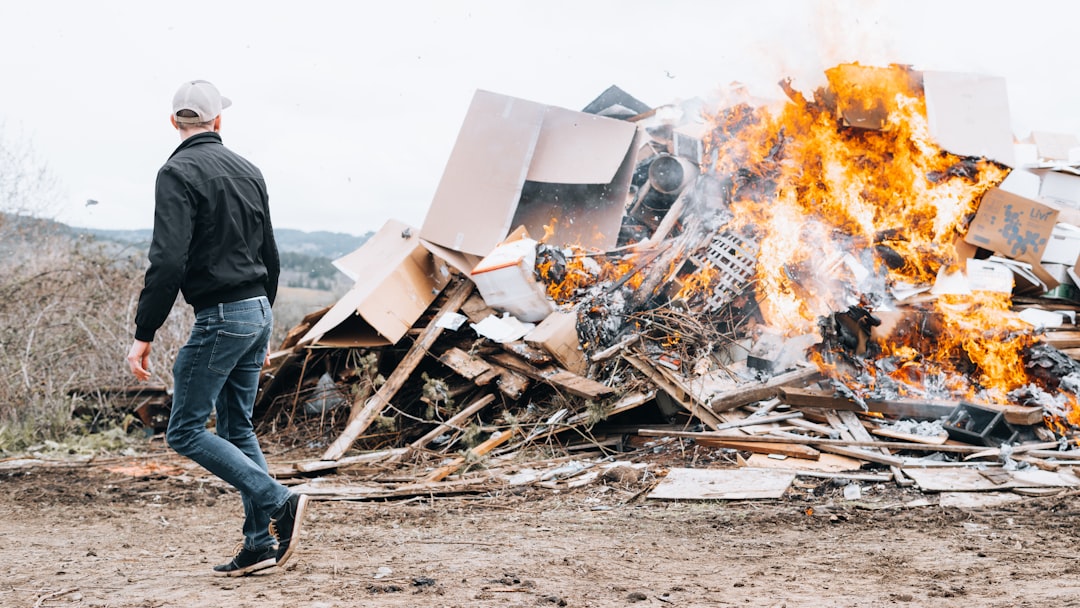
At approximately 3:45 a.m., a 20-year-old man hurled an incendiary device at the gate of Altman’s home near Chestnut and Jones streets.[1] The bottle struck the exterior, igniting a brief fire that security personnel extinguished before firefighters arrived minutes later. The suspect fled on foot and resurfaced about an hour later outside OpenAI’s Mission Bay headquarters, where he issued threats to burn down the building.[3]
Police arrested Daniel Alejandro Moreno-Gama on suspicion of attempted murder, criminal threats, and possession of a destructive device.[1] OpenAI confirmed the sequence in an internal memo to staff, praising the swift response from San Francisco authorities. The company’s spokesperson emphasized that employees remained safe, with heightened security in place around offices.[3]
Altman’s Raw Response and Family Revelation
Hours after the attack, Altman published a personal essay on his blog, accompanied by a photo of himself cradling his infant son. He explained the image’s purpose starkly: “Normally we try to be pretty private, but in this case I am sharing a photo in the hopes that it might dissuade the next person from throwing a Molotov cocktail at our house, no matter what they think about me.”[2] The post detailed the assault: “The first person did it last night, at 3:45 am in the morning. Thankfully it bounced off the house and no one got hurt.”
Altman expressed frustration over escalating tensions. He connected the event to a recent profile, admitting, “Now I am awake in the middle of the night and pissed, and thinking that I have underestimated the power of words and narratives.”[2] Reflecting on his tenure at OpenAI, he acknowledged personal shortcomings, including conflict avoidance that caused pain for the company. Yet he highlighted achievements: building powerful AI, securing infrastructure funding, and scaling safe services globally.
Spotlight from The New Yorker’s Critical Lens
The essay referenced an “incendiary article” published days earlier in The New Yorker, titled “Sam Altman May Control Our Future – Can He Be Trusted?” by Ronan Farrow and Andrew Marantz.[4] The piece drew on interviews with over 100 sources, including former OpenAI executives, to question Altman’s integrity and leadership. It cited memos from Ilya Sutskever accusing Altman of a “consistent pattern of… Lying” and Dario Amodei deeming promises “almost certainly bullshit.”[4]
Critics portrayed Altman as prioritizing products and revenue over safety, with the superalignment team under-resourced and safety processes sidelined. The article explored broader AI perils, from job displacement to existential risks like deceptive alignment or geopolitical weaponization. Altman, in interviews for the profile, defended his evolution: “I do try to be a unifying force,” while admitting the role demands “a heightened level of integrity.”[4]
AI’s Transformative Power and Valid Concerns
Altman affirmed that fears surrounding AI are not unfounded. “The fear and anxiety about AI is justified; we are in the process of witnessing the largest change to society in a long time, and perhaps ever,” he wrote.[2] He outlined core beliefs in a list that balanced optimism with caution:
- AI represents “the most powerful tool for expanding human capability and potential that anyone has ever seen,” with uncapped demand driving incredible progress.
- Safety requires more than model alignment; society must build resilience through policy for economic transitions and new threats.
- Power must be democratized: “Control of the future belongs to all people and their institutions.”
- Adaptability matters, as impacts of superintelligence remain unknown but immense.
While praising technological progress, Altman urged restraint: “We should de-escalate the rhetoric and tactics and try to have fewer explosions in fewer homes, figuratively and literally.”[2] The incident echoes prior threats to OpenAI, including office lockdowns and protests, signaling rising stakes in the AI race.[3]
Key Takeaways
- The attack caused no injuries but highlighted vulnerabilities for AI leaders amid polarized debates.
- Altman calls for democratizing AI while validating public anxieties over its societal upheaval.
- Rhetoric’s role in inciting violence demands collective de-escalation for productive discourse.
As OpenAI pushes boundaries, this brush with violence serves as a sobering reminder: AI’s promise carries profound risks, demanding vigilance from innovators and critics alike. What do you think about the balance between AI fears and progress? Tell us in the comments.