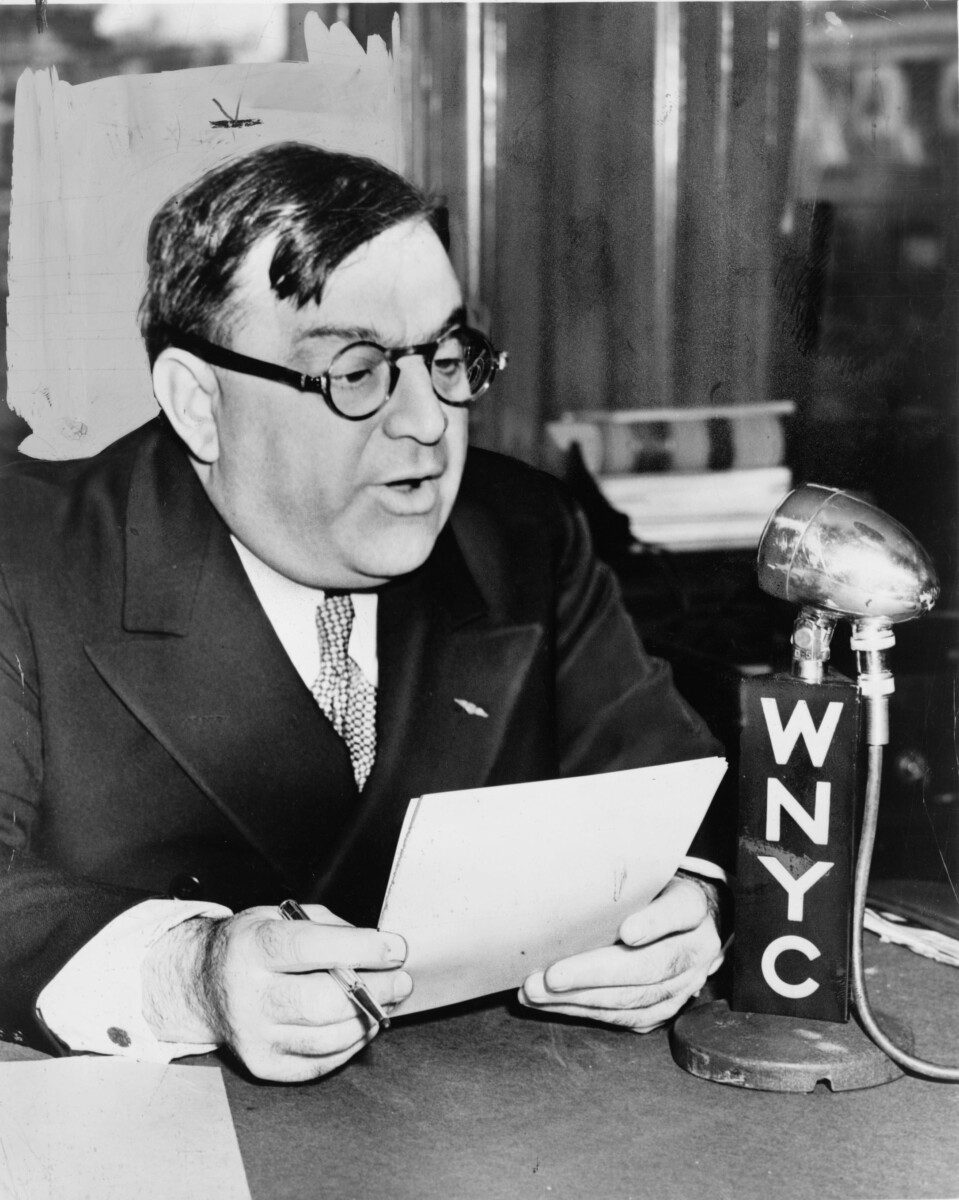
A Colorful Leader Captivates the City (Image Credits: Upload.wikimedia.org)
New York City – Fiorello La Guardia led the city through crisis and war from 1933 to 1945, partnering with radicals and reformers to establish enduring institutions of social progress.[1]
A Colorful Leader Captivates the City
Fiorello La Guardia grabbed national attention during a 1930s newspaper strike by reading comic strips over the radio to entertain children, revealing his flair for connecting with everyday New Yorkers.[1]
Fluent in Italian and Yiddish, he once conducted the New York Philharmonic and stood as a fierce opponent of fascists both abroad and at home. His three terms as mayor marked a shift toward bold public investments. La Guardia channeled municipal funds into massive construction efforts that employed thousands. He supported labor organizers and expanded public housing initiatives. These steps laid groundwork for a more equitable urban landscape. The era showcased his ability to blend showmanship with substantive governance.[1]
Landmark Projects Reshape the Skyline
La Guardia’s administration delivered playgrounds across neighborhoods, nonprofit venues like the City Center of Music and Drama, and an airport that now bears his name.[1]
Public housing grew significantly under his watch, addressing urban poverty head-on. Workers benefited from jobs funneled through New Deal programs aligned with his vision. The coalition he led promoted policies favoring ordinary residents over entrenched elites.
- Expansion of public housing units
- Construction of numerous playgrounds
- Development of LaGuardia Airport
- Creation of cultural hubs like City Center
- Large-scale public works projects
These efforts transformed infrastructure and daily life for millions.
Alliances Fuel a Progressive Coalition
La Guardia anchored the Popular Front, uniting socialists, liberals, and reformers to tackle economic woes and fascism.[1]
President Franklin Roosevelt, a former New York governor, shared his commitment to narrowing class divides. Key allies included union leader Sidney Hillman, who pioneered political action committees; Black councilman Adam Clayton Powell Jr.; theologian Reinhold Niebuhr; and columnist Walter Winchell. Figures like Vito Marcantonio and Benjamin Davis pushed for racial justice in sports and beyond. This broad group governed with widespread support, advancing social democracy. Their partnership dominated city politics through the 1930s and into wartime.[1]
War Effort Solidifies the City’s Legacy
New York emerged as the nation’s top manufacturing hub during World War II, producing submarines’ periscopes, penicillin, and napalm while 736,000 residents served in the armed forces.[1]
Women entered shipyards, munitions factories, and even the Stock Exchange. The Manhattan Project began operations in lower Manhattan. Cultural vibrancy persisted with hits like Oklahoma!, bebop jazz, and Afro-Cuban rhythms. Sports saw pushes for integration, culminating in the Brooklyn Dodgers signing Jackie Robinson. A German U-boat captain off Brooklyn marveled at the city’s glowing skyline in 1942, noting in his diary: “Don’t they know there’s a war on?” La Guardia’s leadership navigated internal tensions over segregation and pacifism. By war’s end, the United Nations selected New York as its home.[1]
Key Takeaways
- La Guardia’s Popular Front coalition drove social democracy through housing, jobs, and culture.
- New York led U.S. war production, with massive enlistment and industrial output.
- Alliances bridged radicals, reformers, and liberals to counter fascism and inequality.
La Guardia’s tenure, chronicled in Mike Wallace’s Gotham at War, cemented New York as a model of tolerance and progress amid national strife. His choices endure in the city’s public spaces and spirit of inclusion. What aspects of La Guardia’s legacy resonate most with you today? Share in the comments.