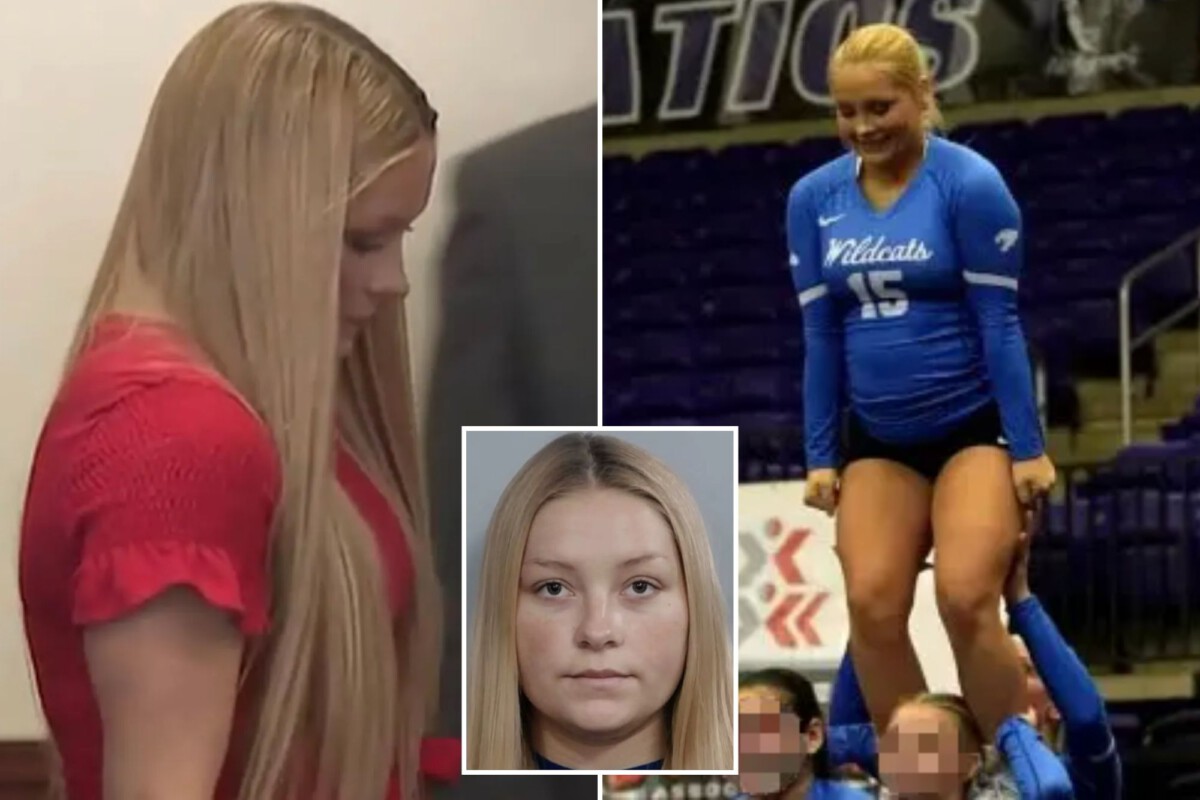
The Discovery That Shook a Campus Neighborhood (Image Credits: Nypost.com)
Lexington, Kentucky – A former University of Kentucky student athlete confronted escalated legal consequences this week when a grand jury indicted her on first-degree manslaughter in connection with her infant son’s death.[1][2]
The Discovery That Shook a Campus Neighborhood
Police responded to a report of an unresponsive infant in the 400 block of Park Avenue on August 27, 2025. Officers discovered the newborn male wrapped in a towel inside a black trash bag tucked away in a closet.[1] The child, later identified as belonging to 21-year-old Laken Snelling, was pronounced dead at the scene.
Snelling, then a senior and member of the university’s STUNT team, a competitive cheerleading squad, admitted to giving birth alone in her off-campus bedroom around 4 a.m. that day. She told investigators the baby fell to the floor, and she did not believe it was breathing. After passing out briefly, she awoke, wrapped the infant, placed it in the bag, cleaned traces of blood from the room, and prepared for class.[2]
Initial Arrest and Lesser Charges
Authorities arrested Snelling days later on charges of abuse of a corpse, tampering with physical evidence, and concealing the birth of an infant. She pleaded not guilty during her first court appearance on September 2, 2025, and waived a preliminary hearing the following month.[3] The case advanced to a grand jury as investigators pursued further evidence.
Snelling withdrew from the University of Kentucky shortly after her arrest and relocated to house arrest at her parents’ home in Tennessee under electronic monitoring. Early autopsy results from the Fayette County Coroner’s Office proved inconclusive, pending deeper analysis.[1]
Autopsy Findings Shift the Case
The Kentucky Medical Examiner’s Office later concluded the infant, referred to as “Infant Snelling,” had been born alive. The cause of death emerged as asphyxia by undetermined means, a determination that prompted prosecutors to seek more serious charges.[2][4] This revelation marked a pivotal turn, elevating the matter beyond concealment to potential criminal negligence or action.
Here is a timeline of key developments:
- August 27, 2025: Birth and discovery of the infant.
- Late August/Early September 2025: Arrest on initial charges.
- September 2025: Initial autopsy inconclusive.
- March 9-10, 2026: Grand jury indictment including manslaughter.
Grand Jury Adds Manslaughter Count
On March 9 or 10, 2026, a Fayette County grand jury formally indicted Snelling on first-degree manslaughter alongside the original three charges. Court records detailed her account to police, underscoring the sequence from birth to concealment.[3]
The escalation reflects ongoing forensic scrutiny, including subpoenas for medical records dating back to August 2024. Snelling remains on home confinement as the case proceeds.[2]
Legal Path Ahead
Prosecutors now prepare for trial, where the undetermined means of asphyxia will likely draw expert testimony. The case highlights challenges in neonate death investigations, balancing maternal statements with medical evidence.
Snelling’s defense may argue the birth’s chaos and her perception of the infant’s viability. Yet the live birth confirmation strengthens the manslaughter claim under Kentucky law.
Key Takeaways
- Autopsy proved the baby lived post-birth, shifting charges to manslaughter.
- Snelling faces four felony counts total after 17 months of investigation.
- She maintains house arrest pending further proceedings.
This indictment closes one chapter but opens questions about accountability in private tragedies. What factors contributed to the infant’s fate, and how will courts weigh them? Share your thoughts in the comments.