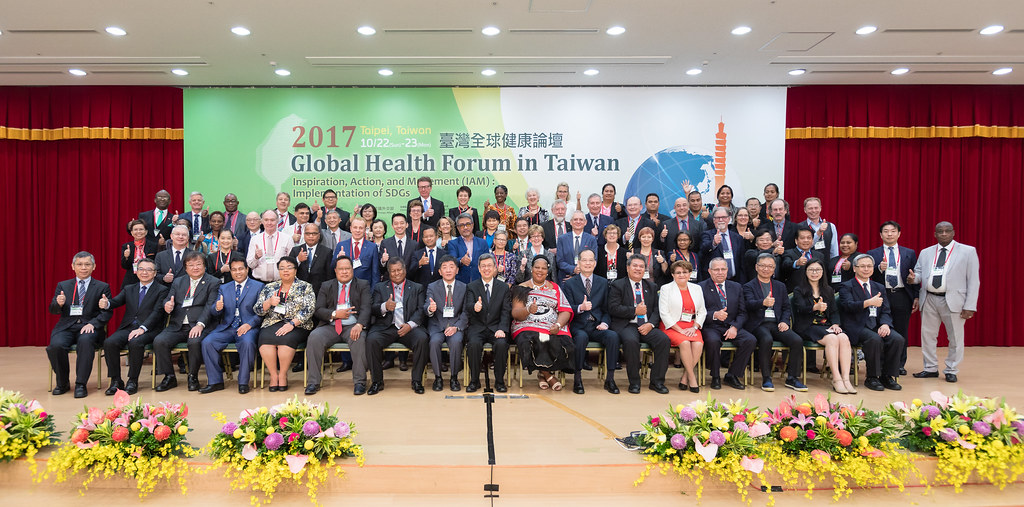
A Lifetime in Global Health Shapes New Mission (Image Credits: Flickr)
Bill Steiger assumed leadership of Malaria No More this month as the Trump administration advances its overhaul of U.S. foreign assistance programs.[1]
A Lifetime in Global Health Shapes New Mission
Godson of President George H.W. Bush, Steiger launched his career during that administration as director of global affairs at the Department of Health and Human Services. He later served as chief of staff at the U.S. Agency for International Development during Trump’s first term. Those experiences positioned him to view recent policy shifts favorably. The changes emphasized sustainability long absent from aid efforts, he noted.[1]
Major U.S. programs previously lacked firm endpoints, relying indefinitely on donor funds without building local capacity. Countries now face pressure to contribute financially and train their own leaders. Steiger described this “journey to self-reliance” as a policy long overdue. Transitions proceed at varying paces, quicker in capable nations and slower in conflict zones.[1]
Embracing the America First Global Health Strategy
Critics warned that reshaping USAID would erode U.S. soft power, yet Steiger sees enduring influence through targeted investments. The strategy links aid to American health security and business opportunities. Programs persist, though leaner and more efficient, he explained. “The levels might not be the same as in the past,” Steiger said, “but America isn’t walking away.”[1]
This approach promises lives saved alongside national benefits. Steiger praised the focus on deals that advance U.S. interests without abandoning global needs. His endorsement highlights rare bipartisan continuity in health policy. The non-profit role allows him to advocate for science-driven solutions amid these changes.
Innovations Poised to Transform the Fight
Malaria claimed 610,000 lives in 2024, but Steiger remains upbeat about emerging tools. Resistance to traditional insecticides and drugs demands fresh tactics. Rapid diagnostic tests now distinguish malaria from other fevers with pandemic risk. Gene drive technology genetically alters mosquitoes to halt transmission; trials occur in Africa.[1]
The spatial emanator Guardian, developed by SC Johnson, stands out for vector control. This compact device hangs in homes or tents, releasing repellents without power for up to a year. It slashes protection costs to about 18 cents per person, far below bulky bed nets. Steiger called it “incredibly exciting” for reaching more families affordably.[1]
- Rapid diagnostics for precise fever identification
- Gene drive mosquitoes to block disease spread
- Spatial emanators for low-cost, easy home protection
- Cost efficiencies to expand coverage dramatically
Balancing Optimism with Urgent Calls to Action
Every U.S. dollar spent on African malaria control yields $5.80 in economic growth, outperforming many market investments. Steiger stressed this dual payoff: moral imperative meets financial sense. Yet complacency lingers, with some viewing malaria as an eternal foe. Convincing stakeholders of victory within lifetimes requires bold leaps, he said.
“I remain fundamentally optimistic, but sometimes I worry that we’re not moving fast enough,” Steiger remarked. Malaria No More translates complex science for policymakers, amplifying these tools’ potential. His pivot from government to advocacy signals confidence in the path ahead.
Key Takeaways
- U.S. aid reforms prioritize self-reliance, sustaining effective programs.
- New technologies like gene drives and emanators promise cost cuts and breakthroughs.
- Malaria investments deliver strong economic returns for America.
The convergence of policy rigor and technological leaps offers real hope against malaria. Steiger’s vision underscores how strategic U.S. engagement can yield global triumphs. What steps should accelerate this fight? Share your thoughts in the comments.