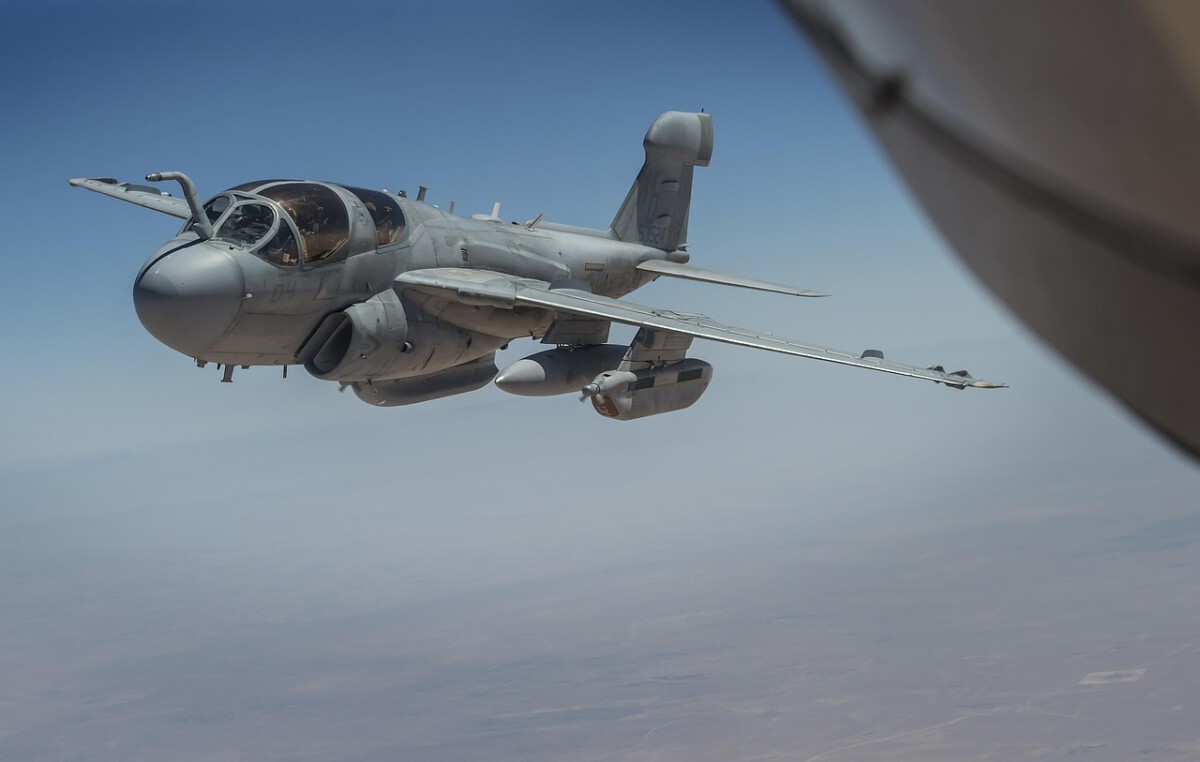
A Low-Flying Giant Captivates Onlookers (Image Credits: Pixabay)
Fresno Yosemite International Airport served as the backdrop for an unusual visitor on Sunday, March 8, when a U.S. Navy Boeing E-6B Mercury aircraft executed repeated low-altitude maneuvers overhead.[1]
A Low-Flying Giant Captivates Onlookers
Residents across the Central Valley craned their necks skyward as the massive, unmarked gray plane circled the area for nearly two hours. Observers noted its distinctive Navy insignia – a white five-pointed star in a blue circle with red-and-white bars – amid the otherwise bare fuselage. The aircraft performed mock landings and approaches at the airport, flying lower than typical commercial traffic.[1]
Fresno Yosemite International Airport representatives confirmed the activity to local media, describing it as scheduled approaches. Social media buzzed with photos and videos, with some locals calling the sight unnerving. Flight tracking data corroborated the extended pattern work near the airport’s runways.[2]
The E-6B Mercury: A Veteran of the Skies
Modified from the commercial Boeing 707 airliner, the E-6B Mercury stretches 150 feet long with a 148-foot wingspan and stands 42 feet high. It accommodates up to 22 crew members during deployments that often last three weeks. The Navy operates these planes from Tinker Air Force Base in Oklahoma, with forward bases including Travis Air Force Base in California.[1][2]
Two squadrons maintain the fleet: the “Ironmen” of Fleet Air Reconnaissance Squadron 3 and the “Shadows” of VQ-4. These aircraft trace their service back to the late 1990s, evolving from earlier E-6A models to handle advanced missions.[1]
- Length: 150 feet
- Wingspan: 148 feet
- Height: 42 feet
- Crew capacity: 22 members
- Primary bases: Tinker AFB (Oklahoma), Travis AFB (California)
Routine Drills Despite Global Backdrop
Retired Air Force Major General Clay Garrison, chairman of the Castle Air Museum, clarified the purpose behind the flyover. He described the exercises as standard practice for aircrews to maintain proficiency. Airport officials echoed this, emphasizing no cause for alarm.[1][3]
The timing coincided with reports of escalating tensions in the U.S.-Iran conflict, which marked its 11th day around the sighting. Still, military experts dismissed direct links, pointing to the plane’s regular training rotations at civilian airports like Fresno Yosemite. Such visits ensure crews stay sharp without disrupting operations.[2][3]
Command in the Clouds: Nuclear Relay Role
The E-6B fulfills dual missions as a Take Charge and Move Out (TACAMO) communications relay and an airborne strategic command post, known as Looking Glass. It links national leaders to the nuclear triad – bombers, land-based missiles, and ballistic missile submarines – even if ground centers fail.[1]
Garrison explained: “They can control the bombers, if the bombers are on alert, they can control the missiles, because the missiles are always on alert, and obviously they can control our ballistic missile submarines. It’s all combined into one.”[1] The design resists electromagnetic pulses from nuclear blasts, ensuring reliable very-low-frequency signals to submerged submarines.
Key Takeaways
- The E-6B Mercury conducted routine mock landings at Fresno Yosemite International Airport on March 8.
- Experts confirm training exercises, unrelated to current conflicts.
- This airborne platform safeguards U.S. nuclear command continuity.
The Fresno flyover offered a rare public glimpse into the Navy’s quiet guardians of deterrence. While it fueled brief speculation, assurances of normalcy prevailed. What caught your eye in the skies that day? Share your thoughts in the comments.