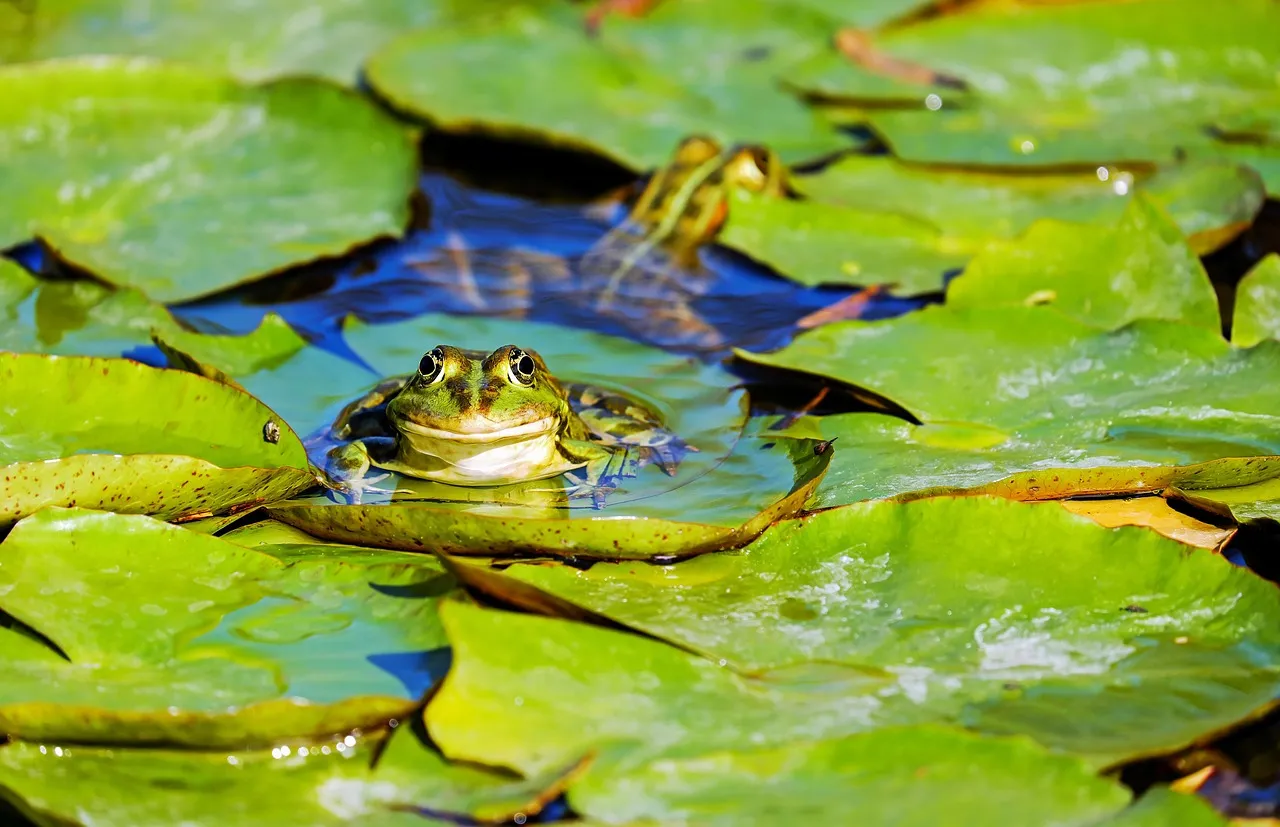
Frogs Seek Refuge in Unexpected Warmth (Image Credits: Pixabay)
Near Canberra, Australia – Researchers have introduced low-cost “frog saunas” and saline ponds in local parks to combat a fungus that decimated the green and golden bell frog population.
Frogs Seek Refuge in Unexpected Warmth
Conservationists observed green and golden bell frogs basking in brick holes during earlier studies, drawn to the warmth that shielded them from a lethal pathogen. This behavior sparked an idea: engineered hot spots could serve as safe havens. Simon Clulow, a professor at the University of Canberra, pursued the concept after noting the chytrid fungus thrives in cooler conditions. The species, once abundant across eastern Australia, vanished from the region in the 1980s amid widespread amphibian declines.
Teams refined the design through trials, starting with dark-painted bricks before enclosing them in plastic pyramids that trap sunlight. These structures reach temperatures lethal to the fungus while appealing to the frogs’ love of heat. Early lab tests confirmed short heat exposures clear infections effectively.
Heat and Salinity as Dual Defenses
The saunas pair with small “spas” – ponds laced with mild salinity levels that also inhibit chytrid without harming the frogs. Surviving wild populations clustered in naturally warmer, slightly brackish sites, informing this combined approach. Salinity stays low, around two to three parts per thousand, far below seawater levels.
Clulow emphasized the method’s simplicity. “The technology we’re using is extremely low tech,” he noted. “That’s good because everything we do in science and conservation, ideally, we want to be accessible, affordable, and scalable.” Such interventions mimic natural refuges while amplifying protection.
Mass Release Tests Real-World Viability
The largest trial to date spans 15 engineered wetlands across Australia’s Capital Territory, covering hundreds of square miles. Scientists released about 450 frogs this year, starting with a captive-bred, vaccinated cohort. Control sites without saunas or spas allow direct comparisons of survival rates.
Tracking via microchips and distinctive calls – resembling revving motorbikes – shows early promise. One month post-release, the population grew steadily despite overnight monitoring marathons. The setup demands minimal maintenance, relying on sunlight and basic materials.
Winter Trials and Broader Implications
Cold snaps pose the next hurdle, with temperatures potentially dropping to 23 degrees Fahrenheit. Saunas maintain internal warmth up to 86 degrees, offering critical shelter. Success here could validate the strategy for wild-born offspring lacking vaccines.
Chytrid has extinguished at least 90 frog species globally and threatens hundreds more. Replicable at low cost, these interventions hold potential for worldwide use. Natural history underscores urgency: the bell frog once filled farms and ponds unnoticed until the fungus struck.
Key Takeaways
- Saunas use sun-heated bricks in plastic enclosures to kill chytrid fungus.
- Saline spas provide secondary protection via low-salt water.
- Early field results show thriving populations one month after release.
This experiment demonstrates how modest designs can counter ecological threats, potentially restoring balance to fragile ecosystems. What innovative conservation efforts have you encountered? Share in the comments.