

A Childhood Blind Spot (Image Credits: Unsplash)
Los Angeles – Driving down Melrose Avenue, the low-slung structure caught my eye again, its blank facade staring back like a forgotten sketch under the hazy afternoon light.
A Childhood Blind Spot
Imagine growing up in a neighborhood where architectural wonders hide in plain sight. That’s my story with the building at Melrose and Sycamore. As a kid, I zipped past it on my bike, dismissing its odd, windowless form as just another urban oddity. Little did I know, it held the signature twists of one of the world’s most innovative minds.
Frank Gehry, the visionary behind Bilbao’s Guggenheim and LA’s Disney Hall, poured his early creativity into this spot. Built in the late 1970s, it was one of his first bold statements in the city he called home. Yet, for decades, it blended into the backdrop of strip malls and palm trees, unnoticed by locals like me.
Reflecting now, especially after Gehry’s recent passing, I see how his deconstructed style challenged what we expect from buildings. It wasn’t about flash; it was about rethinking space in a sprawling city like ours.
The Building’s Quirky Charm
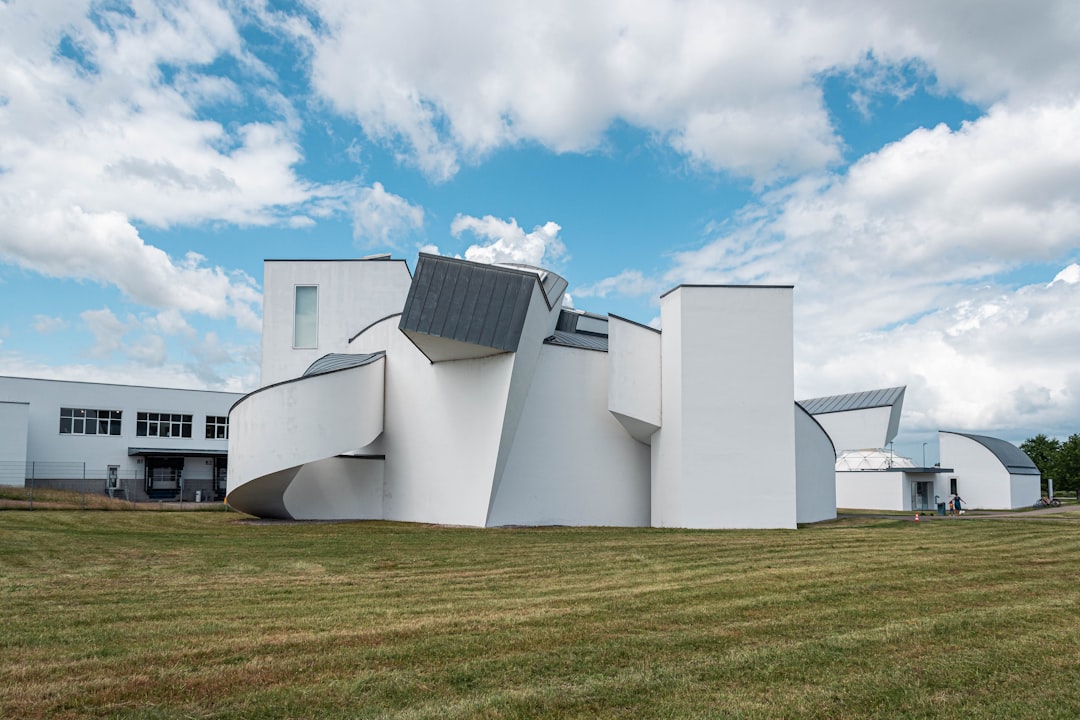
What makes this structure stand out? Its facade, a mix of raw concrete and metal sheeting, defies the glassy high-rises popping up everywhere. Gehry designed it as a furniture showroom for the Norton family, turning a simple commercial space into a playful experiment. No windows meant no distractions, just pure form playing with light and shadow.
Over the years, it housed various tenants, from galleries to offices, each adding layers to its story. But its core remained Gehry’s: asymmetrical angles that echo his later masterpieces. Walking by today, you can almost feel the architect’s hand in every curve, a quiet rebellion against boring boxes.
Why We Overlook Hidden Treasures
In a city obsessed with the new and shiny, older designs often fade into irrelevance. This Gehry piece suffered that fate, overshadowed by his flashier projects downtown. I wasn’t alone in my ignorance; even architecture buffs sometimes miss it amid LA’s chaos.
Part of the issue is familiarity. When something’s always there, we stop seeing it. Yet, with Gehry’s influence shaping modern skylines, revisiting these early works reveals his evolution. From this modest start, he built an empire of imagination.
Current tributes following his death highlight how his LA roots fueled global icons. This building, though small, whispers those beginnings.
Gehry’s Lasting Echo in LA
Frank Gehry didn’t just build structures; he reshaped how we experience cities. His Santa Monica home, a corrugated metal maze, set the tone for experiments like this one. In Los Angeles, where he lived and worked for decades, his touch lingers in unexpected places.
This Melrose spot exemplifies his early playfulness, before the titanium sails of Bilbao. It’s a reminder that masterpieces aren’t always grand; sometimes they’re tucked into everyday streets. As the city mourns his loss at 96, we appreciate these subtle imprints more.
Lessons from a Misjudged Masterpiece
Rediscovering this building taught me to look closer at my surroundings. Gehry’s work proves that beauty hides in the unconventional, urging us to question the ordinary. In LA’s ever-changing landscape, such gems preserve a creative history worth celebrating.
Today, with renewed interest post his passing, more eyes turn to these sites. It sparks curiosity about what else we’ve overlooked in our own backyards.
Key Takeaways
- Gehry’s early LA works, like the Melrose building, laid the groundwork for his iconic style.
- Familiarity can blind us to architectural innovation right next door.
- His legacy encourages a fresh look at urban spaces, blending the everyday with the extraordinary.
In the end, what seemed like junk turned out to be a spark of genius, much like Gehry’s career. It reminds us that true impact often starts small and unassuming. What overlooked spot in your city might hold a similar surprise? Share your thoughts in the comments.