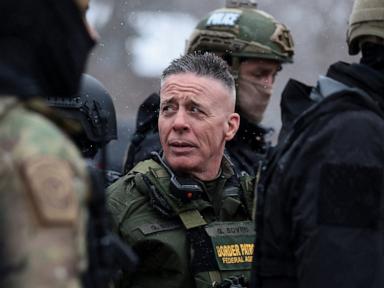
End of a High-Profile Tenure Draws Scrutiny (Image Credits: S.abcnews.com)
El Centro, California – Veteran Border Patrol commander Greg Bovino is set to resume his role as chief of the El Centro sector after serving in a high-profile national position.[1][2]
End of a High-Profile Tenure Draws Scrutiny
Greg Bovino’s departure from his role as commander-at-large marks the close of a contentious chapter in federal immigration operations. He oversaw aggressive enforcement efforts across several Democratic-led cities, often clashing with local officials and protesters. The move comes shortly after fatal shootings involving federal agents in Minneapolis heightened national tensions.[1]
Bovino, who joined the Border Patrol in 1996, rose through the ranks to lead sectors in Yuma, New Orleans, and El Centro before his recent national assignment. Sources indicated the commander-at-large position was always temporary, positioning him to return to California duties. Department of Homeland Security officials pushed back against reports of a demotion, with assistant secretary Tricia McLaughlin stating Bovino “has NOT been relieved of his duties” and remains a “key part of the President’s team.”[1][3]
From Local Chief to National Enforcer
Bovino’s career trajectory accelerated under the Trump administration. He directed operations like Operation Midway Blitz in Chicago, where federal agents conducted raids amid protests. Federal judges criticized his tactics, including the use of tear gas in violation of court orders and instances where he admitted to misleading testimony under oath.[4]
His public persona grew through social media posts and press conferences, where he defended agents and mocked critics. Bovino traveled with a film crew, posting images from sites like Chicago’s Bean sculpture. Operations extended to Los Angeles, Charlotte, and New Orleans, establishing him as the visible face of militarized immigration enforcement.
- Chicago: Led mass raids with helicopter support.
- Los Angeles: Oversaw June 2025 protests-sparking operation.
- Minneapolis: Managed ICE efforts amid local resistance.
- New Orleans: Continued enforcement push in December 2025.
Minneapolis Incidents Spark Leadership Shift
Tensions peaked in Minneapolis with two fatal encounters involving federal agents. On January 7, ICE agents shot Renee Nicole Good during an immigration raid. Days ago, Border Patrol agents killed Alex Pretti, an intensive-care nurse, prompting widespread outrage.[1][2]
Bovino addressed the Pretti shooting at a press conference, describing it as a “massacre” attempt by Pretti against agents. He claimed Pretti approached with a 9mm handgun and resisted violently. Video evidence, however, showed agents disarming Pretti before shooting him while he held a cell phone. Local officials noted Pretti carried a valid concealed permit. President Trump responded by announcing Border Czar Tom Homan’s deployment to the city, signaling a command change.[1]
What Lies Ahead for Bovino and Enforcement
Back in El Centro, Bovino will oversee the critical U.S.-Mexico border sector where he previously served as chief. Reports suggested he planned retirement soon after reaching mandatory age limits. The White House disputed ouster claims, while Trump indicated discussions with Minnesota Governor Tim Walz and Minneapolis Mayor Jacob Frey yielded progress.[2]
This transition reflects evolving strategies in the administration’s deportation campaign. Homan’s direct involvement bypasses traditional chains, emphasizing high-level oversight. Veteran officials expressed unease over Bovino’s political engagements outside standard protocols.
Key Takeaways
- Bovino’s return ends his commander-at-large role amid Minneapolis fallout.
- DHS denies any relief from duties, affirming his ongoing value.
- Tom Homan steps in for Minnesota operations.
The reshuffling underscores the challenges of balancing aggressive enforcement with public and legal pushback. As Bovino returns to familiar ground, federal immigration efforts face renewed scrutiny. What impact will this have on border security priorities? Share your thoughts in the comments.