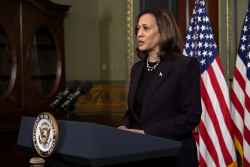
Vance Secures Dominant Grip on GOP Field (Image Credits: Assets.realclear.com)
National surveys released in recent weeks placed former Vice President Kamala Harris atop Democratic preferences and Vice President JD Vance far ahead among Republicans for the 2028 presidential nomination.[1][2]
Vance Secures Dominant Grip on GOP Field
Vice President JD Vance drew overwhelming support from Republicans, topping 50 percent in key polls and signaling strong early momentum.[2]
A Harvard CAPS/Harris Poll conducted January 28-29 among 2,000 registered voters showed Vance at 53 percent, well ahead of Donald Trump Jr. with 21 percent and Marco Rubio at 17 percent.[2] Tucker Carlson registered 5 percent, while 3 percent named someone else.
The RealClearPolling aggregate of recent surveys reinforced Vance’s position, giving him 44.6 percent on average against fragmented opposition.[3] An I&I/TIPP poll from January 27-29 placed him at 43 percent, with Trump Jr. second at 18 percent.[3]
Other recent measures, including those from Big Data Poll and Echelon Insights, consistently showed Vance leading by margins exceeding 25 points.
Harris Reemerges as Democratic Frontrunner
Former Vice President Kamala Harris reclaimed a clear advantage among Democrats despite her 2024 defeat, leading the field in the Harvard CAPS/Harris survey with 39 percent support.[2]
California Governor Gavin Newsom followed at 30 percent, with U.S. Rep. Alexandria Ocasio-Cortez at 12 percent, Pennsylvania Governor Josh Shapiro at 9 percent, and Illinois Governor JB Pritzker at 7 percent.[2] Four percent selected another candidate.
The I&I/TIPP poll similarly highlighted Harris’s edge on the Democratic side, though specific breakdowns emphasized her position over challengers.[1]
These results suggested persistent name recognition and party loyalty propelled Harris forward in the early going.
High Undecided Shares Underscore Uncertainty
Double-digit undecided responses in several polls indicated voters remained open to alternatives more than two years before primaries begin.[1]
Field sizes varied, with Republicans showing tighter consolidation around Vance compared to the more divided Democrats.
- Republican undecided/not sure: Often under 10 percent in recent surveys.
- Democratic field: Spread across five main contenders, leaving room for shifts.
- Sample sizes: Typically 2,000 registered voters, margins of error around 2 percent.
- Poll dates: Concentrated in late January 2026.
Polling Trends and Potential Matchups
RealClearPolling’s aggregation captured data from nine polls since early January, confirming Vance’s lead extended across pollsters like YouGov and Morning Consult.[3]
Hypothetical general election tests, such as a Zogby Analytics survey, showed Harris edging Vance 48.5 percent to 42.1 percent.[4] Vance, however, led Gavin Newsom 44.6 percent to 41 percent in that matchup.
| Pollster | Vance (GOP %) | Top Rival |
|---|---|---|
| Harvard CAPS/Harris | 53 | Trump Jr. (21) |
| I&I/TIPP | 43 | Trump Jr. (18) |
| RCP Average | 44.6 | Trump Jr. (15.5) |
Key Takeaways:
- Harris holds 39 percent among Democrats, double Newsom’s share in recent polling.
- Vance exceeds 40 percent in every major GOP survey, averaging a 29-point lead.
- Undecided voters exceed 10 percent, signaling volatility ahead.
These early indicators reflected current favorability and party dynamics, yet substantial time remained for challengers to gain ground. Political observers noted Vance’s inheritance of Trump-era support as a key factor. What do you see as the path forward for 2028? Tell us in the comments.