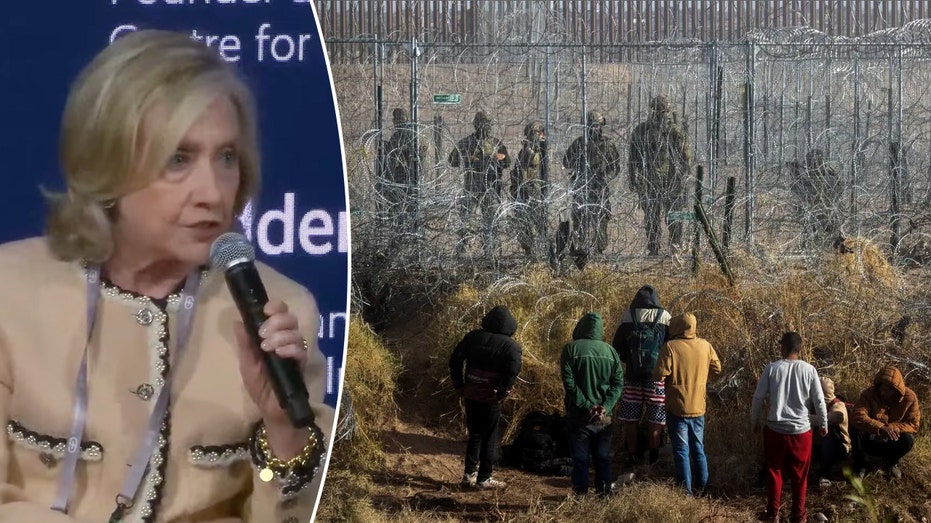
Unexpected candor on a divisive issue (Image Credits: A57.foxnews.com)
Munich, Germany – Former U.S. presidential candidate Hillary Clinton asserted at the Munich Security Conference that migration has surpassed acceptable limits and must undergo humane adjustments supported by robust border measures.[1]
Unexpected candor on a divisive issue
Clinton delivered her remarks during a panel discussion titled “The West-West Divide: What Remains of Common Values.”[1] She opened by recognizing the validity of ongoing debates surrounding migration flows. “There is a legitimate reason to have a debate about things like migration,” she stated plainly.[1]
Her comments marked a notable pivot, as she described the scale of recent movements as excessive. The former secretary of state highlighted the consequences for societies worldwide. Participants and observers noted the shift toward emphasizing control alongside compassion. This stance emerged amid broader conversations on transatlantic values and security challenges.
Evolution from past positions
Clinton’s current views contrast with her earlier advocacy during the 2016 campaign. She once opposed expansive border wall construction while conceding that physical barriers suited certain locations.[1] Supporters of President Barack Obama’s policies found backing in her platform, which deferred enforcement for millions of undocumented parents and children.
Family detention drew her criticism, prompting calls to terminate the practice. Deportations targeted violent offenders under her proposed approach, yet she sought to reduce raids that sowed fear in communities. In 2018, she condemned family separations under the Trump administration as a “disgrace.”[1] Immigrants bolstered the U.S. economy, she argued then, through workforce replenishment and larger families.
Core elements of her proposed fixes
Clinton outlined a balanced path forward in her Munich address. “It went too far, it’s been disruptive and destabilizing, and it needs to be fixed in a humane way with secure borders that don’t torture and kill people,” she explained.[1] Strong family structures formed the foundation of civilization, she added, linking migration policy to deeper societal stability.
Secure borders stood central to her vision, designed to prevent harm while addressing root disruptions. The approach prioritized humanity without compromising safety. Panel discussions amplified these ideas within a European context, where migration strains persist. Her words resonated as a call for pragmatic Western unity.
- Migration levels exceeded sustainable bounds, causing disruption.
- Secure borders must prevent deaths and torture.
- Humane reforms preserve family units as civilization’s base.
- Debate on the issue remains essential and legitimate.
Implications for transatlantic policy
The Munich forum provided a platform for reevaluating shared values amid global pressures. Clinton’s intervention underscored migration’s role in the West-West divide. European leaders have grappled with similar influxes, prompting varied responses from integration efforts to stricter controls.
U.S. experiences informed her perspective, blending economic benefits with security needs. Observers viewed her statements as reflective of evolving Democratic priorities. The conference highlighted ongoing tensions between openness and order. Future policies may draw from such candid exchanges.
Key Takeaways
- Clinton acknowledges migration’s destabilizing excess.[1]
- Secure borders enable humane management.
- Past leniency contrasts with current calls for fixes.
Clinton’s Munich appearance signals a potential consensus on balancing compassion with control in immigration debates. As nations navigate these challenges, her emphasis on secure, humane solutions offers a framework for dialogue. What do you think about her evolving stance? Tell us in the comments.