
The question hanging in the air for millions of Americans over forty isn’t whether AI will transform their workplace. It already has. What keeps experienced professionals up at night is whether they’ll adapt fast enough, whether their decades of expertise still matter, and whether companies will invest in them or simply hire younger workers who grew up with technology. Let’s be real, the conversation around AI and jobs tends to focus on fresh graduates and early-career disruption. Yet the stakes might actually be higher for mid-career and older workers who have mortgages, families, and fewer years to pivot. So what’s really happening out there?
AI Is Already at Work, But Not Everywhere

By September 2025, roughly one in five U.S. workers reported that at least some of their work involved AI. That’s significant, though it also means the vast majority still operate without it daily. Nearly half of workers across all sectors said they used AI tools at least once a month to help with their work by spring 2025, up from about one third the previous year.
The speed of adoption varies wildly. Between late 2022 and July 2025, entry-level employment in software engineering and customer service declined by roughly twenty percent, while employment for older workers in the same jobs grew. Here’s the thing: older workers aren’t losing ground in every sector touched by AI. In fact, they’re holding their own or even gaining in certain roles, particularly where experience and soft skills matter. The challenge is that AI is quietly reshaping what employers value, and not everyone has gotten the memo.
Job Churn Is Coming, Even if Net Numbers Hold

Global projections paint a picture of massive upheaval even when the final tally of jobs looks okay. The World Economic Forum predicts that by 2025, eighty-five million jobs may be displaced by AI and automation, but ninety-seven million new roles may emerge. That’s a net positive, sure. Yet for someone in their fifties, being told “new jobs will appear” doesn’t answer the pressing question: will I be qualified for them, and will anyone hire me?
By 2030, fourteen percent of employees globally will have been forced to change careers because of AI, and twenty million U.S. workers are expected to retrain in new careers or AI use in the next three years. The problem isn’t just whether jobs exist. It’s whether the transition pathways are realistic for workers who’ve spent two decades mastering one domain. Will companies invest the time and money to retrain a forty-eight-year-old accountant into a data analyst role, or will they just hire a twenty-five-year-old who already knows Python?
Older Workers Face Higher Risk Without Support

The IMF identifies older workers as at risk of being less able to adapt to AI technology. That’s a polite way of saying that without deliberate support, this demographic could get left behind. Older employees are often confronted with significant hurdles in keeping pace with AI changes, as the threat of job displacement looms large with automation encroaching upon routine tasks previously performed by humans.
It’s hard to say for sure, but age bias probably plays a role too. The rate of job seekers commenting about ageism during recruitment on Glassdoor in the first quarter of 2025 jumped one hundred thirty-three percent over the previous year’s figure. Some of that surge likely reflects AI-driven hiring tools that inadvertently screen out older candidates. The irony is bitter: the very technology supposed to reduce human bias may be amplifying it in new, hidden ways.
The Reskilling Challenge Is Real and Complicated

Everyone talks about reskilling as the silver bullet. Learn to code, take an online course, adapt and survive. In practice, it’s far messier. Research suggests that older learners can do as well as younger ones in self-directed learning contexts, but they often need to spend more time and effort to learn new skills. Time and effort that workers juggling full-time jobs, caregiving responsibilities, and financial pressures may not easily spare.
Older people, a group very likely to be overrepresented in jobs at risk of automation, may not be interested in retraining, particularly for those closer to retirement. That’s not stubbornness. It’s a rational calculation. Why invest two years learning a new skill if you plan to retire in five? Reskilling program organizers frequently cite issues anticipating future labor market demands; very often, workers appear to retrain from one automation-susceptible occupation to another. Imagine spending months learning a skill only to discover AI has already automated it. Frustrating doesn’t begin to cover it.
The U.S. also lags in funding these efforts. Workforce development in the U.S. is chronically underfunded compared to peer nations. So workers who want to reskill often shoulder the cost themselves, adding financial strain to an already stressful transition.
AI Hiring Tools Might Be Screening You Out

Let me bring up one of the more unsettling trends: algorithmic bias in recruitment. AI models are trained on historical hiring data, which often reflects existing biases; if past hiring patterns favored younger candidates, the AI will replicate that trend, and algorithms may use seemingly neutral factors such as graduation year or length of experience to infer an applicant’s age and penalize them accordingly.
In 2022, the EEOC settled a lawsuit with iTutorGroup for using AI software that automatically rejected older applicants; women over fifty-five and men over sixty were particularly affected by this age bias, and the case resulted in a three hundred sixty-five thousand dollar settlement. That’s a wake-up call. Research found that ChatGPT generates resumes for women presenting them as less experienced and younger, while older men receive higher ratings even when based on the same initial information, suggesting that AI-based tools employers may use to review resumes may give older men an advantage while putting older women and younger job seekers at a disadvantage.
The legal framework exists to fight this. The Age Discrimination in Employment Act protects workers forty and older. Yet proving discrimination when an algorithm quietly filters you out before a human ever sees your resume? That’s a whole different challenge. Many job seekers don’t even realize they’ve been screened out by a machine.
Experience and Soft Skills Remain Your Edge
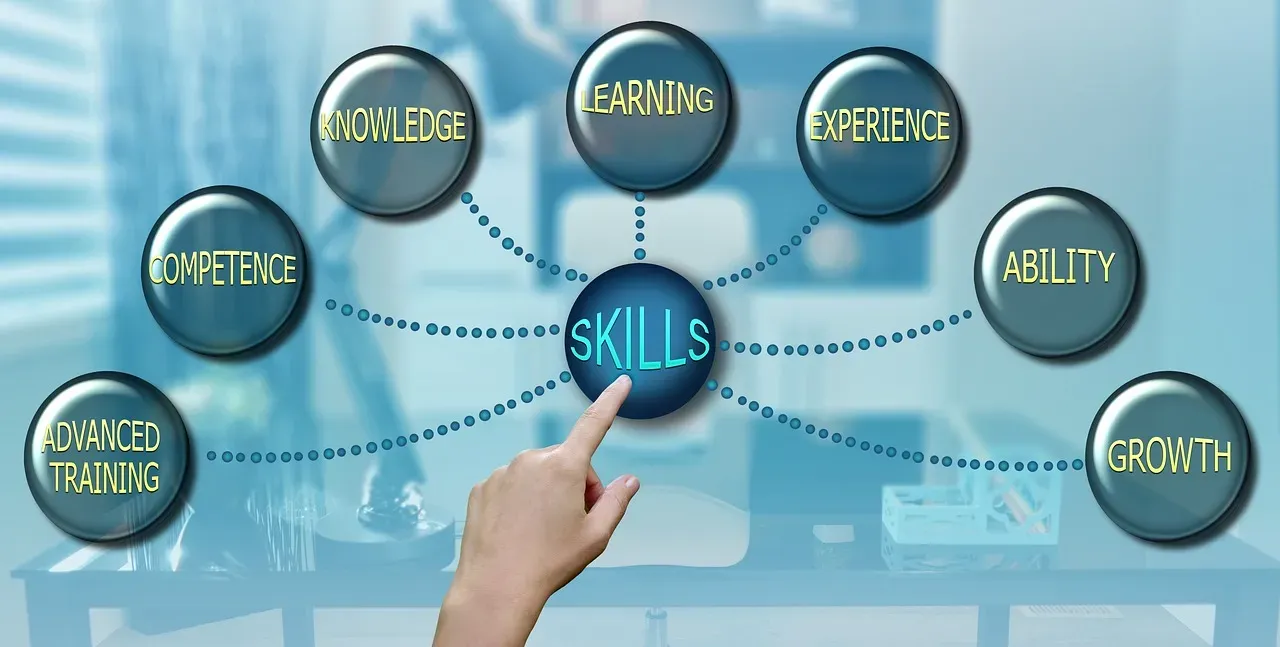
There’s a reason older workers are holding their ground in certain roles. Older employees, who generally have navigated the workplace for a longer period, are more likely to have picked up the kinds of communication and other soft skills that are harder to teach and that employers may be reluctant to replace with AI. AI can draft an email or schedule a meeting. It cannot read a room, negotiate a tense client relationship, or mentor a struggling team member.
With the right training and support, mid-career and older workers can fully harness the power of AI, bringing a level of strategic thinking and contextual understanding that can significantly enhance AI deployment for any organization. Organizations that recognize this are redesigning workflows to leverage the strengths of experienced employees. The trick is pairing decades of judgment with new tools, not trying to turn a fifty-year-old manager into a twenty-something coder.
Which Roles Are Most Exposed?

Installation, repair, and maintenance jobs are at lower risk from AI and remain in demand, and construction and skilled trades are among the least threatened by AI automation. Jobs safest from AI and automation require human qualities a robot cannot replicate, such as social skills, emotional intelligence, and interpersonal relationships; the most common jobs with low automation risk are in the medical field, as they are complex and require flexibility since medical situations can be unpredictable.
On the flip side, Software engineering and customer service are two fields where AI already appears to be supplanting a significant number of young workers, with entry-level employment in those areas declining roughly twenty percent between late 2022 and July 2025. Administrative and clerical roles also face high exposure. If your job involves repetitive data entry, routine scheduling, or straightforward analysis, AI can likely do it faster and cheaper. That’s the uncomfortable truth.
Healthcare, education, skilled trades, and roles requiring high-touch human interaction remain relatively insulated. For workers over forty in vulnerable fields, the message is clear: either upskill into a complementary area or pivot toward roles where human judgment and connection are irreplaceable.
Productivity Gains Are Real, But Who Benefits?

Here’s something encouraging: AI genuinely boosts productivity for those who use it. Workers who used generative AI reported saving an average of roughly five percent of work hours in late 2024; for someone working forty hours per week, that’s over two hours saved, and overall this suggests about a one percent increase in productivity for the entire workforce. AI-skilled workers saw an average fifty-six percent wage premium in 2024, double the twenty-five percent in the previous year.
Recent experiments show that less-experienced or lower-skilled individuals tend to see the largest productivity gains when using generative AI tools; by providing cost-effective and instant access to relevant information, generative AI facilitates on-the-job learning and helps lower-skilled workers bridge the gap with their more skilled peers. That’s great for entry-level workers. Yet experienced professionals also benefit when they learn to integrate AI effectively. The key is treating AI as a tool that amplifies your existing expertise, not as a replacement.
The catch? Firms’ adoption lags far behind worker adoption, suggesting much worker use remains informal, and these potential productivity gains may not immediately appear in official productivity statistics. If your employer doesn’t recognize the time you’re saving, those gains might not translate into promotions or raises. Worse, if you’re using AI tools your company hasn’t approved, you might face policy violations rather than praise.
Age Bias in the Age of Algorithms
It’s worth circling back to discrimination because this is a defining issue. AARP reports that seventy-eight percent of older workers either saw or experienced age discrimination in the workplace during the COVID-19 pandemic; those same workers expressed interest in learning new skills yet were largely denied opportunities or felt they experienced more roadblocks than younger counterparts.
The EEOC settled a lawsuit with iTutorGroup for employing AI software that discriminated against older applicants, and such incidents underscore the need for inclusive practices in AI deployment. Age discrimination is frequently normalized or even justified in technology development under the guise of user targeting or performance optimization. Until companies audit their AI hiring systems for age bias, older workers will continue facing invisible barriers.
Some employers are starting to get it. Employers must provide tailored training programs that equip older workers with the skills needed to thrive in an AI-powered workplace; mentorship and reverse mentorship programs, where younger employees mentor older colleagues, can be very beneficial. But we’re still in the early stages. Most organizations haven’t implemented formal age-proofing strategies for their AI systems.
What This Means for Your Career Right Now
So where does all this leave the forty-plus worker trying to plan the next decade of their career? First, don’t panic. AI is not an instant job destroyer. The broader labor market has not experienced a discernible disruption since ChatGPT’s release over two years ago, undercutting fears that AI automation is currently eroding demand for cognitive labor across the economy. Jobs are changing more than disappearing.
Second, get hands-on with AI tools relevant to your field. You don’t need to become a data scientist. You need to understand how AI can make your work better. About one in five workers feel pressured by their employers to use AI, and about three in ten worry they’re going to fall behind if they don’t. That pressure reflects reality. Workers who integrate AI into their workflow are becoming more valuable. Those who resist may find themselves sidelined.
Third, lean into what makes you irreplaceable. Even the most advanced AI systems can support diagnostics and automate routine tasks, but they cannot fully replicate the judgment, adaptability, or communication required in roles involving interpreting non-verbal cues, responding to unpredictable scenarios, and making complex decisions that weigh medical, ethical, and situational factors. Your decades of experience navigating office politics, managing difficult clients, and making nuanced judgment calls? That’s your moat. Protect it by continuing to hone those skills while adding AI literacy on top.
Fourth, advocate for training and support from your employer. Companies are experimenting with reskilling programs, but many employees aren’t aware these exist. Thirty-seven percent of employers say their company provides reskilling programs, but only twenty-eight percent of employees confirm this; forty-four percent of employers report offering upskilling programs, while only thirty-three percent of employees agree. If your company offers training, take it. If they don’t, ask why not. The squeaky wheel gets the grease, and businesses that care about retention will respond.
Did you expect this kind of nuanced reality? The story of AI and the forty-plus workforce isn’t one of inevitable obsolescence or effortless adaptation. It’s messier, more contingent, and ultimately more human than the headlines suggest. Your next move matters, so make it count.