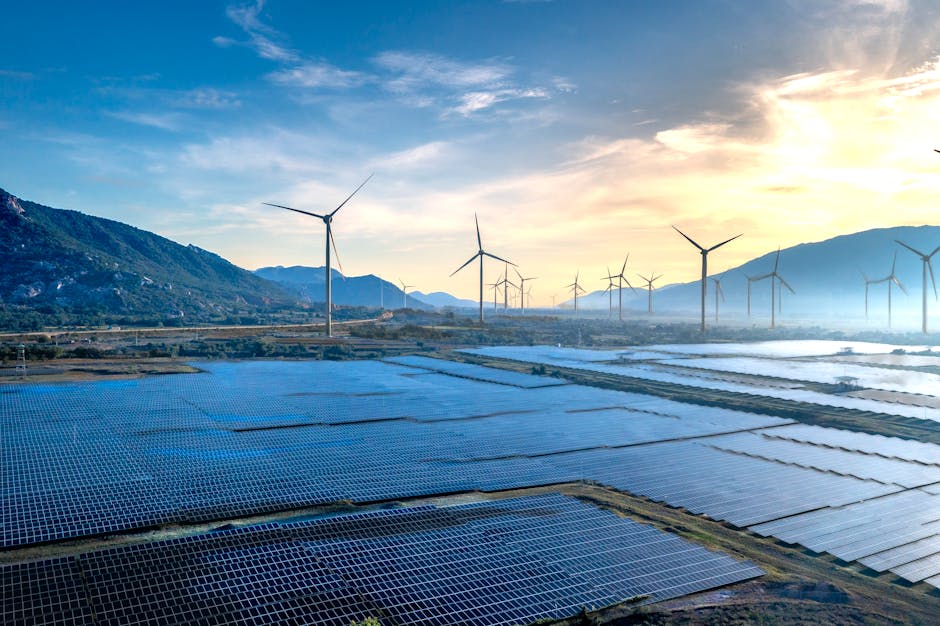
America’s Existing Renewable Foundation (Image Credits: Pexels)
United States – Questions about replacing fossil fuels with renewables frequently center on scale and space. The nation currently relies on an average continuous electricity demand of 470 gigawatts, with peak periods requiring even more capacity. Installing roughly 1,200 gigawatts of wind or solar nameplate capacity could cover that need, accounting for weather variability and downtime. This calculation sparks curiosity about the actual land footprint such a shift would demand.
America’s Existing Renewable Foundation
The country already generates substantial power from clean sources. Renewables, including wind, solar, hydro, geothermal, and tidal, produce 220 gigawatts today. Wind leads with 160 gigawatts of installed capacity, while solar contributes 130 gigawatts.
These figures represent nameplate capacity, not constant output. Capacity factors – the ratio of actual energy produced to maximum possible – play a crucial role. Modern wind turbines achieve up to 40% efficiency, and top solar panels reach 25%. This existing base demonstrates that scaling up remains within reach, though expansion introduces new considerations.
Breaking Down the Land Math
Wind farms average 23 megawatts per square mile, reflecting spacing needs to minimize turbulence – turbines typically stand 5 to 10 rotor diameters apart. Scaling to 1,200 gigawatts would require about 21,000 square miles for wind alone. Solar farms pack more densely at 64 megawatts per square mile, needing roughly 7,500 square miles.
These estimates draw from conservative figures. Realizable wind output per square mile varies widely, from 0.8 to 122 megawatts, while solar ranges from 26 to 312 megawatts. Factors like terrain, wind speeds, and sunlight hours influence density. Still, even low-end numbers affirm feasibility.
| Energy Source | Average Output per Sq. Mile | Total Land for 1,200 GW |
|---|---|---|
| Wind | 23 MW | 21,000 sq. miles |
| Solar | 64 MW | 7,500 sq. miles |
Where Could These Farms Fit?
Texas offers prime wind territory, hosting 25% of national capacity amid vast ranchlands. A full-scale wind deployment there would blend with grazing activities. Nevada suits solar, boasting 79% clear skies and 87,500 square miles of underused federal land.
Visual overlays highlight scale: green zones for wind dwarf blue solar rectangles due to spacing. Placing mega-farms in these states underscores geographic advantages. Distributed setups, like rooftop solar, would further reduce centralized land pressure.
Global Benchmarks and Uncertainties
China’s Gansu Dunhuang Solar Park spans 386 square miles for 5 gigawatts – a fraction of U.S. needs. The Gansu Guazhou Wind Farm matches that area but yields 20 gigawatts. These projects prove large-scale execution works, though transmission limits concentration.
Uncertainties persist. Future tech improvements could shrink footprints. High-voltage lines and storage solutions remain essential for reliability. Sources like Today’s Homeowner and Green Business Barbados inform these baselines. For deeper analysis, see Sky Lights.
- Wind spacing prioritizes airflow over density.
- Solar thrives in sunny, flat expanses.
- Hybrid approaches optimize land use.
- Policy and investment drive progress.
Key Takeaways
- 21,000 square miles for wind equals about 1.8% of U.S. land.
- Solar needs just 0.6%, fitting unused federal areas.
- National efforts could mirror historic projects like the Interstate Highway System.
Powering America fully with wind and solar proves physically viable, demanding commitment akin to past moonshots. Fossil fuels fade as greener paths emerge. What do you think – ready for the shift? Tell us in the comments.