

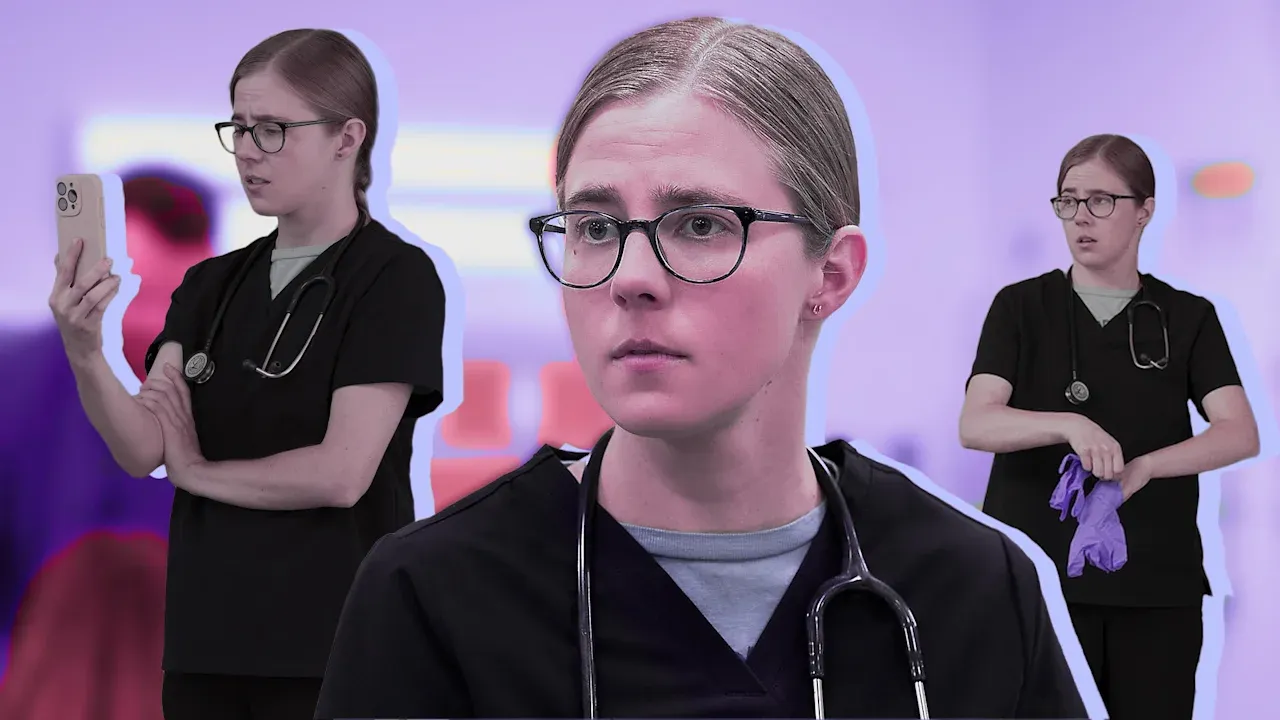
Dr. Mel King’s Quiet Revolution on Screen (Image Credits: Images.fastcompany.com)
HBO’s medical drama “The Pitt” drew on real expertise to craft a resident whose subtle traits resonated deeply with audiences and experts alike.
Dr. Mel King’s Quiet Revolution on Screen
A standout character emerged in the show’s debut season: Dr. Mel King, portrayed by Taylor Dearden as a dedicated ER resident navigating chaos with unique flair.
Mel displayed traits often linked to autism, such as self-soothing behaviors, missed social signals, and intense focus on repetitive tasks. Yet the series never labeled her explicitly neurodivergent, allowing viewers to witness her full humanity – comforting a grieving child, forging bonds with colleagues, and reciting Megan Thee Stallion lyrics to steady herself amid crises.
This layered approach hooked millions, contributing to the show’s three Emmy wins and average viewership of 10 million per episode.
Expert Input from the Frontlines of Autism Care
Dr. Wendy Ross, director of the Jefferson Center for Autism & Neurodiversity in Philadelphia, entered the picture through a surprise Zoom meeting in early 2024.
She spotted Noah Wyle, executive producer and star, in the digital writers’ room. Ross, a developmental and behavioral pediatrician, offered guidance to avoid stereotypes from the outset. Her recommendations shaped Mel’s portrayal, emphasizing traits that unfold naturally rather than dramatically.
Ross advocated for ambiguity around diagnosis, mirroring how many autistic women receive identifications later in life – often after their own children’s diagnoses prompt self-reflection.Late diagnoses frequently go unnoticed because such traits can blend into neurotypical behaviors under scrutiny.
Facing the Stark Challenges for Autistic Physicians
Ross’s prior research painted a grim picture of autistic doctors’ experiences, data that informed the show’s grounded realism.
In a study co-authored with Autistic Doctors International, she surveyed 225 autistic physicians. Shockingly, 77 percent had contemplated suicide, and 24 percent attempted it. While 80 percent suspected colleagues on the spectrum, only 22 percent knew of openly autistic peers.Workplace stigma fosters a “don’t ask, don’t tell” culture, breeding anxiety and depression.
Disclosure often arrives after accumulated struggles, turning fears into reality, Ross noted.
Ditching Tropes for Genuine Strengths
The production team reached Ross via USC’s Hollywood, Health & Society program, valuing her insights on authentic representation.
She urged creators to sidestep the “savant” myth, where autistic characters possess superhuman skills. Instead, Mel’s value lay in her empathy during stress and rapport with neurodivergent patients – strengths shared by many on the spectrum.
- Subtle quirks over exaggerated genius.
- Casting a neurodivergent actor for authenticity; Dearden later revealed her ADHD.
- Focus on workplace dynamics mirroring real ER demands.
Dearden echoed this in a Variety interview: “I’m really sick of what people usually do on TV… it’s usually complete robots or completely dysfunctional and can’t survive at all. It’s ridiculous.”Authenticity drives impact.
Key Takeaways
- Subtle, unlabeled traits reflect real-life autism, especially for women diagnosed late.
- Autistic doctors face high mental health risks due to stigma; media can shift perceptions.
- Better representation highlights diverse strengths, benefiting entire healthcare teams.
As “The Pitt” enters its second season amid acclaim for addressing gun violence, addiction, and burnout, its empathetic lens on neurodiversity offers a blueprint for workplaces everywhere. Shows like this challenge industries to embrace all minds, much like ramps aid more than wheelchair users – they elevate everyone. What steps can healthcare take next to support neurodivergent professionals? Share your thoughts in the comments.