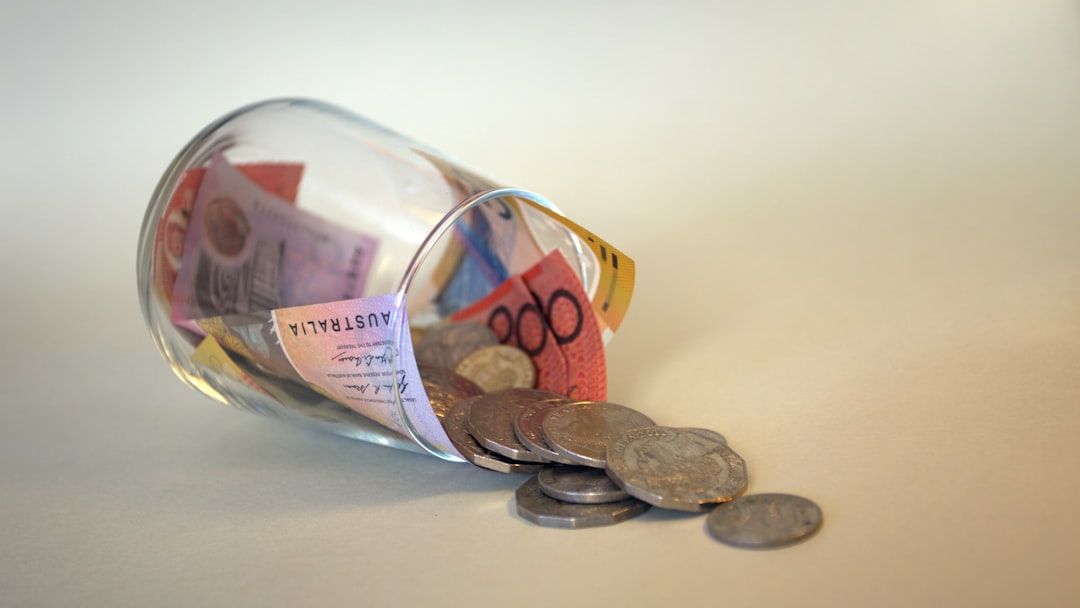

Most people think of their emergency fund as a “set it and forget it” situation. Tuck away a few months of expenses, pick a savings account, and move on. Honestly, that mindset made sense for years – because it barely mattered where you put the money when interest rates were near zero.
That’s not the world we’re living in anymore. The rate environment has shifted dramatically, and where you park your emergency cash right now has real, measurable consequences for your financial security. The window to take full advantage is closing faster than most people realize. Let’s dive in.
Your Emergency Fund Is Probably Sitting in the Wrong Place
Here’s the thing – most Americans are quietly losing money by inertia. Most people have their emergency fund in the wrong place, and it’s costing them money. The average checking account pays just 0.07% APY per the FDIC, meaning a $10,000 emergency fund earns roughly $7 a year in interest.
Compare that to what’s actually available right now. The best high-yield savings accounts are paying around 4.00% APY or more – that same $10,000 balance would earn $400 in interest annually. That’s not a trivial difference. That’s almost $400 left on the table, every single year, just because of where the money sits.
The average savings account yields just 0.39% as of March 2026, according to the FDIC. That’s less than ideal, but it’s important to understand the average is weighed down by the majority of accounts offering little to no return. You can get a much better rate by simply shopping around for a high-yield savings account. Think of it like flying economy when someone’s offering you a business class seat at the same ticket price. Why wouldn’t you take it?
The Fed Cut Rates Three Times in 2025 – And More Cuts May Be Coming
After holding interest rates steady for much of 2025, the Federal Reserve closed out the year by trimming its benchmark rate three times between September and December. The central bank had cut the federal funds rate six times total after raising it eleven times throughout 2022 and 2023 to combat inflation.
The federal funds rate currently sits at 3.50% to 3.75% following those three cuts at the end of 2025. The decreased federal funds rate is likely to lead to lower APYs on savings accounts going forward. This is the core reason financial advisors are urging people to act before June 2026 specifically.
Given that the Fed cut rates several times in late 2025 – a win for borrowers, a challenge for savers – it’s reasonable to expect that some savings account rates could head downward accordingly if banks expect another cut in 2026. Analysts at Goldman Sachs expect the Fed to cut rates twice in 2026, bringing the range down to 3% to 3.25%, while Morgan Stanley analysts forecast a slightly more aggressive path that includes four more rate cuts by mid-2026. Acting now, before those cuts materialize, locks in better returns on your cash.
The Real Cost of Inflation on Low-Interest Savings

It’s hard to see inflation eating your emergency fund in real time – but it absolutely happens. The Bureau of Labor Statistics reported that inflation peaked above 9% in 2022 and remained stubbornly elevated through 2023 and 2024. As of September 2025, the rate of inflation year-over-year stood at 3.0%, according to the Bureau of Labor Statistics’ Consumer Price Index.
With the best high-yield savings accounts paying an APY around 4%, you can earn interest to keep your emergency fund growing and preserve your purchasing power by outpacing inflation, which was 2.6% year-over-year as of November 2025. That margin matters. A traditional savings account at 0.39% doesn’t even come close to keeping pace.
Think of it this way. If your emergency fund is worth $20,000 in purchasing power today, and inflation runs at 3% while your account earns 0.39%, you’re losing ground every single month. It’s like filling a bucket with a small hole in the bottom. Moving to a high-yield account is simply patching that hole.
The FDIC Limit You Need to Know About
The bank failures of 2023 rattled a lot of people, and for good reason. Silicon Valley Bank’s sudden collapse after a liquidity crisis made the entire country stop and ask: is my money actually safe? The short answer depends on where and how you’ve stored it.
Some accounts at banks, such as savings accounts, are typically federally insured by the Federal Deposit Insurance Corporation up to $250,000 per depositor, per ownership category per insured bank. As long as your account is FDIC or NCUA-insured, you should be protected up to a $250,000 maximum per financial institution. If your total deposits at a single bank exceed that threshold, the excess is not covered.
Savings accounts at credit unions are federally insured by the National Credit Union Administration. Having multiple savings accounts can be helpful – for example, you could open one high-yield savings account to cover emergencies and another to save for your next vacation. Spreading your money across insured institutions is a simple, underused strategy that costs nothing but offers real peace of mind.
Money Market Funds Hit $7 Trillion – Here’s What That Tells You
When smart money moves somewhere en masse, it’s worth paying attention. In the U.S., money market fund assets reached $7 trillion as both retail and institutional investors helped drive growth forward, with retail money market funds taking center stage in the first half of 2024 as attractive yields became more appealing to investors.
Total money market fund assets increased to $7.86 trillion for the week ended March 18, 2026, according to the Investment Company Institute. That level of inflow doesn’t happen by accident. Millions of ordinary savers recognized that money market funds offered a better return on cash than traditional bank accounts, often without significantly more risk or hassle.
However, it’s important to understand what you’re actually getting. A money market mutual fund is another relatively safe place for emergency funds, though these funds don’t come with the guarantee of FDIC insurance like most savings accounts. They are typically low-risk and easily accessible parking spots for cash, but if you need funds from a money market mutual fund, expect to wait a couple of business days to sell and see the cash in your bank account. For true emergencies, that two-day lag is something you need to plan around.
Treasury Bills as an Emergency Fund Option – Really?
I know it sounds a little unconventional to mention T-bills in the same breath as emergency savings, but stay with me. T-bills are backed by the full faith and credit of the U.S. government. Unlike money market mutual funds, which are subject to the creditworthiness of multiple issuers and counterparties, T-bill investors face a single credit risk: the U.S. government.
Money market fund investors experienced attractive yields in the recent high-rate environment. Yields of 5% or more were available with relatively low risk, driven by exposure to ultra-short-term, high-quality instruments such as Treasury bills, repurchase agreements, certificates of deposit, and commercial paper. Short-term T-bills yielded around 4% to 5% throughout 2024 and into 2025, making them a genuinely competitive option for anyone willing to think slightly outside the traditional savings box.
That said, T-bills are best suited for the outer layer of your emergency fund – the three-to-six month buffer you hopefully never need to touch quickly. Consider short-duration U.S. Treasuries for taxable efficiency as part of your broader cash strategy. They won’t give you instant ATM access, so keep a portion of your fund in a liquid HYSA as well.
How Much Should You Actually Have Saved Right Now?

The standard advice is three to six months of living expenses. It’s still solid guidance, but the current economic climate nudges some people toward the higher end of that range. If you work in an industry that could be hit hard by an economic downturn, you might want a larger cash cushion, closer to six months or even a year.
In addition to thinking about where to store your emergency fund, make sure you’re thinking about how much you should be setting aside, which will vary based on your job security and your household. Unexpected events such as an emergency room visit or a broken-down car can result in major financial problems when you don’t have an emergency fund. It’s not just about having cash – ideally enough to cover at least six months of expenses – set aside for those worst-case scenarios. Where you keep that money is equally important to make sure it’s protected and immediately accessible.
The Federal Reserve’s own Survey of Household Economics found that roughly about one third of Americans would struggle to cover a $400 emergency expense. Let that sink in. For those households, the goal isn’t optimization, it’s simply building the fund at all. Consistently making whatever contributions you can, even if it’s only $50 or $100 a month, will have meaningful benefits over the long haul. Even a month or two of expenses in the bank is far better than none at all.
The Best Moves to Make Before June 2026
Time really is a factor here. Another rate cut is unlikely before the second quarter of 2026, meaning savers are in a relatively strong position and can continue to expect moderate yields for the foreseeable future. Now remains a good time to take advantage of high yields on savings. The window won’t stay open indefinitely.
For most people, the best place to keep an emergency fund in 2026 is a dedicated high-yield savings account at an FDIC-insured bank or NCUA-insured credit union. It gives you the three things an emergency fund needs most: safety, easy access, and some interest while the money sits there. It’s the simplest, most impactful move most people haven’t made yet.
A smarter approach is to ladder your accounts: consider having one month in a standard savings account, the next few months in a money market or high-yield savings account, and the last couple of months in a CD or mutual fund. The speed and size of interest rate reductions may vary widely between savings accounts, so savers seeking the highest yields may need to actively monitor the interest rate they’re receiving and move their money if they want to maximize returns. Set a reminder to check your rate quarterly. It takes five minutes and the payoff can be significant.
Here’s the bottom line: your emergency fund is working either for you or against you at all times. The difference between a 0.39% traditional savings account and a 4% high-yield account isn’t just a number on a screen. It’s hundreds of dollars a year, real purchasing power, and real financial security. Before June 2026, take an hour, check your current rate, and make the move. What’s stopping you?