


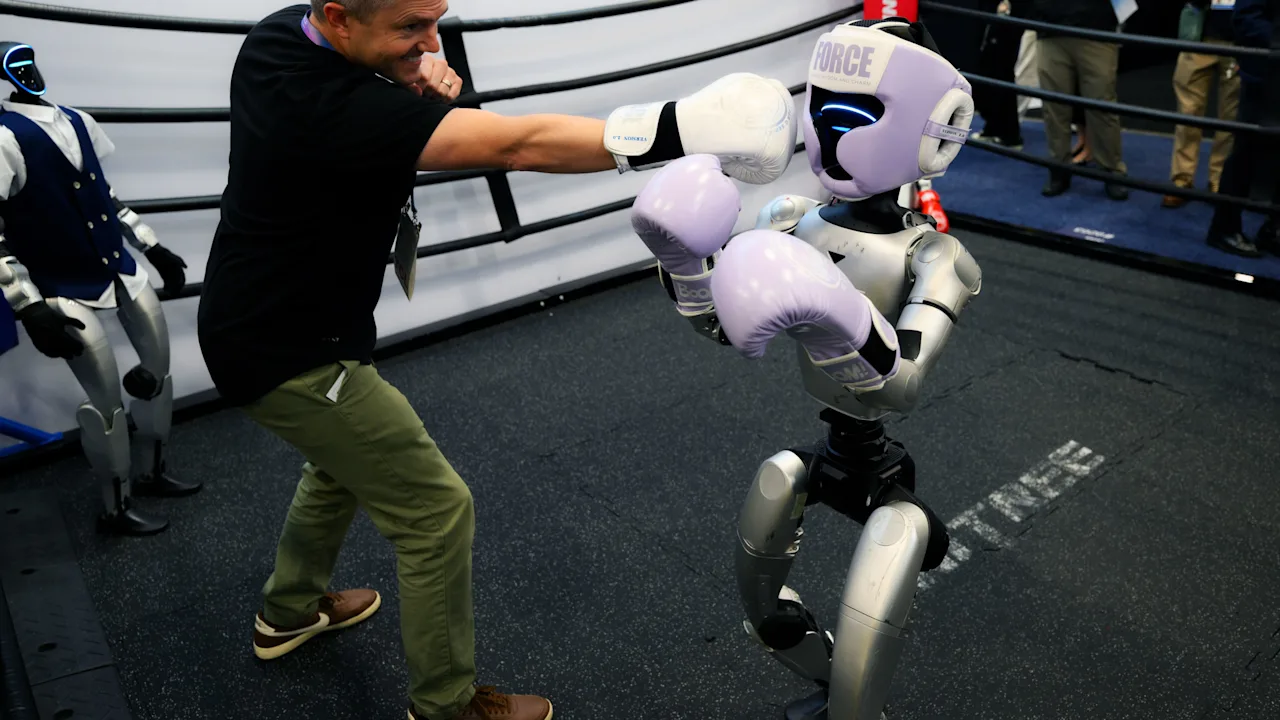
The Allure of Unitree’s Latest Creation (Image Credits: Images.fastcompany.com)
Las Vegas – At the bustling CES 2026, attendees witnessed a blend of futuristic entertainment and cutting-edge robotics as Unitree unveiled its G-1 humanoid in a lively boxing demonstration.
The Allure of Unitree’s Latest Creation
Unitree Robotics drew crowds with its G-1 model, a humanoid already available for purchase at a price point below $15,000, making it accessible in the evolving field of advanced machinery. The robot’s design featured a sleek appearance, complete with a white shirt and vest that gave it a polished, almost formal look amid the high-tech chaos of the convention. Beyond aesthetics, the G-1 showcased fluid dance routines, executing steps with precision that highlighted its balance and coordination capabilities.
These performances served as more than mere spectacle; they demonstrated the robot’s potential for dynamic movement in real-world applications. Engineers at Unitree emphasized the G-1’s joint flexibility, allowing it to mimic human-like agility without the constraints of fatigue. Visitors marveled at how such technology could transition from entertainment to practical uses in industries like manufacturing or entertainment venues.
From Dance Floor to Combat Zone
The atmosphere shifted dramatically when the focus turned to the G-1’s combat simulation, transforming the booth into an impromptu arena. Equipped with protective headgear and striking red boxing gloves, the robot stood ready opposite human challengers, underscoring its robustness against impacts. This setup not only entertained but also illustrated the machine’s endurance and response mechanisms under physical stress.
One participant described the invitation to spar as a spontaneous thrill, a rare chance to interact directly with robotics that typically remain behind glass displays. The G-1’s programming prioritized controlled interactions, ensuring safety while pushing the boundaries of humanoid dexterity. Such demos at CES highlighted the rapid progress in physical AI, where machines now engage in activities once reserved for skilled athletes.
Unpacking the Action in the Ring
As the round began, the human contender leveraged a height advantage to deliver targeted strikes to the robot’s upper body, testing its stability with each connection. The G-1 absorbed the blows resiliently, its frame designed to withstand forces that would challenge lesser builds. Swings from the robot often aimed lower, exploiting the height difference in ways that demanded quick footwork from its opponent.
Over the four-minute exchange, the machine maintained relentless momentum, occasionally missing with wide arcs that betrayed its programmed limitations in precision targeting. Punches to the head area prompted erratic responses, revealing areas for software refinement in adaptive defense. Despite the intensity, the encounter ended with the G-1 simulating a knockout by dropping to the mat, signaling the demo’s conclusion and inviting the next volunteer.
The bout revealed key strengths, such as the robot’s unyielding posture and rapid recovery, but also vulnerabilities like inconsistent guarding. Attendees noted how these interactions humanized the technology, bridging the gap between sci-fi concepts and tangible innovation.
Implications for Robotics’ Future
Unitree’s display at CES 2026 positioned the G-1 as a frontrunner in affordable, versatile humanoids, sparking discussions on ethical deployment in competitive or labor-intensive settings. The boxing element underscored advancements in force control and sensory feedback, essential for safer human-robot collaborations.
Experts viewed the event as a milestone, showing how entertainment demos accelerate public acceptance of robotics. Yet, it also raised questions about programming safeguards to prevent unintended escalations in mixed interactions.
- Joint motors enable 23 to 43 degrees of freedom for complex motions.
- Compact build supports tasks requiring speed and precision.
- Impact-resistant materials ensure durability in dynamic environments.
- AI integration allows real-time adaptation to physical challenges.
- Cost-effectiveness broadens access for developers and hobbyists.
Key Takeaways
- The G-1’s resilience highlights progress in humanoid durability.
- Interactive demos like boxing foster engagement with emerging tech.
- Future iterations may refine targeting for more realistic simulations.
In an era where robots edge closer to everyday integration, encounters like this at CES remind us of the exciting – and slightly unnerving – possibilities ahead. What are your thoughts on humanoids stepping into the ring? Share in the comments below.


