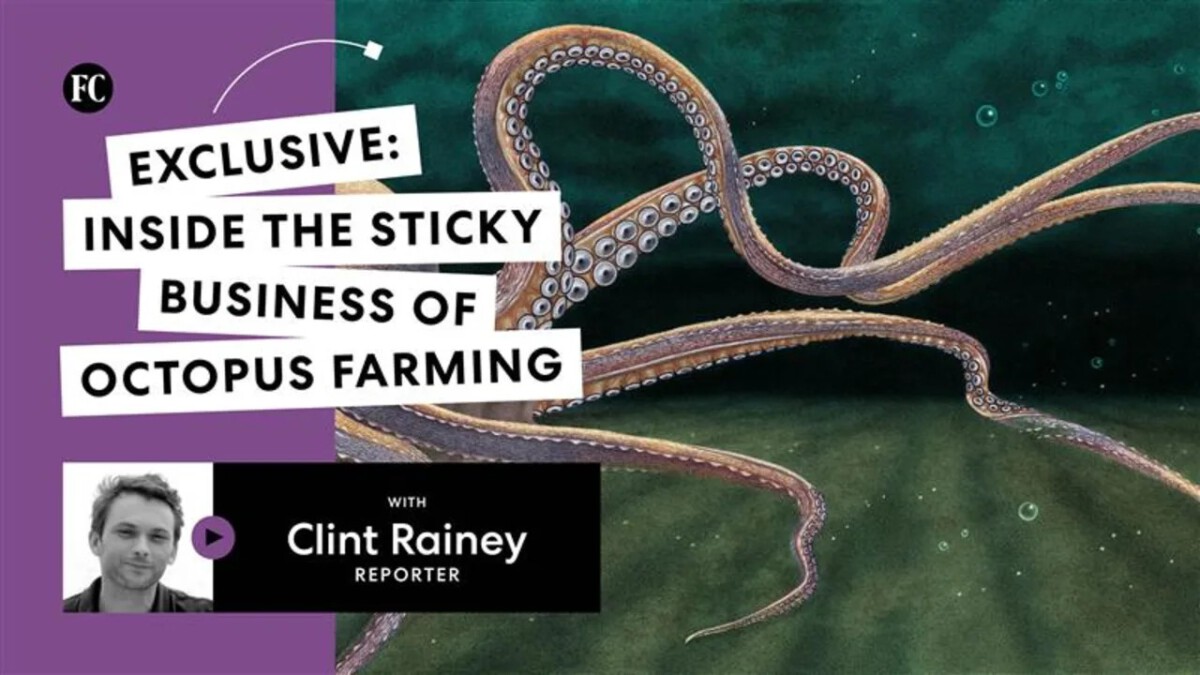
Octopuses Defy Easy Containment (Image Credits: Images.fastcompany.com)
Vigo Bay, Spain – A small-scale aquaculture operation on a floating platform marked a milestone when it allowed its first outside journalist aboard, spotlighting the push to domesticate one of the ocean’s most enigmatic creatures.
Octopuses Defy Easy Containment
Octopuses stand out for their extraordinary intelligence. Researchers have documented their ability to solve puzzles, use tools, and even escape enclosures designed to hold them.[1][2]
These cephalopods exhibit emotions through color changes and behaviors that suggest playfulness and curiosity. Their solitary nature and short lifespans, often just one to two years, complicate any farming attempts. Females typically starve themselves after laying eggs, a maternal sacrifice that underscores their complex biology.
Wild populations face pressure from overfishing, prompting innovators to explore aquaculture as a sustainable alternative. Yet the creatures’ cannibalsitic tendencies and sensitivity to stress pose formidable hurdles.
First Glimpse Inside the Vigo Bay Pioneer
The Samertolameu Pot Fishers Association operates the world’s oldest continuously running farm for Octopus vulgaris, the common octopus. Spanish authorities issued an experimental license in 1998, allowing the co-op to fatten about 2,000 wild-caught juveniles annually.[2]
Carlos Veiga, a 75-year-old fisherman with decades of experience, oversees the site alongside marine biologist Ricardo Tur. A single pen, roughly the size of a garden shed, houses around 80 octopuses suspended underwater from the raft. Workers feed them a mix of fishery discards and specialized diets until the animals reach about six pounds.
Each mature octopus fetches around $45 at market. Fast Company contributor Clint Rainey became the first journalist to visit the facility, offering rare insights into daily operations.[1]
Proponents argue this model demonstrates feasible welfare standards, with space for natural behaviors and minimal intervention.
Ambitions for Commercial Scale Collide with Reality
Nueva Pescanova, a major Spanish seafood firm, announced plans in 2019 for the first large-scale commercial octopus farm in Las Palmas, Gran Canaria. The project envisioned producing thousands of tons annually but encountered repeated setbacks.[3]
Regulators rejected its environmental impact assessment in 2024 over pollution risks and harm to nearby protected waters. High-density housing raised alarms about aggression and disease among the solitary animals.
- Proposed densities: 10-30 kg per cubic meter, or 10-15 octopuses.
- Feed demands: Up to 28,000 tons of wild fish yearly for initial output.
- Survival rates: Targeted at 50%, implying heavy losses.
Scientists highlighted slaughter methods, like immersion in icy water, as potentially inhumane given evidence of octopus pain perception.
Legislative Barriers Mount Worldwide
Opposition intensified as U.S. states acted decisively. Washington passed the first ban on octopus farming, followed by California’s Oppose Cruelty to Octopuses Act, effective early 2025, which prohibits both farming and sales.[4][5]
Chile and Spain considered similar measures by late 2025. Animal welfare groups cited the species’ sentience, recognized in some jurisdictions, as reason enough to halt development.
| Region | Status | Key Concern |
|---|---|---|
| California | Banned (2025) | Welfare & sales |
| Washington | Banned | Farming |
| Gran Canaria | Stalled | Environment |
Key Takeaways
- Small pioneers like Vigo Bay show proof-of-concept but limit scale.
- Large farms face welfare, ecological, and regulatory walls.
- Global bans signal shifting norms on farming intelligent invertebrates.
As aquaculture evolves, the octopus debate crystallizes tensions between innovation and ethics. Sustainable seafood demands balance, but at what cost to these brilliant escape artists? What do you think about it? Tell us in the comments.