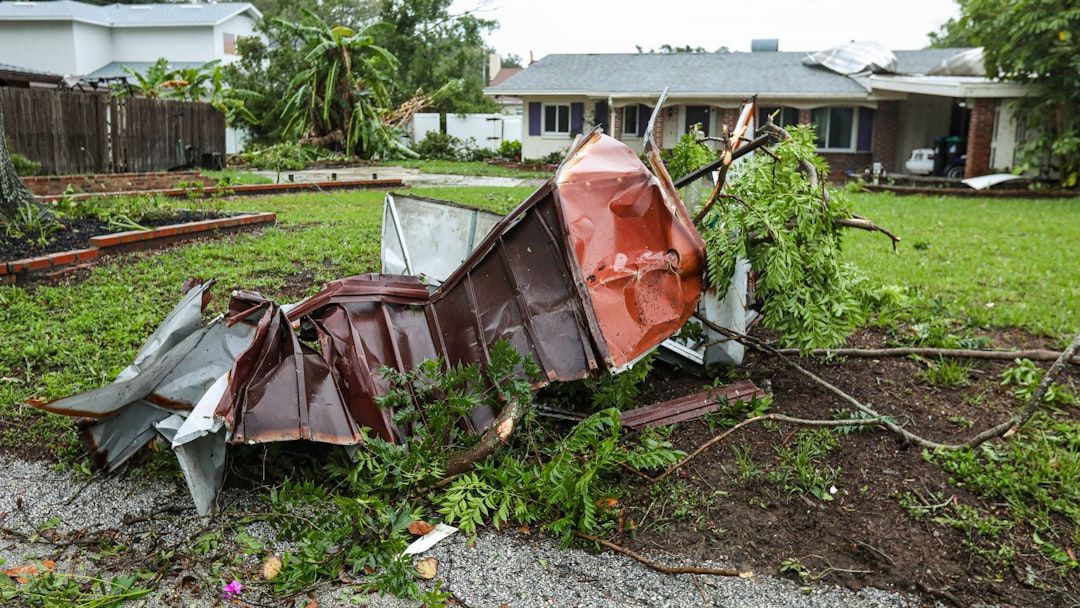

Extreme weather is no longer something that happens to other people, in other states, in other years. It is happening everywhere, all the time, and often with little warning. From Category 4 hurricanes slamming Florida to catastrophic flooding in western North Carolina, the pattern is becoming impossible to ignore.
The real question isn’t just whether a major storm is coming. It’s whether your state, your county, and honestly, your neighborhood, is actually ready for it. The answer, depending on where you live, might surprise you. Let’s dive in.
A Record-Breaking Era of Weather Disasters

If you think 2023 was a rough year for weather, you’d be right. In 2023, the United States experienced 28 separate weather or climate disasters that each resulted in at least $1 billion in damages, totaling $92.9 billion. That’s not a typo. That’s nearly three catastrophic, billion-dollar events per month.
The 2023 tally surpassed 2020, which had 22 events, for the highest number of billion-dollar disasters in U.S. history. Then 2024 picked up almost right where 2023 left off. In 2024, there were 27 individual weather and climate disasters with at least $1 billion in damages, trailing only the record-setting 28 events in 2023.
The 1980 to 2024 annual average is 9.0 events, but the annual average for the most recent five years from 2020 to 2024 is 23.0 events. That kind of acceleration should concern every state planner in the country. Think of it as the weather equivalent of a car suddenly doubling its speed on a road that hasn’t been redesigned for it.
The Cumulative Cost Is Staggering

From 1980 to 2024, there were 403 confirmed weather and climate disaster events with losses exceeding $1 billion each, including 32 drought events, 45 flooding events, 203 severe storm events, and 67 tropical cyclone events. That number tells a story of a nation constantly rebuilding itself.
Over the last ten years from 2015 to 2024, the U.S. has been impacted by 190 separate billion-dollar disasters that have killed more than 6,300 people and cost roughly $1.4 trillion in damage. For context, that’s more than the entire annual GDP of many countries combined.
Much of the nation’s growth has taken place in vulnerable areas like coasts, the wildland-urban interface, and river floodplains, and vulnerability is especially high where building codes are insufficient for reducing damage from extreme events. Honestly, it’s hard not to see the pattern here.
Hurricane Helene and Milton: A Brutal Wake-Up Call

Hurricane Helene was the deadliest Atlantic hurricane since Maria in 2017 and the deadliest to strike the U.S. mainland since Katrina in 2005, with total costs reaching $78.7 billion. A single storm. Nearly $79 billion. Let that sink in for a moment.
Helene’s most severe impacts came from historic rainfall of up to 30 or more inches and flooding across much of western North Carolina, eclipsing the region’s previous worst flood from 1916, with Asheville and many surrounding communities heavily impacted.
Hurricane Milton made landfall near Siesta Key, Florida, with 120 mile-per-hour sustained winds, a storm surge of up to 10 feet caused damage along the Gulf coast, and the hurricane spawned dozens of highly destructive tornadoes across southern Florida, with total costs of $34.3 billion. Back-to-back billion-dollar catastrophes within weeks of each other. That is the new reality many coastal states now face every single season.
Flood Risk: More Homes at Stake Than You Think

Here’s the thing: millions of Americans believe they are safe from flooding because they don’t live near the coast or a major river. That belief is increasingly dangerous. Across the United States, 39 million properties are at high risk of flooding, wildfires, and hurricane winds, and among those at risk, 12 million properties have significant flood risk outside of public-facing FEMA flood zones.
Roughly one in four pieces of critical infrastructure in the country is at risk of becoming inoperable, representing roughly 36,000 facilities, and 23 percent of all road segments in the country, nearly 2 million miles of road, are at risk of becoming impassable. Think about what that means for emergency response when roads disappear under floodwaters.
The highest concentration of community risk exists in Louisiana, Florida, Kentucky, and West Virginia, with 17 of the top 20 most at-risk counties in the U.S. located across those states. If you live in one of these areas, your state’s preparedness level isn’t just a policy issue. It’s personal.
Wildfire Preparedness: Western States on the Frontline

Wildfires have gone from a regional problem to a national crisis. The National Interagency Fire Center reported that over 2.7 million acres burned in U.S. wildfires in 2024, demonstrating the scale of the challenge many states face with fire preparedness. The 2025 Los Angeles wildfires added another devastating chapter to that story.
The five-year average costs of wildfire events ballooned from about $1 billion annually through roughly 2016 to over $17 billion in 2021, with growth in structures destroyed by wildfires outpacing the additional area burned by a wide margin. More homes burning per acre of fire is a trend that speaks directly to how states zone and build in high-risk areas.
Recent disasters such as the Los Angeles wildfires in early 2025 demonstrate the continued need for government-wide action to deliver assistance effectively. California, Oregon, and other western states have had to fundamentally rethink their evacuation protocols, land use planning, and firefighting resource allocation. Some are further along than others.
Infrastructure Grades: Still Far From Ready

When a storm hits, the quality of your state’s infrastructure can be the difference between a manageable crisis and a complete breakdown. The American Society of Civil Engineers assessed U.S. infrastructure with an overall “C” grade in its 2025 report, finding that legislation passed by Congress has sparked progress, but more work and investment is needed to overcome decades of underinvestment.
The individual 2025 category grades ranged from a “B” for ports to a “D” grade for stormwater and transit, and though some categories improved, nine categories still received a grade in the “D” range. A “D” for stormwater infrastructure is particularly alarming in a country experiencing record rainfall events.
ASCE projects a $3.7 trillion gap between current planned infrastructure investments and what must be done to put U.S. infrastructure in good working order, an increase from the $2.59 trillion gap reported four years ago. That growing gap is not just an engineering problem. It is a weather preparedness problem. Old pipes, outdated levees, and crumbling stormwater systems fail precisely when storms push them to their limits.
Small Businesses and Communities Bear Heavy Burdens

Individuals are not the only ones vulnerable. FEMA estimates that roughly two in five small businesses never reopen after a disaster, highlighting just how devastating a single extreme weather event can be for local economies. For many communities, losing those businesses means losing the economic backbone of the town itself.
The number and cost of weather and climate disasters is rising due to a combination of population growth and development along with the influence of human-caused climate change on some types of extreme events that lead to billion-dollar disasters. In other words, we keep building in harm’s way while storms keep getting worse.
I think the real tragedy here is that many of these economic losses are preventable with the right mitigation planning. A community that invests in flood barriers, updated building codes, and emergency supply stockpiles is simply more likely to bounce back. States that shortchange those investments end up paying far more in recovery costs.
The Shifting Role of Federal vs. State Preparedness

There is a significant shift happening right now in how disaster response responsibilities are being divided between Washington and individual states. There were 90 major disaster declarations in 2024 and 27 climate-related events that caused more than $1 billion in damages, and while states typically lead disaster response, they rely on federal resources as needed, and not every state will be able to take on more of that responsibility.
GAO analyzed selected states’ assessments of their disaster response capabilities and found that capability levels varied widely, with federal, state, and local officials emphasizing the variation in capabilities at the state and local level, including challenges for rural or less-resourced jurisdictions.
States have raised concerns about the uncertainty of the future of FEMA’s role, with state officials noting that it is challenging to plan in the absence of clear, consistent, and accurate guidance. That uncertainty, frankly, is one of the most dangerous elements in the current preparedness landscape. States cannot plan effectively without knowing what federal support will actually look like when the next major storm arrives.
Early Warning Systems: The Underrated Game-Changer
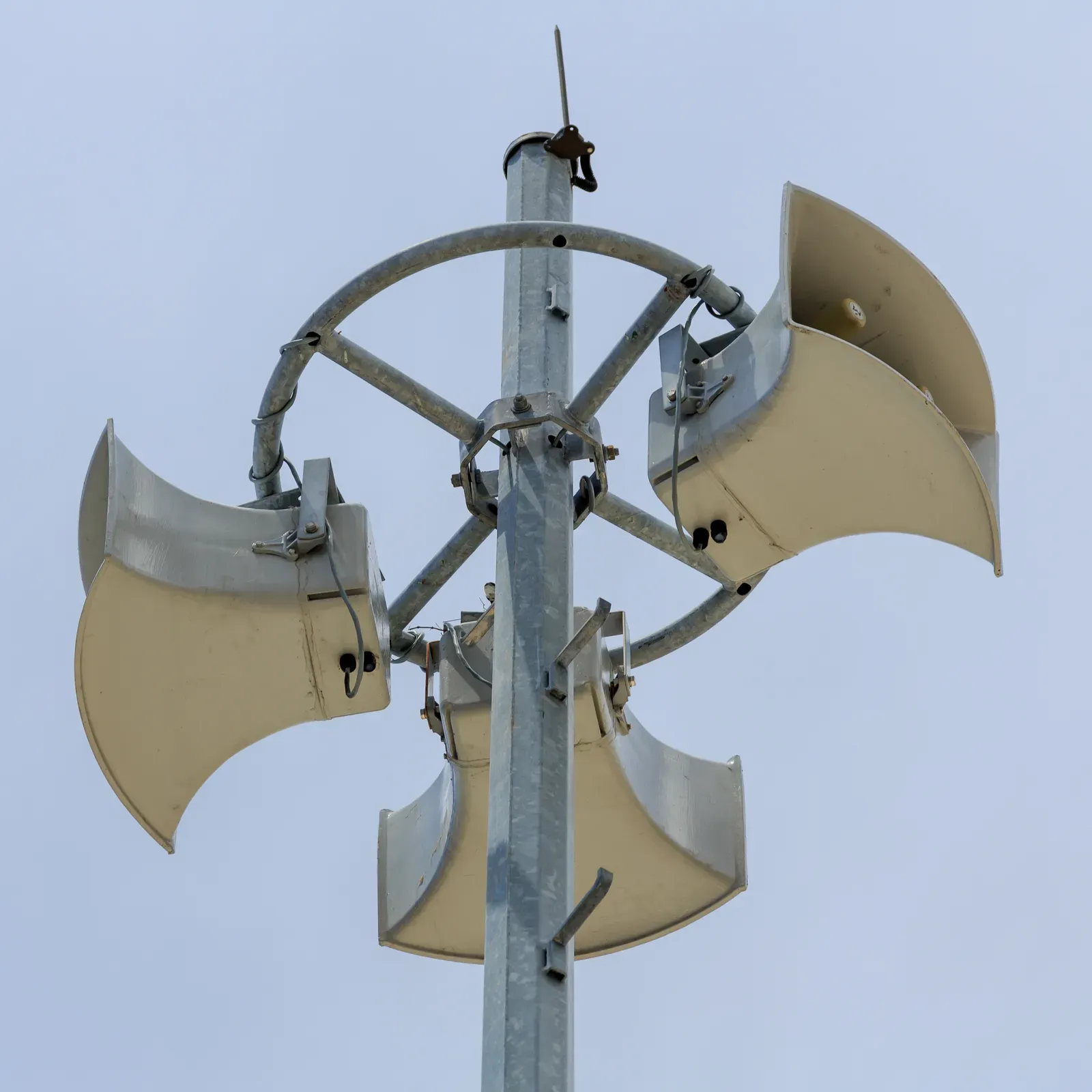
The United Nations Office for Disaster Risk Reduction has highlighted that early warning systems can reduce disaster damage by up to roughly one third, making preparedness planning one of the most effective safety strategies available. That’s an extraordinary return on investment for what amounts to technology and communication infrastructure.
The U.S. has strong national weather forecasting through NOAA, but early warning systems are only effective when communities have the tools to act on them. A tornado warning is useless if there are no sirens, no community notification systems, and no pre-established evacuation routes. Some states excel at connecting forecasts to community action. Others still have major gaps.
The increase in disasters creates “compound extremes,” which are billion-dollar disaster events that occur at the same time or in sequence, and climate change is also increasing the risk of multiple extremes occurring simultaneously in different locations connected by complex human and natural systems. Early warning systems that only track one type of hazard at a time are becoming dangerously inadequate for this reality.
What Real Preparedness Actually Looks Like

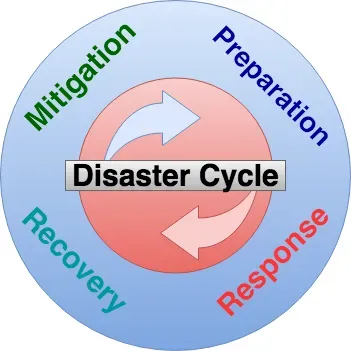
State preparedness is not just about having a disaster plan written up somewhere in a government office. It means updated building codes, functional emergency communication networks, invested stormwater infrastructure, and trained emergency management personnel at the county level. Taking steps to help people and communities be more prepared means developing the capabilities needed to prevent, protect against, respond to, recover from, and mitigate against all threats and hazards.
It has been nearly 20 years since the Post-Katrina Emergency Management Reform Act of 2006 required actions to address shortcomings in the nation’s disaster response system, yet federal, state, and local governments continue to face challenges preparing for and responding to large-scale disasters. Two decades is a long time to still be catching up.
The 2025 report card estimates that $9.1 trillion in investment is required to bring infrastructure in all 18 categories up to a state of good repair. That number feels enormous, but the alternative, paying for repeated catastrophic losses year after year, is arguably worse. Preparedness is not an expense. It is an investment with a very real return.
Conclusion: The Time to Prepare Is Before the Storm
The data is not abstract. It represents flooded homes, shuttered businesses, and communities that took years to rebuild, if they rebuilt at all. 2024 was the 14th consecutive year in which 10 or more separate billion-dollar disaster events impacted the U.S. Fourteen years in a row. That is not a streak of bad luck. That is a structural reality.
No state is immune. The storms are coming, and they are coming harder and more frequently than any generation of Americans has experienced before. The gap between prepared states and unprepared ones will determine not just property damage statistics, but lives. That ought to focus the mind of every governor, county commissioner, and city planner in the country.
Preparedness is ultimately a community decision. You can check your state’s official emergency management website, know your evacuation routes, understand your flood risk, and advocate for infrastructure investment in your district. The question isn’t really whether a major weather event is coming your way. The question is: what happens when it does? What do you think your state needs to do better? Let us know in the comments.