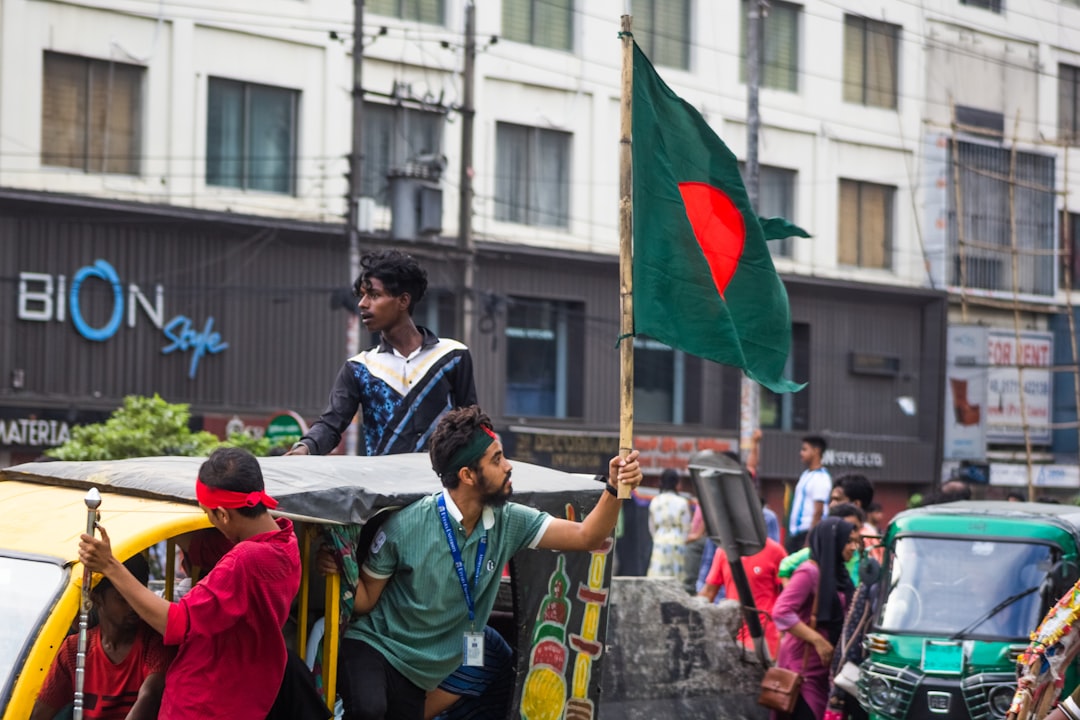
BNP Secures Decisive Victory Amid Post-Uprising Polls (Image Credits: Unsplash)
Bangladesh – Voters reshaped the political landscape in the February 12 parliamentary election, elevating an Islamist party to the role of primary opposition for the first time since independence.[1][2]
BNP Secures Decisive Victory Amid Post-Uprising Polls
The Bangladesh Nationalist Party claimed a commanding 212 seats in the 300-member Jatiya Sangsad, earning a two-thirds majority. Tarique Rahman, from a prominent political family, prepared to assume the prime minister position. This outcome followed the 2024 student-led uprising that forced former leader Sheikh Hasina to flee and led to a ban on her Awami League party.[1][2]
The election marked the first national vote under an interim government headed by Muhammad Yunus. Voter turnout reached 59.44 percent, reflecting heightened engagement after years of contested polls. Results, announced on February 16, confirmed the BNP’s dominance across key divisions like Dhaka and Sylhet.[2]
Jamaat-e-Islami’s 11-party alliance captured 77 seats, with the party itself winning 68 – a record that quadrupled its previous high of 18 seats. The student-led National Citizen Party took six seats within that bloc.[1][3]
| Party/Alliance | Seats Won |
|---|---|
| Bangladesh Nationalist Party (BNP) | 212 |
| Jamaat-e-Islami Alliance | 77 (Jamaat: 68) |
| National Citizen Party (within alliance) | 6 |
| Independents/Others | 5 |
Islamist Party’s Journey from Ban to Prominence
Jamaat-e-Islami opposed Bangladesh’s 1971 independence war and faced accusations of atrocities, which the party denied. Senior members received death sentences or life terms in trials from 2010 to 2013, deemed politically motivated by supporters. Banned multiple times, including in 2023, the group regained registration after the 2024 unrest.[1][4]
Leader Shafiqur Rahman conceded the results gracefully. “We recognize the overall outcome and we respect the rule of law,” he stated. “We will serve as a vigilant, principled, and peaceful opposition.”[1]
The party’s campaign emphasized practical reforms, appealing to young voters focused on the future rather than historical grievances. It fielded one Hindu candidate but none from women, aligning with its view that no woman can lead the organization.[1]
Upending the Dynastic Order
The results disrupted the long-standing rivalry between the dynastic BNP and Awami League. Jamaat’s surge positioned it to scrutinize the new government and push reforms outlined in the July National Charter, aimed at curbing autocracy.[1][5]
Analysts noted the party’s evolution. Retired law professor Maimul Ahsan Khan observed that younger voters prioritized achievable promises over past affiliations. Jamaat’s youth wing had triumphed in university elections, broadening its base.[1][3]
- Nearly 32 percent vote share in contested areas, up from historical peaks below 12 percent.
- Strong performance in Khulna and Rajshahi divisions.
- Alliance strategy boosted smaller partners like the National Citizen Party.
- Focus on economic issues, youth empowerment, and anti-corruption.
Lingering Worries on Rights and Governance
Critics highlighted Jamaat’s constitutional commitment to Sharia law, despite a moderated campaign tone. Concerns centered on women’s roles and minority protections, with the party framing such stances as family safeguards. Violence against minorities has occurred under various regimes, often tied to economic factors.[1][4]
Independent analyst Jon Danilowicz noted that Jamaat’s opposition duties would test its commitment to accountability. The party pledged to uphold Bangladesh’s secular framework for minorities, given the nation’s over 90 percent Muslim population.[1]
Key Takeaways
- Jamaat-e-Islami’s 68 seats establish it as a formidable check on BNP power.
- Post-2024 reforms demand inclusive governance to sustain democratic gains.
- Moderation on social issues will prove critical for broader acceptance.
This election ushers Bangladesh into uncertain yet promising territory, where an once-marginal force now influences national direction. Observers await whether Jamaat fulfills its pledge as a constructive opposition. What implications do you see for the region’s stability? Share in the comments.