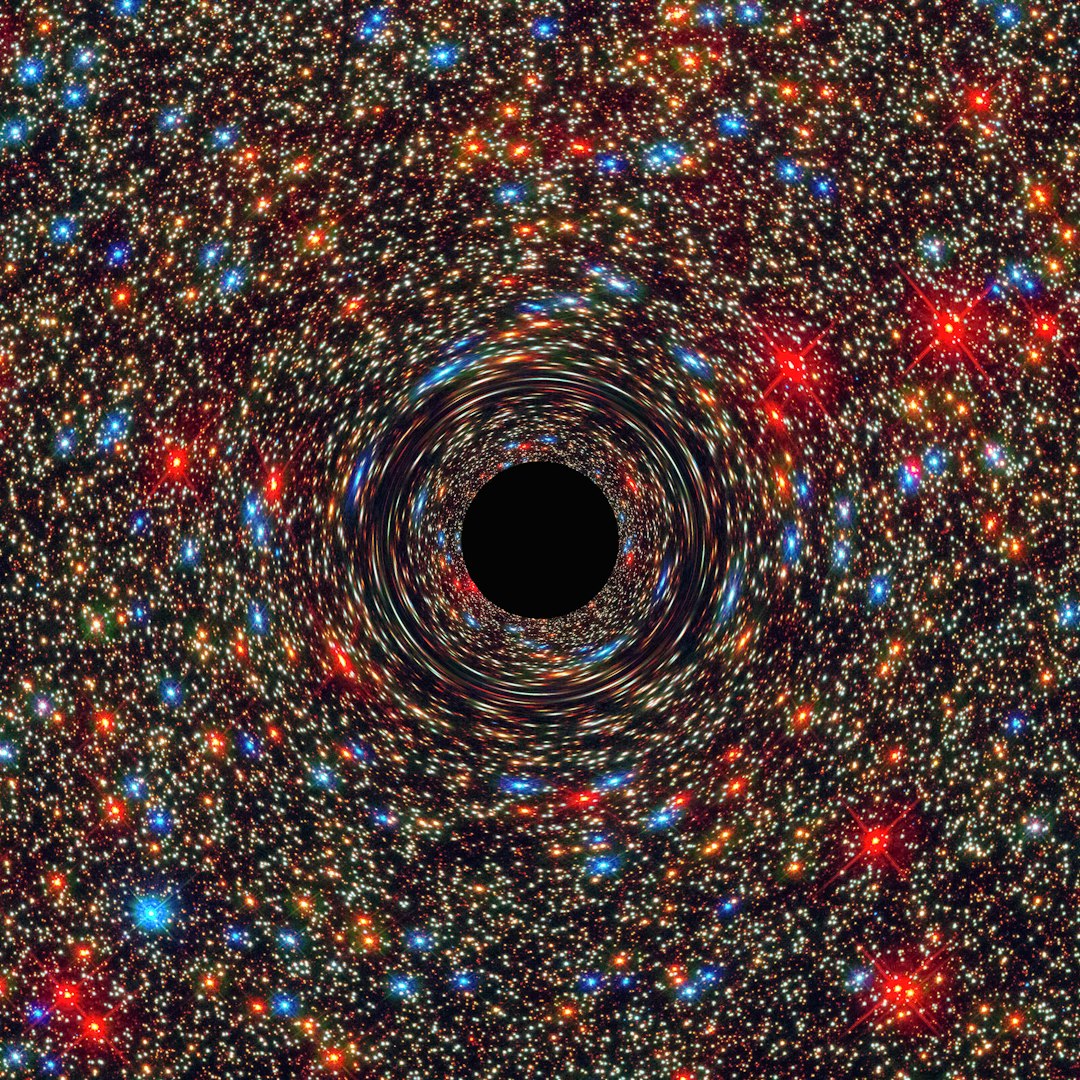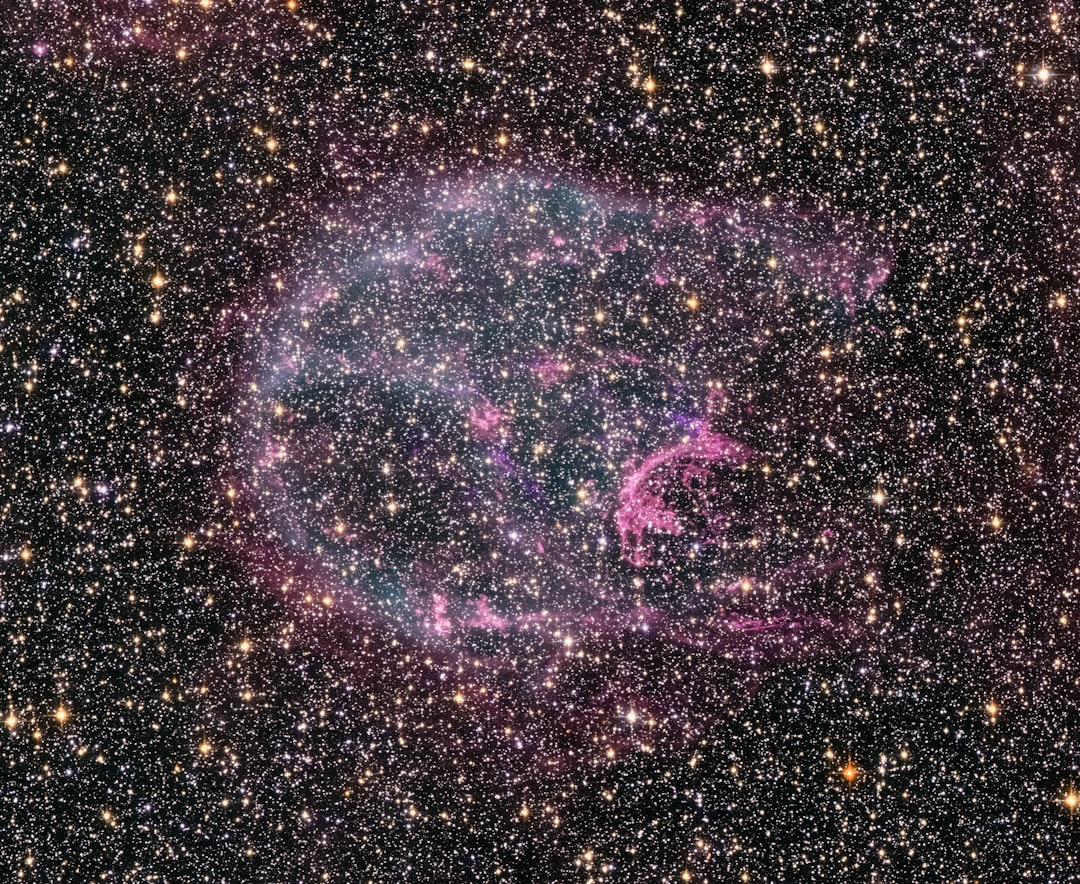
A Burst That Outlasted All Predecessors (Image Credits: Unsplash)
Astronomers witnessed a cosmic spectacle on July 2, 2025, when NASA’s Fermi Gamma-ray Space Telescope captured GRB 250702B, a gamma-ray burst that endured for at least seven hours. This duration dwarfed typical bursts, which fade within seconds or minutes, and marked the longest such event ever recorded.[1][2] Follow-up observations from the James Webb Space Telescope and other instruments revealed its origin in a massive, dusty galaxy billions of light-years away, challenging long-held theories on these universe-shaking explosions.
A Burst That Outlasted All Predecessors
The initial detection came from Fermi’s Gamma-ray Burst Monitor, which triggered multiple times over roughly three hours as the emission pulsed repeatedly. China’s Einstein Probe had spotted soft X-rays a full day earlier, an unprecedented precursor never seen in prior gamma-ray bursts.[1] NASA’s Neil Gehrels Swift Observatory pinpointed the location in the constellation Scutum shortly after, enabling a global array of telescopes to track X-ray flares that persisted for days.
GRB 250702B’s gamma-ray phase spanned at least 25,000 seconds, surpassing the previous record holder, GRB 111209A, by more than 10,000 seconds. No single high-energy instrument could capture the full event, requiring data from Fermi, Swift, Wind, Psyche, and others. “The burst went on for so long that no high-energy monitor in space was equipped to fully observe it,” noted Eric Burns, an astrophysicist involved in the analysis.[2]
JWST Pierces the Dust to Reveal the Host
James Webb’s Near Infrared Camera and Spectrograph provided crucial insights about 51 days post-detection. Spectroscopy confirmed a redshift of z = 1.036, placing the burst roughly 8 billion light-years distant – light that began its journey when the universe was about 6 billion years old.[1] The host galaxy stood out as exceptionally massive, exceeding twice the Milky Way’s mass, with a prominent dust lane bisecting its edge-on disk.
High-resolution images showed the explosion site approximately 1,900 light-years from the galactic center, near the disk’s edge in a star-forming region. No supernova signature appeared, with limits ruling out a bright Type Ic event due to heavy extinction. “The resolution of Webb is unbelievable. We can see so clearly that the burst shined through this dust lane spilling across the galaxy,” said Huei Sears of the observation team.[2]
Unraveling the Explosive Mechanism
The isotropic gamma-ray energy reached at least 2.2 × 1054 erg, equivalent to a thousand Suns shining for 10 billion years. Standard collapsar models – massive stars collapsing into black holes – fail to explain the prolonged accretion needed for such duration. Instead, researchers favor scenarios involving black hole-star interactions.
Leading hypotheses include:
- A stellar-mass black hole merging with a helium-rich star companion, forming an accretion disk that fuels jets.
- An intermediate-mass black hole (hundreds to thousands of solar masses) triggering a tidal disruption event (TDE) by shredding a passing star.
- A rare “micro-TDE” where a stellar-mass black hole partially disrupts its companion.
These align with the off-nuclear position and lack of bright supernova, though rapid variability challenges some TDE predictions. “The continued accretion of matter by the black hole powered an outflow that produced these flares, but the process continued far longer than is possible in standard GRB models,” explained Brendan O’Connor.[2]
A Rare Event Reshaping Astrophysics
GRB 250702B’s volumetric rate appears over 1,000 times lower than typical long gamma-ray bursts and more than 105 times scarcer than core-collapse supernovae, adjusted for beaming. This rarity underscores its uniqueness among roughly 15,000 GRBs detected since 1973.
| Event | Duration (seconds) | Key Feature |
|---|---|---|
| Typical GRB | <100 | Short, bright jets |
| GRB 111209A | ~15,000 | Previous record |
| GRB 250702B | >25,000 | Repeating, ultralong |
Such outliers like this one, observed once every 50 years, could define a new class of explosions. The host’s atypical properties – large, dusty, and massive – hint that environment plays a key role in progenitor evolution.
Key Takeaways
- GRB 250702B lasted seven hours, the longest gamma-ray burst recorded.
- Originated in a rare massive galaxy at z=1.036, with no supernova detected.
- Points to black hole-star mergers or TDEs as likely causes.
This extraordinary event not only expands our catalog of cosmic violence but also demands refined models of black hole feeding frenzies. As telescopes like JWST continue to probe deeper, similar blasts may reveal patterns in the universe’s most extreme phenomena. What do you think caused GRB 250702B? Tell us in the comments.