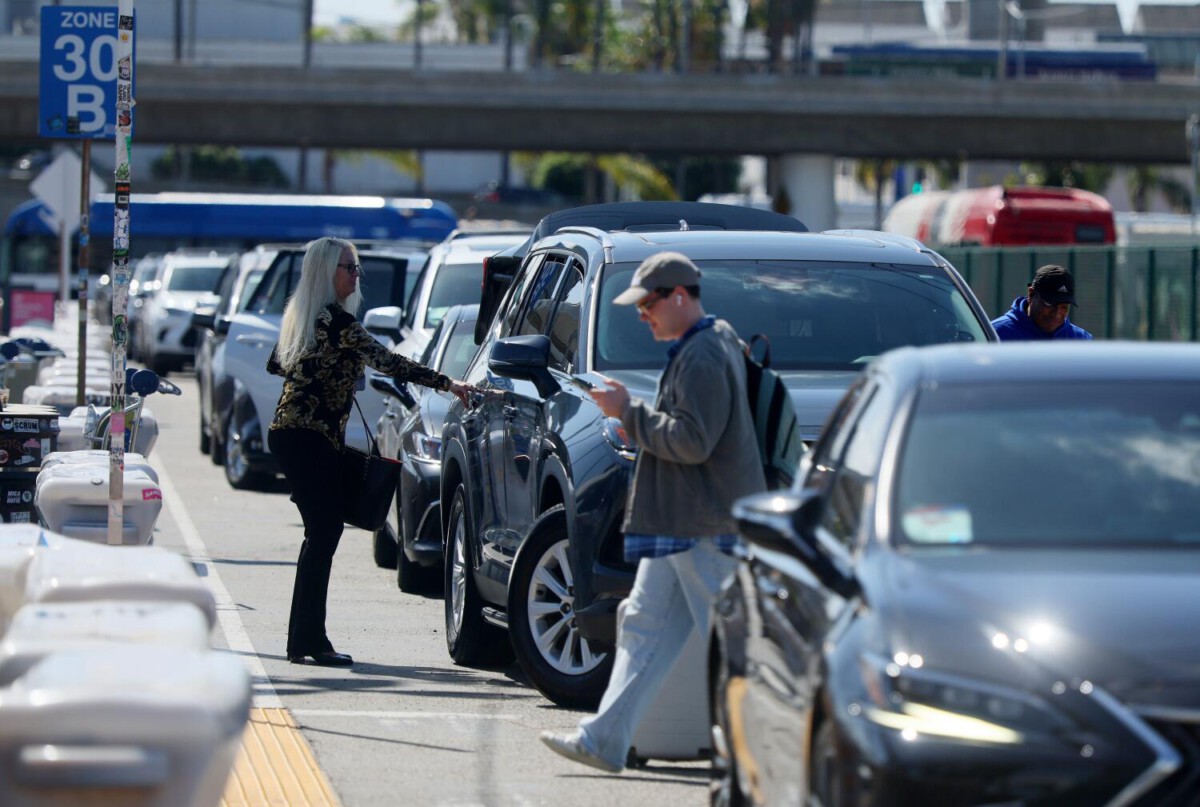
A Vote That Could Double Costs (Image Credits: Ca-times.brightspotcdn.com)
Los Angeles – Travelers relying on Uber, Lyft, and similar services at Los Angeles International Airport could soon encounter steeper costs as the airport’s governing board considers significant access fee increases.[1][2]
A Vote That Could Double Costs
The Los Angeles Board of Airport Commissioners scheduled a special meeting for Tuesday morning to deliberate on the proposal. Officials from Los Angeles World Airports presented the plan to adjust ground transportation access fees, marking the first major update in a decade. Ride-hailing companies currently charge passengers about $4 to $5 per trip for airport access, covering pickups and drop-offs.[1]
Under the new structure, a $6 base fee would apply each way starting roughly 30 days after approval, even for remote lots like LAX-it. Once the Automated People Mover, known as SkyLink, launches later this year, curbside access in the Central Terminal Area would rise to $12 per transaction. Taxis and limousines, previously exempt from some charges, would also face the new rates for pickups.[2]
| Service/Location | Current Fee (per trip) | Proposed Fee (per trip) |
|---|---|---|
| Ride-hail drop-off/pickup (curbside) | $4-$5 | $12 (post-SkyLink) |
| LAX-it lot access | $4 | $6 |
| Taxi/limo pickup | $0 (drop-off) | $6 base + applicable |
Addressing Chronic Traffic Woes
Airport leaders cited overwhelming vehicle volumes as the primary driver behind the changes. Each day, between 80,000 and 100,000 vehicles navigate the limited curbside space, creating gridlock and safety risks. David Reich, LAWA’s deputy executive director for mobility strategy, emphasized that funneling all traffic into the Central Terminal Area proved unsustainable.[1]
The nearly $3.5 billion SkyLink system aims to alleviate this pressure. Delayed multiple times from its original 2023 target, the automated train will loop passengers around terminals in about 10 minutes, handling up to 85 million riders annually. Higher fees would steer more activity to remote pickup zones and the people mover, while generating revenue – potentially $100 million in the first full year – for further improvements.[2]
Pushback from Riders and Companies
Ride-hailing giants mobilized against the plan. Uber urged customers and drivers to voice concerns, warning that round-trip fees could surge 140% from $10 to $24, positioning LAX among the world’s priciest airports for such services. Lyft echoed similar criticisms, highlighting impacts on working families and seniors.[3]
State lawmakers joined the fray, with seven Assembly members and two senators requesting a delay for more public input amid California’s affordability challenges. Travelers expressed frustration over added expenses, especially with rising gas prices and travel demands. One frequent flyer noted the hikes would strain monthly work commutes already costing upwards of $50.[1]
- Ride-hailing firms argue the increases lack transparency and burden users unnecessarily.
- Critics predict shifts toward riskier informal pickups or reduced airport access for lower-income groups.
- Drivers worry about fewer trips, exacerbating challenges in making ends meet amid long waits.
- Officials counter that fees align with peers like San Francisco International, where ride apps pay $6.
- Potential curbside pickup caps – limiting ride-hail to 30% in high-traffic zones – add another layer of restriction.
Timeline and Broader Implications
Approval could implement initial changes by April, with full effects tied to SkyLink’s opening amid ongoing contractor disputes. LAWA indicated flexibility to postpone for economic reasons, following discussions dating back to 2023. The board’s decision comes ahead of expected passenger surges, including 2028 Olympics preparations.[1]
Beyond fees, related measures target taxi oversupply at busy terminals, aiming for balanced operations.
- Fees could double to $12 curbside post-people mover launch.
- Aimed at cutting 80,000+ daily vehicles and boosting SkyLink ridership.
- Opposition grows from Uber, lawmakers, and budget-conscious travelers.
As LAX balances growth with manageability, this vote underscores tensions between infrastructure investments and user costs. Riders may need to explore buses, shuttles, or FlyAway options sooner than planned. What do you think about the proposed changes? Tell us in the comments.