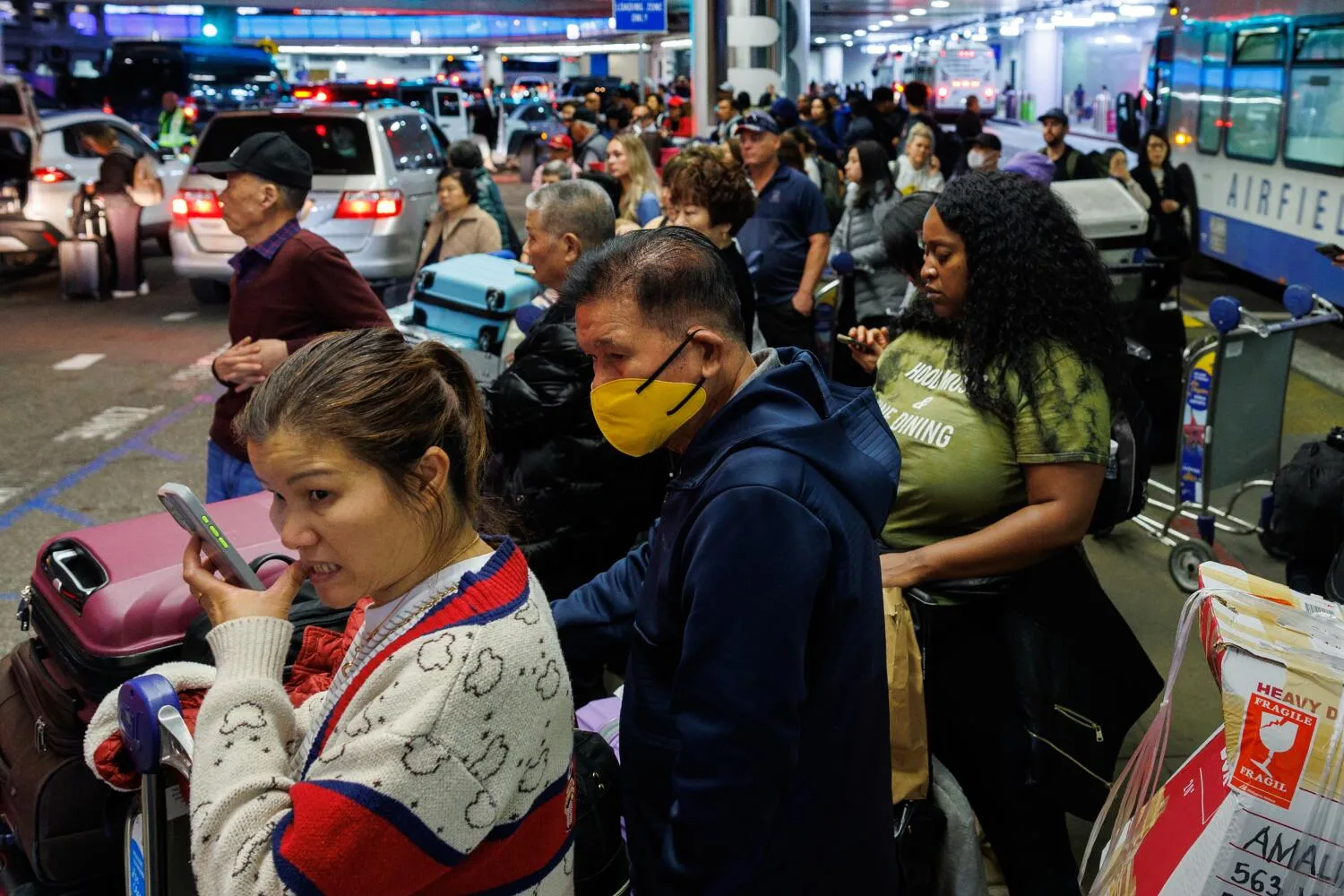
Sudden Disruptions Grip Tom Bradley Terminal (Image Credits: Ca-times.brightspotcdn.com)
Los Angeles — Airlines canceled multiple flights from Los Angeles International Airport to major Middle East destinations Sunday after several countries in the region shuttered their airspace in response to U.S. and Israeli strikes on Iran.[1][2]
Sudden Disruptions Grip Tom Bradley Terminal
Travelers at LAX’s Tom Bradley International Terminal faced abrupt cancellations as planes bound for Dubai, Doha, and Tel Aviv remained grounded. Flight tracking data from FlightAware confirmed the suspensions, which caught many passengers off guard late Saturday into Sunday.[1]
A mother and daughter en route to Doha learned of their flight’s cancellation at midnight, leaving them devastated amid concerns for family overseas. The disruptions stemmed directly from airspace shutdowns triggered by the widening conflict, with no immediate timeline for resumption.[2]
Airlines Issue Statements and Waivers
Qatar Airways suspended all flights to and from Doha, emphasizing passenger safety in a statement on its website. “The safety of our passengers and employees is always our highest priority, and we apologise for any inconvenience caused,” the airline wrote.[1]
Emirates halted operations to Dubai until at least 3 p.m. local time Monday, while actively monitoring developments with authorities. El Al canceled services to and from Israel, including its subsidiary Sundor, through 2 a.m. local time Wednesday, promising to rebook affected customers proactively.[1][3]
Several carriers offered waivers for rebooking without fees, though jammed phone lines complicated efforts to secure alternatives.
Regional Airspace Lockdown Details
Countries including Iran, Iraq, Israel, Kuwait, Qatar, Bahrain, Syria, and parts of the UAE and Saudi Arabia closed or restricted airspace following the strikes and Iranian retaliatory attacks. Major hubs like Dubai International, Hamad International in Doha, and Abu Dhabi International suspended operations, with Dubai reporting a damaged concourse and four injured employees.[4][1]
FlightAware reported over 2,400 cancellations across Middle East airports Sunday, with some estimates reaching 3,400 at seven key facilities. The closures forced global rerouting, adding hours to journeys and straining fuel supplies.[5][2]
- Iran: Full closure after strikes.
- Israel: Airspace shut, affecting El Al operations.
- UAE (Dubai, Abu Dhabi): Indefinite suspensions.
- Qatar (Doha): Operations halted until further notice.
- Iraq, Kuwait, Bahrain, Syria: Restricted or closed.
Wider Fallout: Stranded Planes and Travelers
At least 33 widebody aircraft from Gulf carriers like Emirates, Qatar Airways, Etihad, and El Al sat idle at 13 North American airports, including LAX. These included Airbus A380s, Boeing 777s, and Dreamliners, with passengers and crew awaiting clearance.[4]
Globally, hundreds of thousands of travelers found themselves stranded, scrambling for connections as airlines diverted routes around the conflict zone. United Airlines, for instance, axed all U.S.-Tel Aviv flights through March 6.[5]
| Airport Hub | Status | Operator Impact |
|---|---|---|
| Dubai (DXB) | Suspended indefinitely | Emirates grounded |
| Doha (DOH) | Closed until Monday | Qatar Airways halted |
| Abu Dhabi (AUH) | Suspended | Etihad affected |
| Tel Aviv (TLV) | Airspace closed | El Al canceled |
- Safety drives all cancellations, with no firm resumption dates.
- Over 2,400 regional flights scrapped Sunday alone.
- U.S. hubs like LAX host stranded Gulf jets amid uncertainty.
The rapid escalation leaves air travel in limbo, underscoring how regional tensions can swiftly paralyze global networks. Travelers should monitor airline updates closely – what are your experiences with these disruptions? Share in the comments.