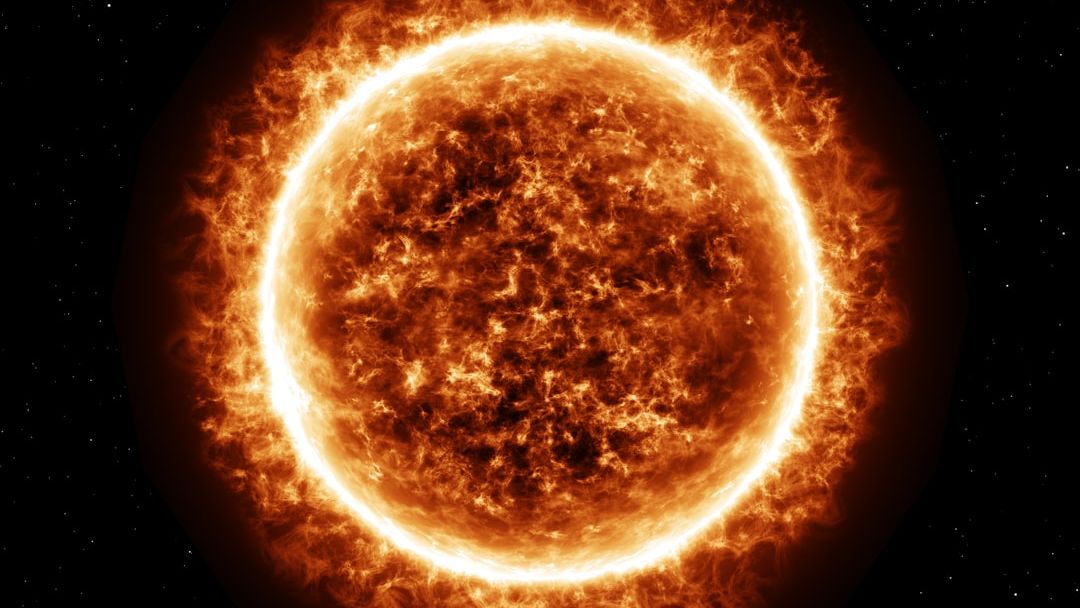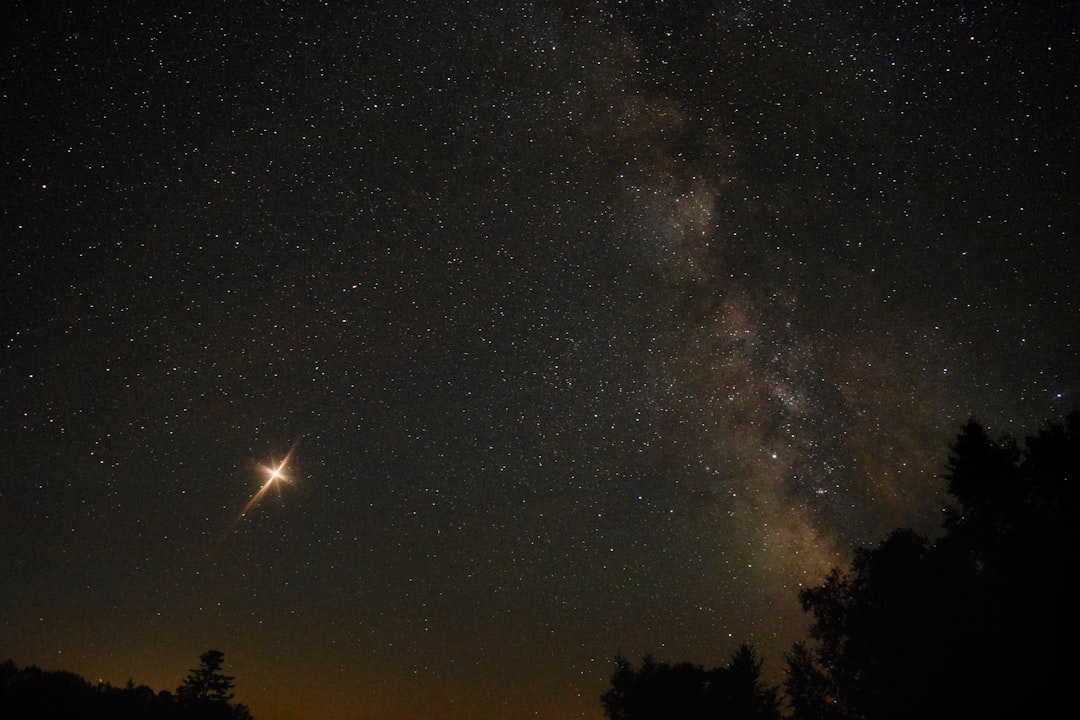
Evening Skies Dominated by Venus and Jupiter (Image Credits: Unsplash)
Spring 2026 offers stargazers a rich tapestry of visible planets, striking lunar alignments, and potential cometary drama. From the brilliant evening glow of Venus and Jupiter to the subtle morning trio of Mercury, Mars, and Saturn, the coming weeks provide ample opportunities for observation. A mysterious sungrazing comet adds intrigue, while the Lyrid meteor shower caps off April’s highlights.[1]
Evening Skies Dominated by Venus and Jupiter
Venus captures attention in the western sky after sunset, its crescent phase gleaming brightly above the horizon throughout March. Observers noted it hugging the Pleiades star cluster and Aldebaran in Taurus during early April, gradually climbing higher as the month progresses. By April 30, it lingered about two hours past sunset, making it a reliable evening beacon.[1]
Jupiter commands the evening sky higher up, positioned near the twin stars Castor and Pollux in Gemini. It remained visible until a few hours after midnight early in the season, shortening to about one hour by late April. The planet’s steady brilliance drew eyes westward before it dipped below the horizon.[1]
Morning Challenges: Spotting Mercury, Mars, and Saturn
Mercury emerged in the predawn sky during the last week of March, though faint and best from the Southern Hemisphere. It reached its greatest western elongation on April 3, standing 28 degrees from the sun and brightening thereafter. Northern viewers faced twilight interference, but dedicated observers caught it low in the east before sunrise.[1]
Mars trailed Mercury, faint in March’s bright twilight but climbing higher post-April 3. Saturn joined faintly by mid-April, emerging from the sun’s glare. Late April mornings featured a tight trio of these worlds low in the east before dawn, particularly favorable from southern latitudes where they stood clearer above the horizon.[1]
The Moon’s Captivating Spring Path
Tomorrow evening, March 28, the waxing gibbous moon positioned itself near Regulus and the Sickle asterism in Leo, offering a striking view after sunset. This alignment continued on March 29, framing the lion-shaped constellation dramatically. Skywatchers prepared binoculars for the details in the moon’s shadowed craters against the starry backdrop.[1]
April brought further lunar spectacles. The full Pink Moon crested near Spica in Virgo on April 1-2, visible all night. Subsequent nights saw the waning gibbous moon passing Spica again on April 3, then Antares and Scorpius on April 6-7 mornings, and Sagittarius’ Teapot on April 8-9. The third quarter arrived April 10, followed by a slender waning crescent near Capricornus April 11-14, and a new supermoon on April 17 ideal for dark-sky stargazing.
- Waxing crescent reunited with Venus, Aldebaran, and Pleiades April 18-20.
- First quarter on April 24 supported evening views.
- Waxing gibbous revisited Spica April 24-25 and 28-30.
Comet Thrills, Meteors, and Rare Phenomena
Comet C/2026 A1 (MAPS), a Kreutz sungrazer, approached perihelion on April 4-5, skimming perilously close to the sun. Astronomers watched if it would brighten dramatically in Earth’s view around Easter, potentially visible low in the western sky post-sunset. Recent updates highlighted its unexpected surge in brightness, fueling hopes for naked-eye visibility.[1][2]
The Lyrid meteor shower peaked April 22, with its radiant near Vega in Lyra rising northeast after midnight. Moonless conditions favored up to 20 meteors per hour until dawn. Zodiacal light appeared as a false dusk in western skies around the March equinox, best from dark sites. Meanwhile, all five bright planets aligned along the ecliptic with the sun around noon on April 15, a daytime parade invisible to the eye but noteworthy for its rarity.[1]
Essential Tips for Optimal Skywatching
Seek dark-sky locations away from city lights to enhance faint objects like Mercury or the zodiacal light. Allow eyes 20-30 minutes to adapt to darkness, and use apps like Stellarium for local rise and set times. Southern Hemisphere observers gained an edge for low eastern planets, while mid-northern latitudes favored evening giants Venus and Jupiter.
Check almanacs for precise timings, as horizons varied by latitude. Binoculars revealed lunar details and star clusters near planets. Patience rewarded early risers and patient evening watchers alike. For more details, consult resources like EarthSky.[1]
March and April 2026 stand out as a golden window for celestial pursuits, blending reliable planetary displays with unpredictable cometary fireworks and classic meteor action. Whether chasing the moon through Leo tomorrow or awaiting the Lyrids’ streaks, these skies remind us of the universe’s quiet grandeur. What catches your eye first this spring? Share in the comments.
Key Takeaways
- Evenings favor Venus and Jupiter; mornings highlight Mercury, Mars, Saturn from the south.
- Watch the waxing moon near Leo March 28-29 and full Pink Moon April 1-2.
- Comet C/2026 A1 peaks early April; Lyrids shine April 22 under dark skies.