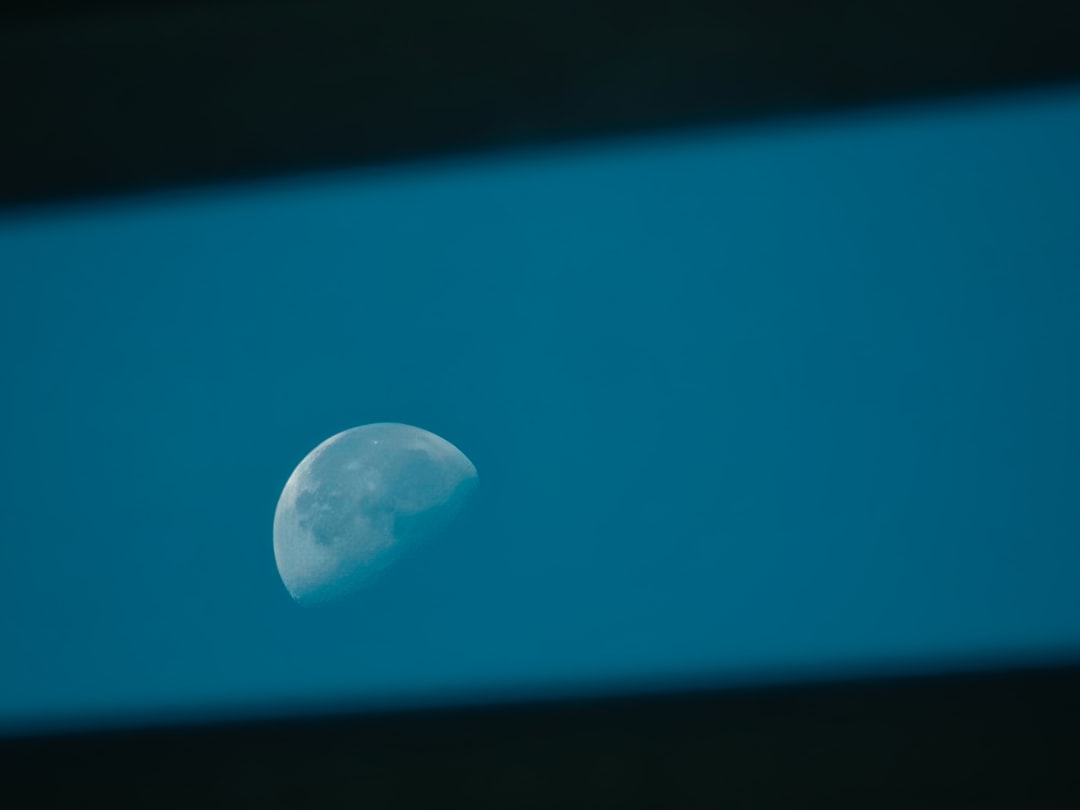
The Striking Conjunction Unfolds (Image Credits: Unsplash)
Stargazers tonight have a prime opportunity to witness the waxing gibbous Moon positioned near brilliant Jupiter within the constellation Gemini.
The Striking Conjunction Unfolds
This evening, the Moon passes 4 degrees north of Jupiter at 9 P.M. EST, creating a visually compelling duo in the central part of Gemini.[1]
Jupiter stands out as one of the sky’s brightest objects, while the nearly full Moon, at 96 percent illumination, adds dramatic glow. The pair appears framed by Gemini’s famous twin stars, Castor and Pollux, to the left. Viewers from mid-northern latitudes will find this scene high in the western sky after sunset.
Such alignments offer a reminder of the dynamic motion in our solar system, with the Moon’s orbit bringing it close to the gas giant regularly.
Delving into Jupiter’s Details
Despite the moonlight, telescopes reveal Jupiter’s 46-arcsecond disk, showcasing alternating light and dark cloud bands.[1]
All four Galilean moons remain visible for much of the evening, positioned west of the planet. Callisto lies farthest out, followed eastward by Ganymede. Closer in, Io and Europa shift positions dynamically.
Europa passes due north of Io shortly after 8:30 P.M. EST. Later, around 12:30 A.M. EST on January 31, Europa slips behind Jupiter’s northwestern limb in an occultation. These events provide thrilling moments for observers with steady scopes.
Gemini’s Nearby Wonders
While focused on the conjunction, turn attention to Castor, one of Gemini’s heads. Telescopes split it into two nearly equal-magnitude stars mere arcseconds apart.
About 1.2 arcminutes south lies a fainter third component at 9th magnitude. Each of these stars hides its own double-star secret, though resolving them requires larger instruments.
On the previous evening, January 29, the open cluster M50 offered a bonus target in the region, visible to binocular users under darker skies.[1]
Key Observing Windows
Plan your session around these local times from 40° N, 90° W:
| Event | Time |
|---|---|
| Sunrise | 7:10 A.M. |
| Sunset | 5:17 P.M. |
| Moonrise | 2:39 P.M. |
| Moonset | 5:41 A.M. |
The Moon’s waxing gibbous phase peaks near 10 P.M. local time.[1]
- Best viewing: Shortly after sunset when Gemini is prominent.
- Use binoculars for wide-field context; switch to telescope for planets and stars.
- Seek darker sites to counter moonlight.
- Track moon positions as they evolve overnight.
- Photograph the scene with a tripod-mounted camera.
- The Moon-Jupiter pairing peaks at 9 P.M. EST amid Gemini’s twins.
- Jupiter’s moons offer dynamic action into the early hours.
- Castor provides a splendid double-star challenge nearby.
This celestial gathering underscores the accessible beauty of the night sky, even from urban areas. Step outside after dusk, locate Gemini by its bright stars, and let the Moon guide you to Jupiter – what catches your eye first?