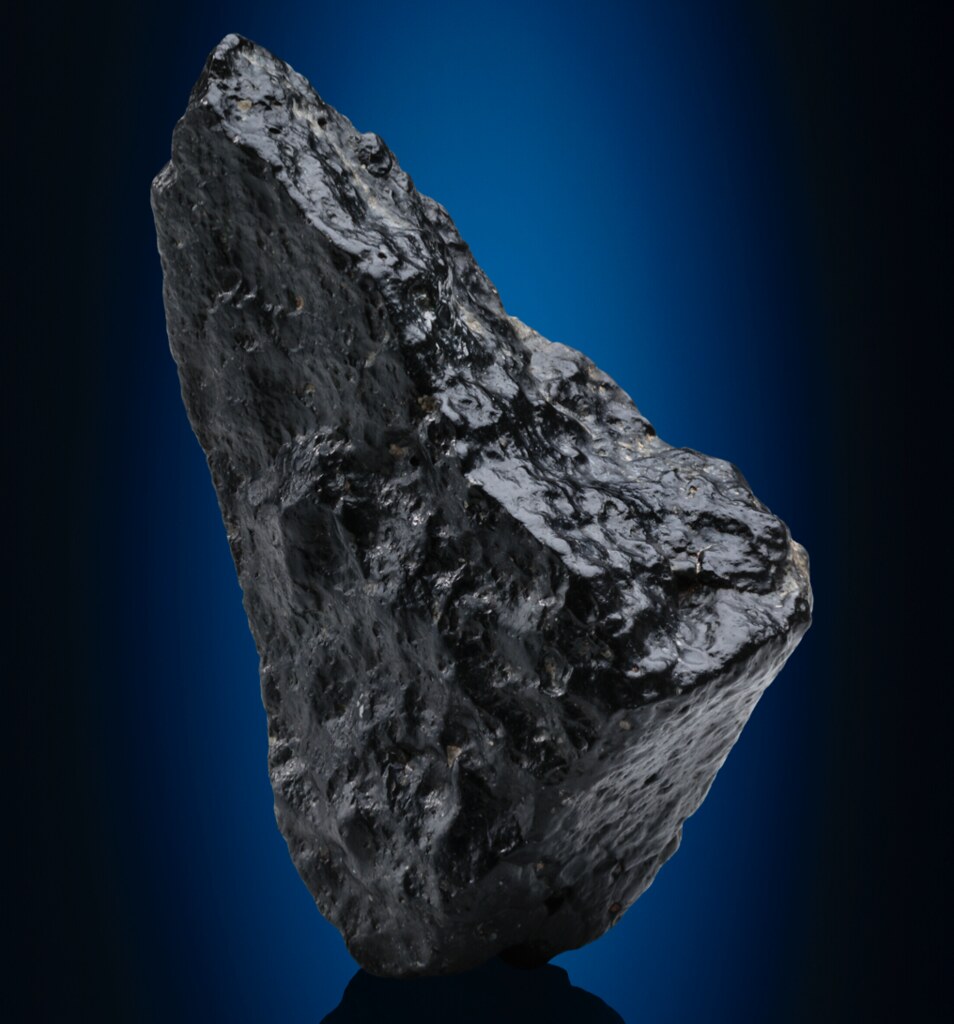
Lunar Regolith Holds Billions of Years of Impact History (Image Credits: Flickr)
Planetary scientists once widely accepted that water-rich meteorites slamming into Earth about 4 billion years ago supplied the bulk of the planet’s oceans.
Lunar Regolith Holds Billions of Years of Impact History
A fresh analysis of Moon rocks has cast serious doubt on that idea. Researchers examined Apollo mission samples of lunar regolith, the loose surface layer of pulverized rock and soil formed by countless impacts. Unlike Earth, where plate tectonics and erosion have erased ancient records, the Moon lacks an atmosphere or active geology to rework its surface. This makes regolith a unique archive spanning billions of years.[1][2]
The study, published in the Proceedings of the National Academy of Sciences, relied on samples collected decades ago. Lead author Tony Gargano, from the Lunar and Planetary Institute and the University of New Mexico, highlighted the regolith’s value. “The lunar regolith acts like a long-term mixing layer,” Gargano said. “It captures impact debris, stirs it in, and preserves those additions for immense spans of time.”[1]
Triple Oxygen Isotopes Reveal Minimal Meteorite Input
Traditional methods struggled to separate true meteorite material from the chaos of impact-altered regolith, which involves melting, vaporization, and mixing. The team turned to high-precision measurements of triple oxygen isotopes, the primary element in rocks. This approach isolated the chemical fingerprint of impactors amid the reprocessed lunar material.
Results showed that carbon-rich meteorites, known carriers of water, contributed just 1 percent by mass to the regolith. These objects partially vaporized on impact, leaving detectable traces. “Triple oxygen isotopes give us a more direct and quantitative way to approach the problem,” Gargano explained. “It lets us isolate an impactor fingerprint from a regolith that has a complicated history.”[1]
Scaling Up: Too Little Water for Earth’s Seas
Water from these meteorites proved negligible on the Moon, pooling only in tiny cold-trapped reservoirs. Earth, larger and hit harder, likely received about 20 times more impact material. Yet even that scaled amount delivers no more than a few percent of a single Earth ocean.
- Lunar regolith: 1% impactor material from water-rich meteorites.
- Moon’s total water addition: Tiny relative to Earth’s oceans.
- Earth’s estimate: Few percent at most, despite heavier bombardment.
- Exotic isotopes in meteorites mismatch Earth’s water signature.
Late-arriving meteorites thus fall short as the main source. The findings tighten constraints on models of planetary habitability.[3]
What Lies Beneath the Meteorite Consensus?
This work builds on Apollo’s legacy, offering “ground truth” from actual lunar samples to test inferences from fallen meteorites. Gargano emphasized the Moon’s role: “It gives us real material we can measure in the lab and use to anchor what we infer from meteorites and telescopes.” The study does not pinpoint alternative origins but underscores that water-rich impactors alone cannot account for Earth’s hydration.
Debates persist over whether water arrived earlier, from inner solar system bodies, or formed internally. Meteorites still contributed some, but their outsized role now appears unlikely. Future missions may tap lunar cold traps for more clues.
Key Takeaways
- Moon’s regolith records 4 billion years of impacts, preserved unlike on Earth.
- Only 1% of lunar soil traces to water-carrying meteorites.
- Even amplified for Earth, meteorites supply mere fractions of our oceans.
These revelations from the Moon force a rethink of how Earth became a water world, refining paths to life elsewhere. What implications do you see for other planets? Share your thoughts in the comments.