The Moon’s Path Through Cancer’s Stars (Image Credits: Pixabay)
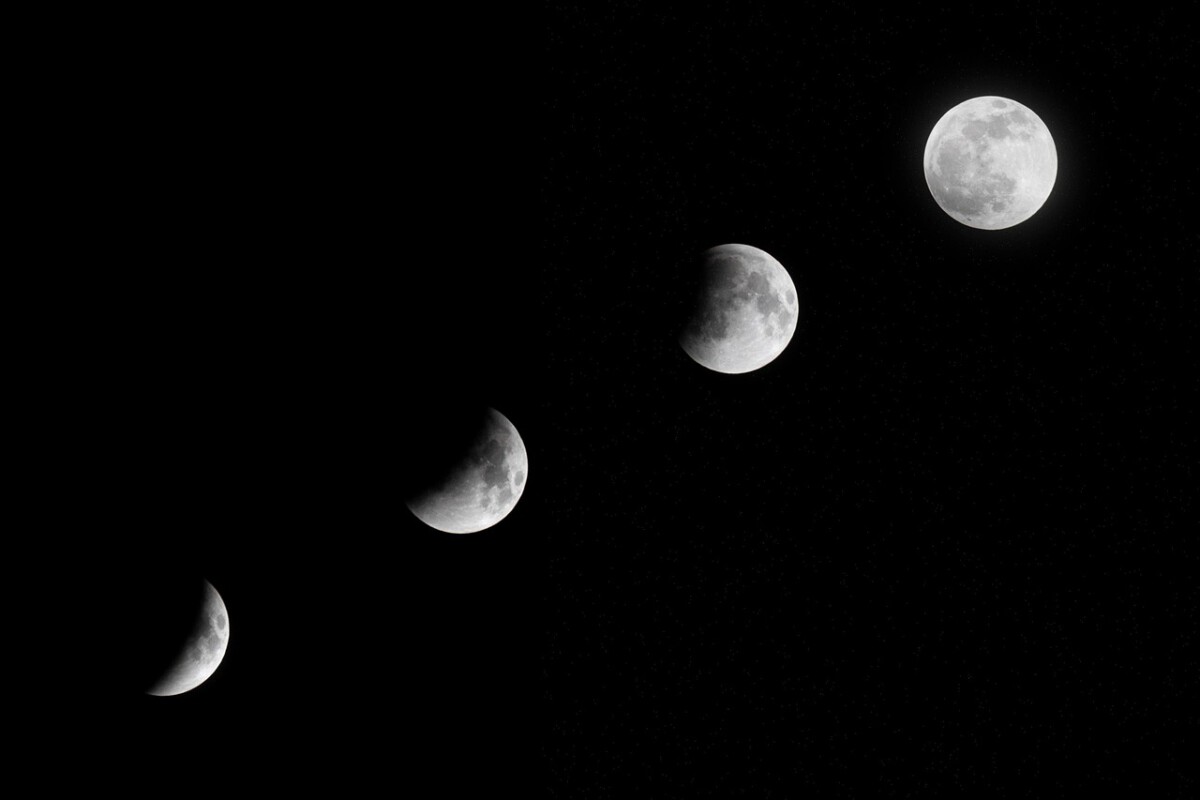
Stargazers across the Northern Hemisphere can look forward to a captivating celestial alignment on Friday evening, March 27, 2026. The waxing gibbous Moon glides near the outskirts of the Beehive Cluster, also known as M44, within the constellation Cancer. This event unfolds high in the southeastern sky shortly after sunset, offering a blend of lunar brilliance and subtle stellar sparkle visible even from urban areas.[1]
The Moon’s Path Through Cancer’s Stars
Observers will notice the Moon positioned in central Cancer as darkness falls. Just one hour after sunset, the region climbs to about 65 degrees above the southeastern horizon. The Beehive Cluster lies immediately southeast of the Moon, with its center less than 2 degrees away from our satellite.[1]
This proximity allows both objects to fit comfortably within the field of view of binoculars or a small telescope. However, the Moon’s glow at 75 percent illumination tends to overwhelm the cluster’s fainter members. As the night progresses, the Moon tracks southeastward across the sky, skimming the very edges of the Beehive. By midnight Eastern Daylight Time, it stands due north of the cluster’s heart.[1]
The pair gradually separates in the early hours of March 28, with the scene dipping toward the western horizon ahead of sunrise. This dynamic motion highlights the Moon’s orbital pace relative to the fixed stars.
Spotlight on the Beehive Cluster
M44 ranks among the sky’s most recognizable open star clusters, spanning roughly 95 arcminutes – about three times the apparent diameter of a full Moon. Under dark skies, it appears as a hazy patch to the naked eye, resembling a tiny Milky Way segment. The cluster harbors around 350 stars, all roughly 700 to 800 million years old, making it a youthful gathering by cosmic standards.[1]
Located in Cancer, the Beehive sits near the zodiac’s faint constellation, often overlooked amid brighter neighbors. Tonight’s lunar visit adds drama, though the moonlight mutes the view of dimmer stars. Historical records trace observations back to ancient times, with Galileo resolving individual stars through his early telescope.
Practical Guide for Tonight’s Viewing
Timing proves crucial for the best sight. The Moon rises around 1:41 p.m. local time from mid-northern latitudes, but the evening post-sunset window shines brightest. Sunset occurs near 7:20 p.m., placing the event at a convenient hour.
| Event | Time (40° N, 90° W Local) |
|---|---|
| Sunrise | 6:52 a.m. |
| Sunset | 7:20 p.m. |
| Moonrise | 1:41 p.m. |
| Moonset | 4:08 a.m. |
Adjust these for your location using a planetarium app or site like Astronomy.com. Seek a clear southeastern view, away from city lights if possible.
- Use binoculars (7×50 or larger) to frame the Moon and cluster together.
- Try averted vision to tease out fainter stars around the Moon’s edge.
- Observe from 8 p.m. to midnight local time for peak alignment.
- Photograph with a telephoto lens at 200mm or more, long exposures optional.
- Compare naked-eye views early versus later as separation grows.
Building on Recent Lunar Drama
This Beehive encounter follows closely on the heels of Thursday’s event, when the Moon occulted the star Kappa Geminorum. That disappearance and reappearance captivated viewers in parts of North America. Now shifting into Cancer, the Moon continues its zodiacal tour, setting the stage for further highlights in the coming week.[1]
Consult broader guides for the full Sky This Week, covering March 27 to April 3, which includes additional planetary action and lunar phases leading to the Full Moon.
- The Moon passes within 2° of M44’s center around sunset, ideal for binoculars.
- Cluster spans 95 arcminutes with 350 young stars, visible despite moonlight.
- Best views from 65° elevation in the southeast, midnight for northern alignment.
As the Moon drifts away from the Beehive toward dawn, it underscores the night’s sky as a living canvas of motion and light. This accessible event invites everyone to pause and connect with the cosmos overhead. What did you see through your binoculars tonight? Share your observations in the comments.