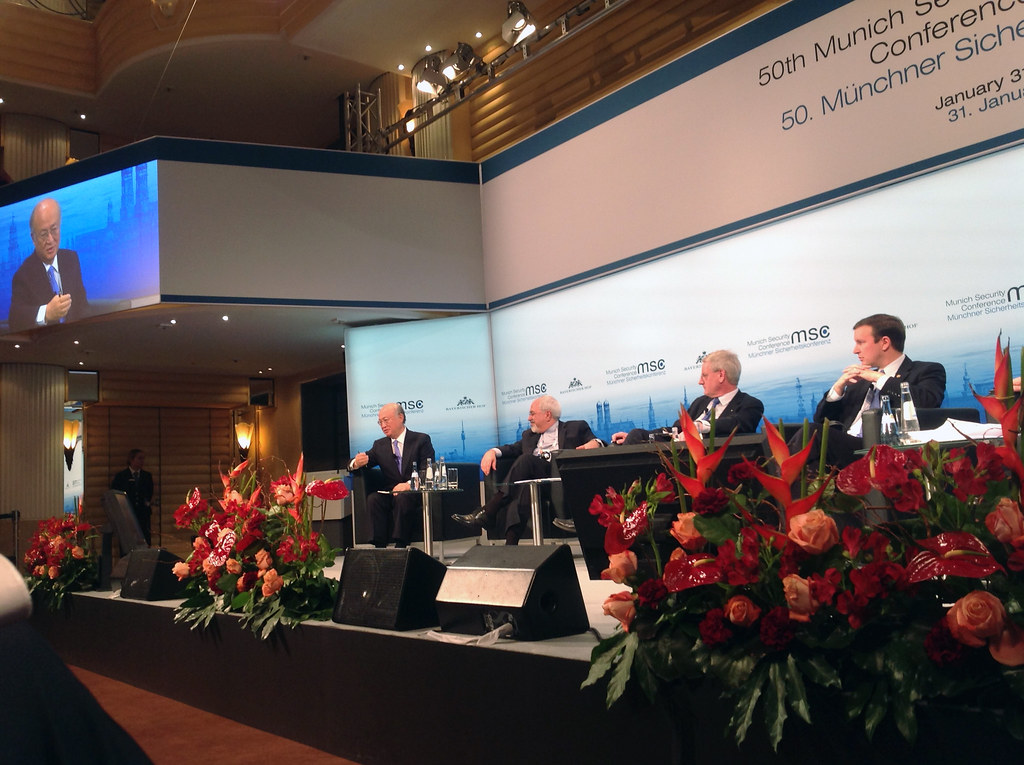
A Standing Ovation Hides Underlying Skepticism (Image Credits: Flickr)
Munich – The 62nd Munich Security Conference concluded with clear signals of evolving transatlantic dynamics.[1][2]
A Standing Ovation Hides Underlying Skepticism
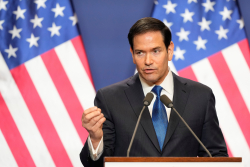
U.S. Secretary of State Marco Rubio delivered a keynote address that marked a softer tone compared to Vice President Vance’s pointed remarks the previous year. Rubio acknowledged shared Western challenges, including immigration pressures that both the U.S. and Europe faced after the post-Cold War era’s “dangerous delusion” of endless liberal democracy.[1] He emphasized European immigrants’ roles in shaping America, noting how Scots-Irish settlers influenced frontiersmen like Davy Crockett and Neil Armstrong, while German farmers built the Midwest’s agricultural strength.[2]
The audience at the Hotel Bayerischer Hof responded with a standing ovation. Conference organizer Wolfgang Ischinger captured the mood by stating Europe was “breathing a sigh of relief.” Yet not everyone shared the enthusiasm. EU foreign policy chief Kaja Kallas displayed visible discomfort and refrained from joining the applause.[1]
Germany’s Chancellor Charts a Bold European Vision
German Chancellor Friedrich Merz opened the conference with a stark declaration on its theme, “Under Destruction.” He asserted that the rules-based international order no longer existed, even in its flawed past form.[2] Merz criticized “big power politics” from the U.S. under President Trump, China, and Russia, which weaponized resources, technologies, and supply chains in zero-sum games.
Europe possessed immense potential, he argued, with the EU’s GDP nearly ten times Russia’s, yet it had failed to harness military, political, economic, and technological strengths. Merz called for a mindset shift to unite resources, fund militaries at full capacity, and construct a rival economy grounded in democratic principles. Delegates found his forward-looking approach inspiring, viewing it as a blueprint for self-reliance.[1]
Protests Outside Underscore Global Fault Lines
Beyond the conference halls, Munich witnessed a massive demonstration of around 250,000 people braving freezing rain. The protest supported Iran’s people against their government and featured exiled Reza Pahlavi, son of the late shah, alongside U.S. Senator Lindsey Graham.
Graham urged action, declaring it “a time of choosing” and backing the Iranian people over the “murderous ayatollah.” These events highlighted concurrent tensions, including U.S.-Iran frictions, that framed discussions inside.[2]
Key Speeches and Their Messages
The conference featured pivotal addresses that revealed divergent priorities:
- Rubio’s speech linked U.S. and European histories to advocate renewed partnership against migration and cultural erosion.
- Merz’s opener demanded European unity to counter great-power dominance.
- Kallas rejected claims of Europe’s “civilizational erasure,” pushing back on U.S. narratives.[1]
These interventions underscored a transatlantic alliance in flux, with Europe prioritizing agency in a rougher world.
Key Takeaways
- Rubio cleared a low bar set by prior U.S. criticism but faced selective historical critiques.
- Merz positioned Europe as a potential superpower through internal reforms.
- Conference signals Europe’s strategic pivot away from U.S. dependence.
The Munich gathering exposed a transatlantic relationship at a crossroads, where American reassurances met Europe’s resolve for autonomy. As leaders return home, the continent’s push for self-strengthening could redefine global alliances for years ahead. What do you think about Europe’s bid for independence? Tell us in the comments.