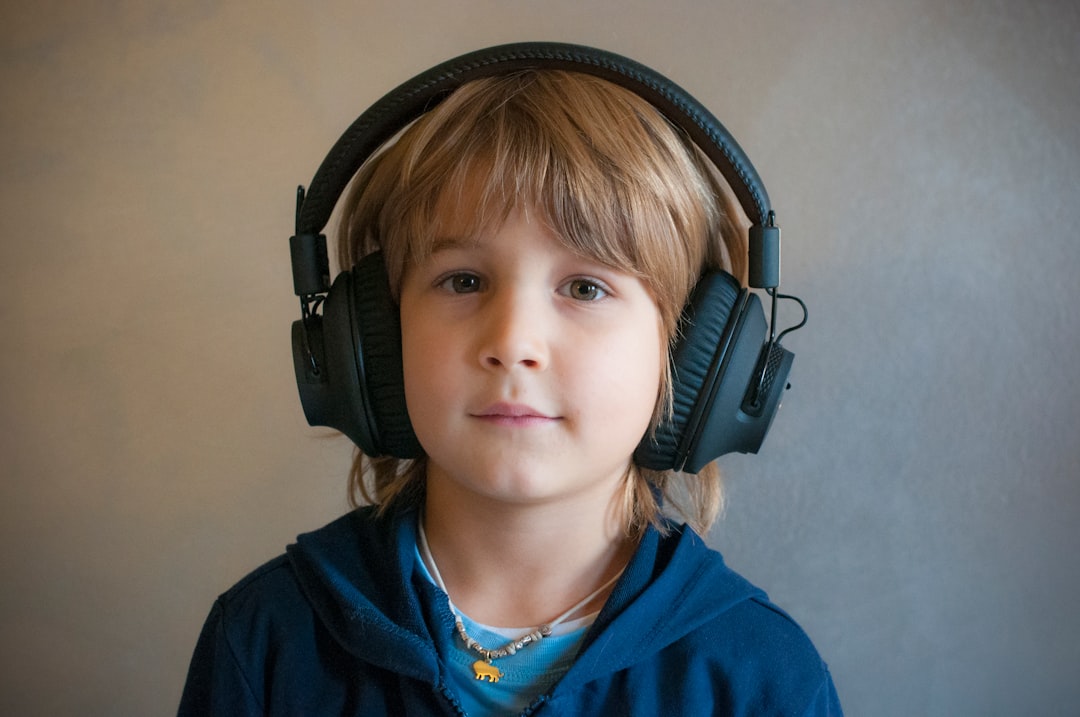
From Classroom Struggles to Productivity Breakthroughs (Image Credits: Unsplash)
Individuals grappling with ADHD often face heightened sensitivity to everyday noises, turning silence into a paradox of distraction, yet targeted sounds have emerged as effective countermeasures.
From Classroom Struggles to Productivity Breakthroughs
Jake Sussman recalled how minor sounds derailed his concentration during elementary school reading sessions after his ADHD diagnosis in sixth grade.
His parents enrolled him in a specialized school and introduced brown noise – deep, rumbling frequencies reminiscent of heavy rain or machinery – to aid relaxation and sleep.
In college, Sussman refined his approach by blending movie score music with brown noise, enabling hours of uninterrupted work.
Lyrics and abrupt changes in conventional music disrupted him, but this combination provided a steady rhythm that matched his internal pace.
He founded Superpower Mentors in 2019, a service connecting young people with ADHD and learning differences to mentors sharing similar traits, often building it amid these soundscapes.
His sibling created a playlist called “Movie Scores for Better Test Scores,” which gained over 13,000 subscribers.
The Neuroscience of Auditory Stimulation
Experts link these sounds to brain responses that counteract ADHD-related distractions.
Kevin Woods, director of science at productivity app Brain.FM, described movie scores as lo-fi music that avoids attention-grabbing elements.
“Most music is made to grab your attention. And if you’re a great music producer, your job is to make things bright and punchy to make people sit up and turn their head – which is bad if you’re trying to work,” Woods stated.
Background noise acts as a shield against subtle interruptions, while providing necessary stimulation for ADHD brains that crave more input to sustain focus.
Woods likened it to “a fidget spinner for the auditory system,” balancing stimulation to avoid boredom or anxiety.
Brain.FM composes tracks layering rhythms synced to brain waves with repetitive soundscapes, categorized for deep work, creativity, learning, and an ADHD-optimized mode.
Customizing Sound for Personal Focus
Research shows varied responses to sounds, complicating universal recommendations.
Andrew Kahn, associate director at neurodiversity nonprofit Understood.org, emphasized individual differences in frequency, volume, and duration needs.
Users benefit from systematic trials, tracking focus before and after specific sounds like brown or pink noise.
Kahn advocated a scientific method: test one stimulus multiple times daily, then switch, gathering data over a week.
This low-risk strategy contrasts with medications or therapy, offering easy self-implementation.
“Using white noise, music, and playlists has so little negative potential outcome, that trying them seems like a really wise thing to do. It can’t hurt,” Kahn noted.
Practical Strategies and Emerging Tools
Experimenters start with accessible options:
- Brown noise for deep, low-frequency calm.
- Movie scores layered with noise for rhythmic focus.
- Apps like Brain.FM for neuroscience-backed tracks.
- Playlists tailored for study or work sessions.
- Pink noise as a subtler alternative.
These approaches extend beyond clinical ADHD to those with similar symptoms, broadening accessibility.
Key Takeaways
- Lo-fi sounds provide stimulation without distraction, ideal for ADHD focus.
- Personal experimentation yields the best results through tracked trials.
- Tools like specialized apps and playlists make implementation straightforward.
Sound-based techniques reveal how subtle environmental tweaks can transform concentration challenges into manageable routines, empowering users to discover their optimal auditory environment. What sounds help you focus? Share in the comments.