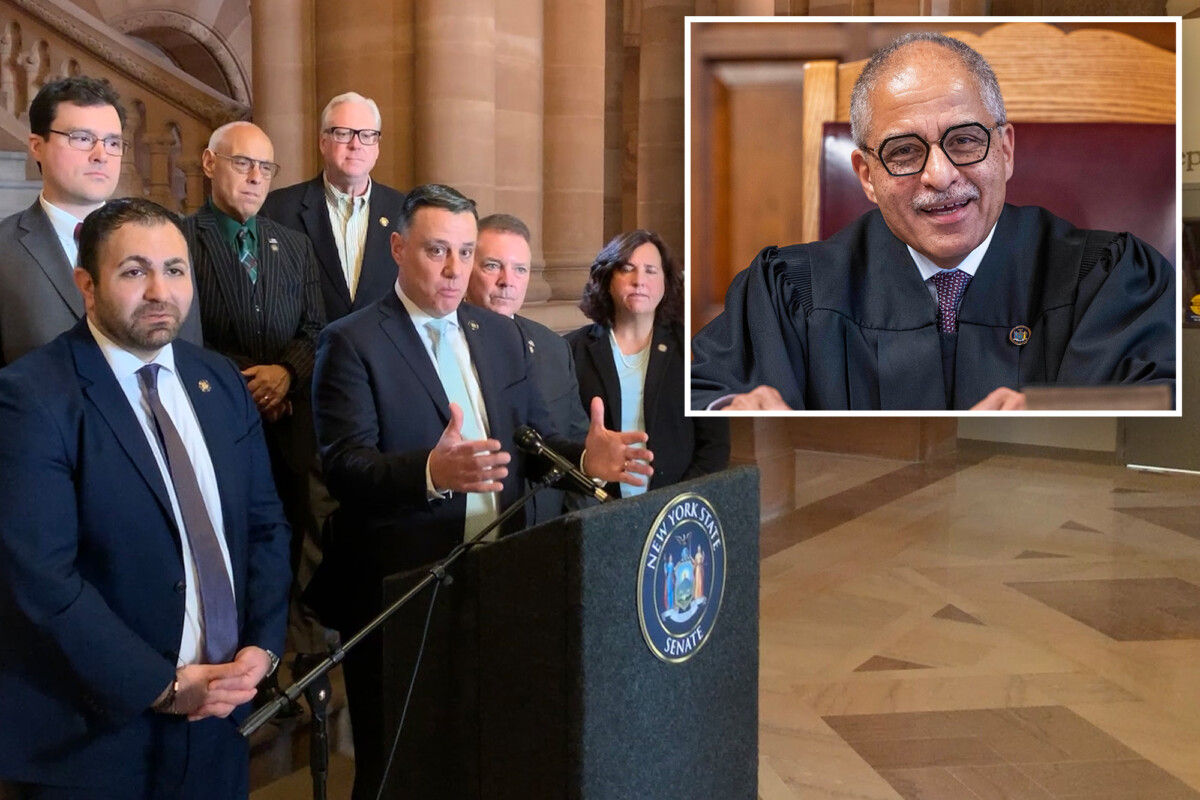
Blunt Critique at CUNY Symposium (Image Credits: Nypost.com)
New York – A prominent panel discussion featuring the state’s top judge has triggered an ethics complaint from Republican lawmakers, who accuse him of crossing into partisan territory.[1][2]
Blunt Critique at CUNY Symposium
Chief Judge Rowan Wilson delivered pointed remarks during a February 27 symposium at the CUNY School of Law in Queens. The event, organized by the Center for Community Alternatives, centered on criminal justice reforms.
Wilson described current sentencing practices in harsh terms. He argued that keeping reformed individuals incarcerated long-term wasted resources. “They hurt somebody maybe very seriously in the past, but they have come to be a very different person. And now we are spending a lot of money to keep them in prison. That’s stupid,” he stated.[1]
He highlighted challenges within the existing framework. Judges struggled to factor in potential future reviews when issuing initial sentences, Wilson explained. His comments extended to specific judicial behavior, labeling a judge’s description of a defendant as an “animal” who deserved lifelong imprisonment as “very distressing.”[3]
Call to Action on Judicial Elections
Wilson went further by addressing voter influence over the judiciary. He urged the audience to identify judges with such views. “You can find out who those people are. And when those judges come up to be elected, don’t vote for them and get other people not to vote for them. That’s something that you can do for me,” he said.[1]
This direct appeal raised eyebrows. Critics viewed it as an improper endorsement against certain jurists. The judge also implied that opposing related reforms amounted to folly, reinforcing his push for change.[2]
Local judges in New York face periodic elections, making voter sentiment a real factor in retention.
Second Look Act at the Center
The symposium promoted the Second Look Act, a long-pending bill in Albany. This measure would allow convicted individuals to petition for resentencing after serving 10 years.
Proponents argued it addressed overly punitive terms, especially for those who demonstrated rehabilitation. Wilson’s participation aligned with his prior advocacy for court system improvements.
However, the legislation remained stalled amid debates over public safety and recidivism risks.
- Permits review after a decade of incarceration.
- Targets potentially excessive sentences.
- Aims to consider personal growth and reduced costs.
- Has lingered in committees for years.
Republican Lawmakers File Complaint
On March 11, State Sen. Anthony Palumbo and Assemblyman Michael Tannousis, Republican ranking members of the judiciary committees, submitted a formal complaint to the Commission on Judicial Conduct.
They charged Wilson with breaching ethics rules on political activity and impartiality. Palumbo remarked, “Your political opinion means nothing when you’re in that robe on the bench.” Tannousis criticized efforts to sway elections.[1]
The panel could issue anything from a private warning to removal, though such outcomes proved rare for high-profile figures.
Responses and Judicial Context
Wilson’s office pushed back through spokesperson Al Baker. He affirmed the chief judge’s right to discuss legislation impacting courts and to promote informed civic engagement in judicial selections.[3]
Thomas Gant of the Center for Community Alternatives praised Wilson’s focus on dehumanizing rhetoric in courts. Wilson ascended to the chief role in 2023 following a contentious confirmation process.
Key Takeaways
- Wilson criticized sentencing as inefficient and urged electoral accountability for judges.
- GOP complaint highlights tensions over judicial neutrality in reform debates.
- The Second Look Act represents ongoing push for sentencing flexibility.
This clash underscores deepening divides on criminal justice in New York, where reform advocates clash with those prioritizing tough penalties. As the commission reviews the matter, questions linger about boundaries for judicial speech. What do you think about the balance between reform and accountability? Tell us in the comments.