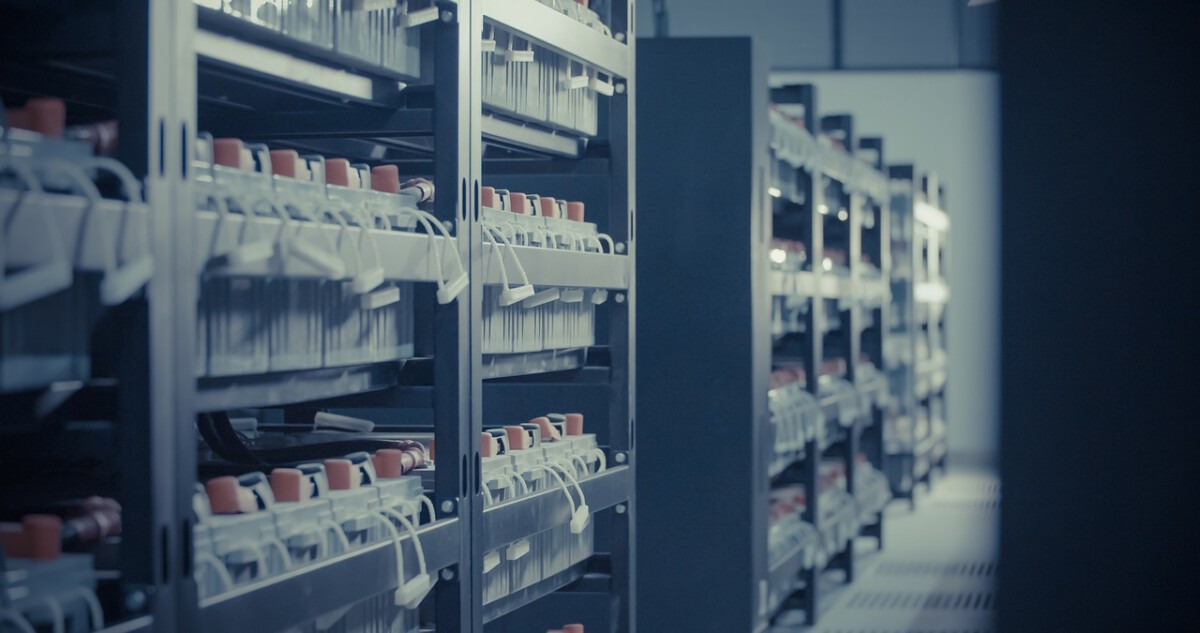
Defying Conventional Build Timelines (Image Credits: Pixabay)
Crusoe and Redwood Materials have demonstrated a groundbreaking alternative to traditional data center construction. Their innovative project combines modular computing units with a solar-powered microgrid backed by repurposed electric vehicle batteries. Eight months after launch, the system has delivered exceptional reliability while relying entirely on renewable energy. This approach sidesteps lengthy utility approvals and grid dependencies that plague the industry.
Defying Conventional Build Timelines
The project began last year when Crusoe connected its compact Spark data centers to Redwood’s solar field and battery network in Nevada. Each modular unit, roughly the size of a shipping container, arrives factory-built and ready for swift site integration. Traditional data centers often face multi-year delays waiting for grid connections, but this setup went live in months.
Cully Cavness, Crusoe’s cofounder, president, and chief strategy officer, highlighted the advantages. “The normal approach would be to get in line with a utility, wait for any number of years, and hopefully one day get an approval and join the grid,” he explained. “This is a pretty innovative approach that bypasses a lot of that timeline and lets us take our outcome into our own hands by really going off-grid with renewables in a very fast timeline.” Such speed positions the model for rapid scaling amid surging demand.
Unlocking Value from Used EV Batteries
Redwood Materials, the nation’s leading EV battery recycler, transforms end-of-life batteries into reliable energy storage. Most incoming batteries retain sufficient capacity for stationary applications like solar microgrids. The company developed monitoring technology to ensure safe, efficient performance in these setups.
Solar energy’s low deployment costs paired with affordable storage from recycled batteries create a viable 24/7 power solution. Cavness noted the breakthrough: “Storing [solar] overnight and making that into a base load resource that can be dispatched 24/7 historically has been very, very expensive. What Redwood has done is they’ve made a 24/7 battery solution with renewables economic and scalable.” An abundant supply of used EV batteries supports widespread adoption, as even a small fraction of retired vehicles yields substantial volume for the stationary sector.
Record Uptime and Ambitious Expansion
The Nevada microgrid has operated at 99.2% uptime since activation, surpassing initial goals and running on clean power alone. Four Spark units initially drew from the solar array and hundreds of repurposed batteries. Recent data confirms the system’s robustness without fossil fuel backups.
Expansion is underway at Crusoe’s new Colorado facility, where 20 additional modular units will nearly multiply compute capacity by seven. Excess solar capacity at the site ensures full utilization. JB Straubel, Redwood Materials’ founder and CEO, emphasized supply potential: “It’s still a very small percentage of EVs that are coming off the road, but it only takes a very small percentage to start to be a big number that’s relevant to the stationary market.” Crusoe envisions scaling to hundreds of megawatts across projects.
Addressing AI’s Power Crunch
This model tackles key hurdles in the AI-driven data center boom, including grid delays and energy costs. Crusoe offers solutions from small modular setups to massive campuses, like its gigawatt-scale site in Texas. Off-grid renewables decouple operations from regional grid strains.
Straubel sees it as the future: “I really think that more of the data center power is going to look like this. Grid interconnect timelines are getting longer and worse. The pricing and political problems around energy pricing, I think that’s kind of intractable… To really defensively solve how you can decouple a data center’s impact on regional pricing or any grid dynamics, having extensive behind-the-meter power or entirely off-grid data centers, I think, is the path.” Quick deployment makes it practical now. Here are the core benefits:
- 99.2% uptime with zero fossil fuels
- Months-long setup versus years for grid-tied builds
- Cost-effective storage via recycled EV batteries
- Scalable from trailers to gigawatt campuses
- Abundant battery supply from growing EV fleets
Key Takeaways
- Proven reliability exceeds targets in real-world use.
- Modular design enables factory efficiency and site flexibility.
- Renewable microgrids offer a sustainable path for AI growth.
This off-grid blueprint not only accelerates data center growth but also advances circular battery economies and clean energy transitions. As AI demands escalate, such innovations could redefine infrastructure resilience. What do you think about this shift to solar-powered computing? Tell us in the comments.