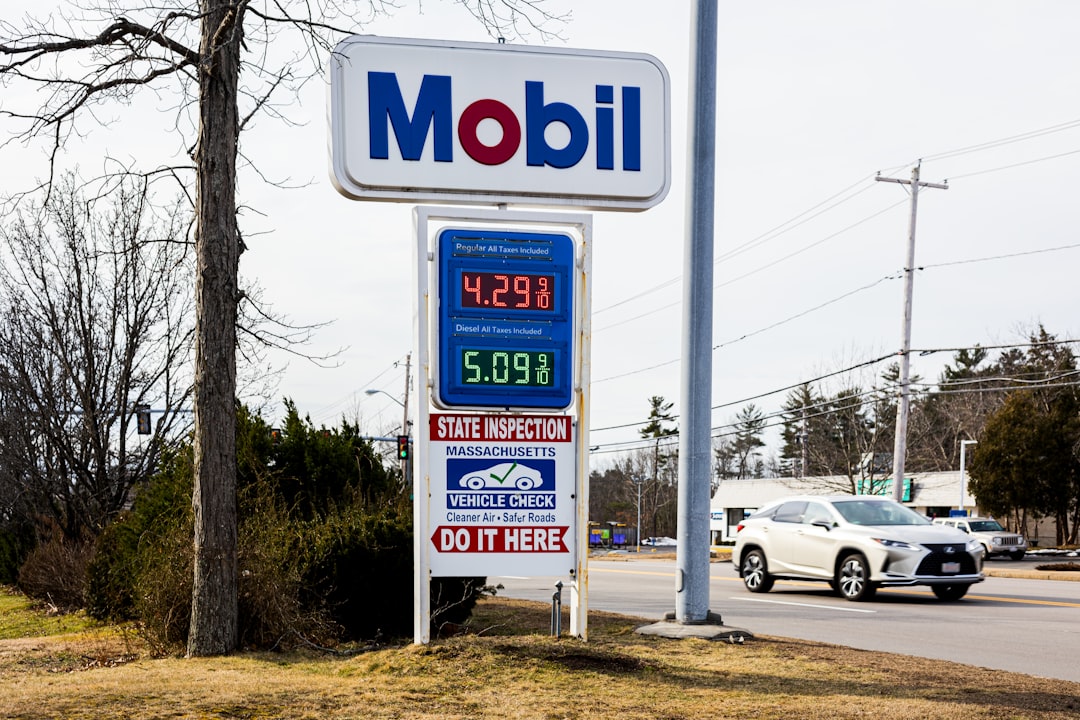
Oil Prices Flash to 18-Month Peak (Image Credits: Unsplash)
Global stock markets plunged Monday amid escalating fears that soaring oil prices from ongoing attacks in the Middle East could derail economic recovery.
Oil Prices Flash to 18-Month Peak
Brent crude, the global benchmark, briefly climbed to $119.50 per barrel early Monday, its highest since the summer following Russia’s 2022 invasion of Ukraine. U.S. crude followed suit, spiking to $119.48 before easing back. By later in the session, Brent settled at $101.76, still up 9.8% from Friday, while U.S. crude stood at $99.59, a 9.6% gain.
Traders pointed to the intensifying war with Iran, initiated by U.S. and Israeli strikes, as the primary driver. Disruptions in key shipping routes amplified the rally. Reports indicated tanker traffic through the Strait of Hormuz had nearly halted due to attack risks.
Wall Street and Beyond Reel from the Shock
The S&P 500 dropped 1.3% after its worst week since October, while the Dow Jones Industrial Average shed 721 points, or 1.5%, by mid-morning Eastern time. The Nasdaq Composite fell 1.2%. European and Asian markets fared worse, with steeper losses reflecting heavier reliance on imported energy.
| Market | Decline |
|---|---|
| South Korea’s Kospi | 6% |
| Japan’s Nikkei 225 | 5.2% |
| France’s CAC 40 | 1.7% |
Sectors sensitive to fuel costs bore the brunt. Airlines, cruise lines, and freight carriers saw outsized drops.
- Carnival: -7.3%
- United Airlines: -6.9%
- Old Dominion Freight: -3.8%
- Best Buy: -4.4%
- Williams-Sonoma: -4%
Supply Fears Center on Vital Chokepoint
The Strait of Hormuz, through which one-fifth of global oil flows daily, emerged as a flashpoint. Closure fears stemmed from Iranian threats and recent strikes on regional infrastructure, including Bahrain’s oil refinery and Israel’s hits on Tehran depots.
Oil strategists at Macquarie Research warned of severe consequences. “Without an agreement and a fast cessation of all kinetic activity, the crude market will begin to break in days, not weeks or months,” they wrote in a report led by Vikas Dwivedi. Prolonged blockage could propel prices to $150 per barrel or more.
Stagflation Shadows Economic Outlook
Persistent high oil prices threaten household budgets strained by inflation and could inflate corporate costs for fuel and logistics. This combination risks “stagflation,” where growth stalls amid rising prices. A weak U.S. jobs report Friday, showing more cuts than additions, heightened those concerns.
The 10-year Treasury yield held steady at 4.15%, caught between inflation pressures pushing rates up and slowdown fears pulling them down. President Donald Trump defended the price pain late Sunday, stating on social media that short-term spikes were “a very small price to pay for U.S.A., and World, Safety and Peace.”
Some investors eyed resilience. Sameer Samana, head of global equities at Wells Fargo Investment Institute, predicted a reversal. “We continue to believe that the current acute shortage of oil will be reversed in the coming months as new supply comes online,” he said.
Key Takeaways
- Oil prices pulled back from $120 peaks but remain sharply higher, pressuring energy-dependent sectors.
- Strait of Hormuz disruptions could accelerate a supply crisis if unresolved.
- Markets have rebounded from past conflicts, provided oil stabilizes quickly.
While history suggests U.S. stocks can recover from geopolitical shocks if energy markets normalize, the path ahead depends on de-escalation in the region. Investors now watch for coordinated responses from major economies to tame the oil rally. What steps should leaders take next? Share your thoughts in the comments.