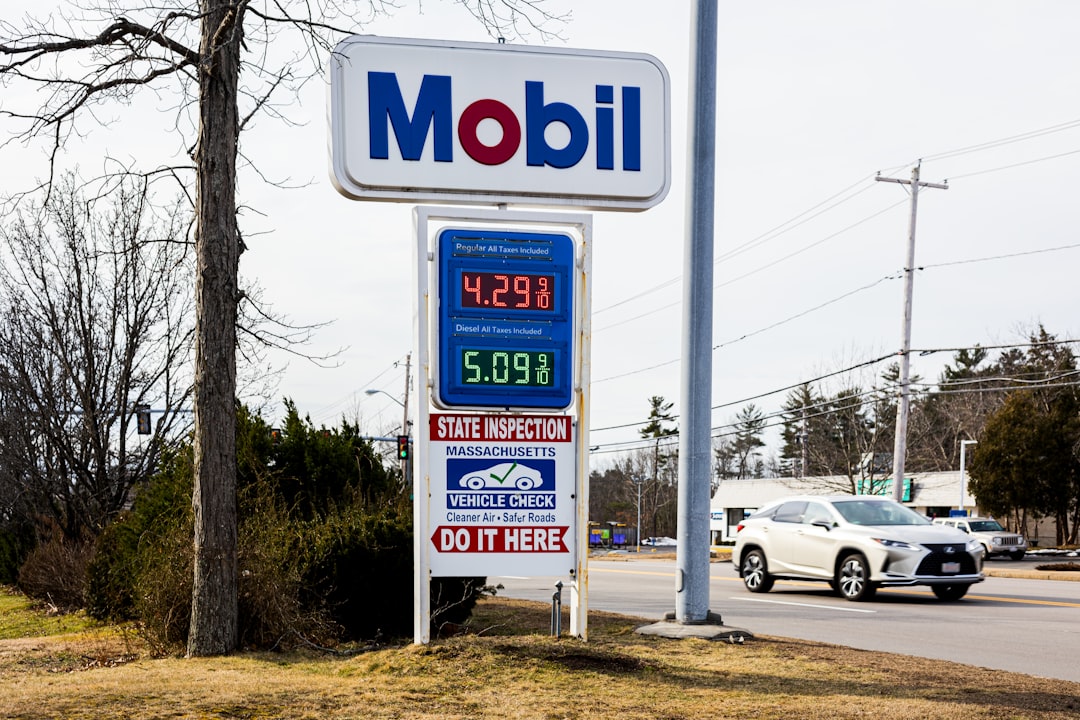
Brent Crude Hits $119.50 in Volatile Trading (Image Credits: Unsplash)
Escalating conflict in the Middle East propelled oil prices to near-record levels on Monday, disrupting shipments through the Strait of Hormuz and rattling global markets.
Brent Crude Hits $119.50 in Volatile Trading
The international benchmark Brent crude rocketed to $119.50 per barrel early Monday, its highest point in 18 months, before retreating to around $106, still up 14 percent for the session. West Texas Intermediate, the U.S. benchmark, mirrored the frenzy, peaking above $119.48 before easing toward $103. Traders watched anxiously as geopolitical tensions fueled the spike, reminiscent of levels last seen after Russia’s 2022 invasion of Ukraine.
Financial markets absorbed the blow, with South Korea’s Kospi index plunging 6 percent to 5,251.87. The rapid ascent stemmed from fears over supply interruptions in the Persian Gulf, where the war entered its second week.
Infrastructure Under Siege in the Gulf
Bahrain’s national oil company invoked force majeure on shipments after an Iranian strike ignited its refinery complex, halting operations amid extraordinary circumstances. Oil depots in Tehran continued to burn following Israeli overnight attacks, while civilian infrastructure suffered too – Bahrain accused Iran of targeting a key desalination plant essential for drinking water.
Critical chokepoints faced severe threats. Roughly 15 million barrels of crude – 20 percent of global daily supply – normally transit the Strait of Hormuz daily, per Rystad Energy data. Tanker traffic from Saudi Arabia, Kuwait, Iraq, Qatar, Bahrain, the UAE, and Iran ground to a near halt amid missile and drone risks. Iraq, Kuwait, and the UAE slashed production as storage tanks overflowed without export outlets. Strikes by Iran, Israel, and the United States further damaged oil and gas facilities.
World Leaders Eye Strategic Reserves
G7 nations explored tapping strategic oil reserves to temper the surge, with reports indicating some members favored immediate releases. French President Emmanuel Macron confirmed the option remained under consideration, noting G7 leaders might convene this week. Finance ministers held a video conference Monday to address the fallout, as France chaired the group.
U.S. President Donald Trump dismissed reliance on America’s Strategic Petroleum Reserve over the weekend, asserting ample domestic supplies would stabilize prices soon. Meanwhile, Iran’s daily exports of 1.6 million barrels, primarily to China, hung in the balance, prompting Beijing to prioritize energy security.
Consumers Feel the Pinch Worldwide
Fuel costs cascaded through economies, exacerbating inflation and curbing spending. In the U.S., regular gasoline averaged $3.48 per gallon early Monday, up nearly 50 cents weekly, while diesel reached $4.66, a more than 80-cent jump. Natural gas climbed to $3.34 per 1,000 cubic feet from $3.19.
- Southeast Asia saw long queues at gas stations, with Hanoi resident Le Van Tu noting impacts on all petrol-dependent transport.
- South Korean President Lee Jae Myung threatened penalties for price gouging by refiners and stations, urging alternatives to Hormuz routes.
- China’s Foreign Ministry spokesman Guo Jiakun stressed responsibilities for stable supplies, vowing protective measures.
| Commodity | Peak Price | Later Trading |
|---|---|---|
| Brent Crude | $119.50 | $106 |
| WTI Crude | $119.48 | $103 |
| U.S. Gasoline | – | $3.48/gal |
Key Takeaways:
- Strait of Hormuz disruptions threaten 20% of global oil flows.
- G7 weighs reserve releases amid 14% daily price gains.
- Energy spikes fuel inflation, hitting households and markets hard.
The conflict’s energy shock underscores vulnerabilities in global supply chains, with higher costs likely to linger until safe passage resumes. How will these pressures reshape economies in the coming weeks? Share your thoughts in the comments.