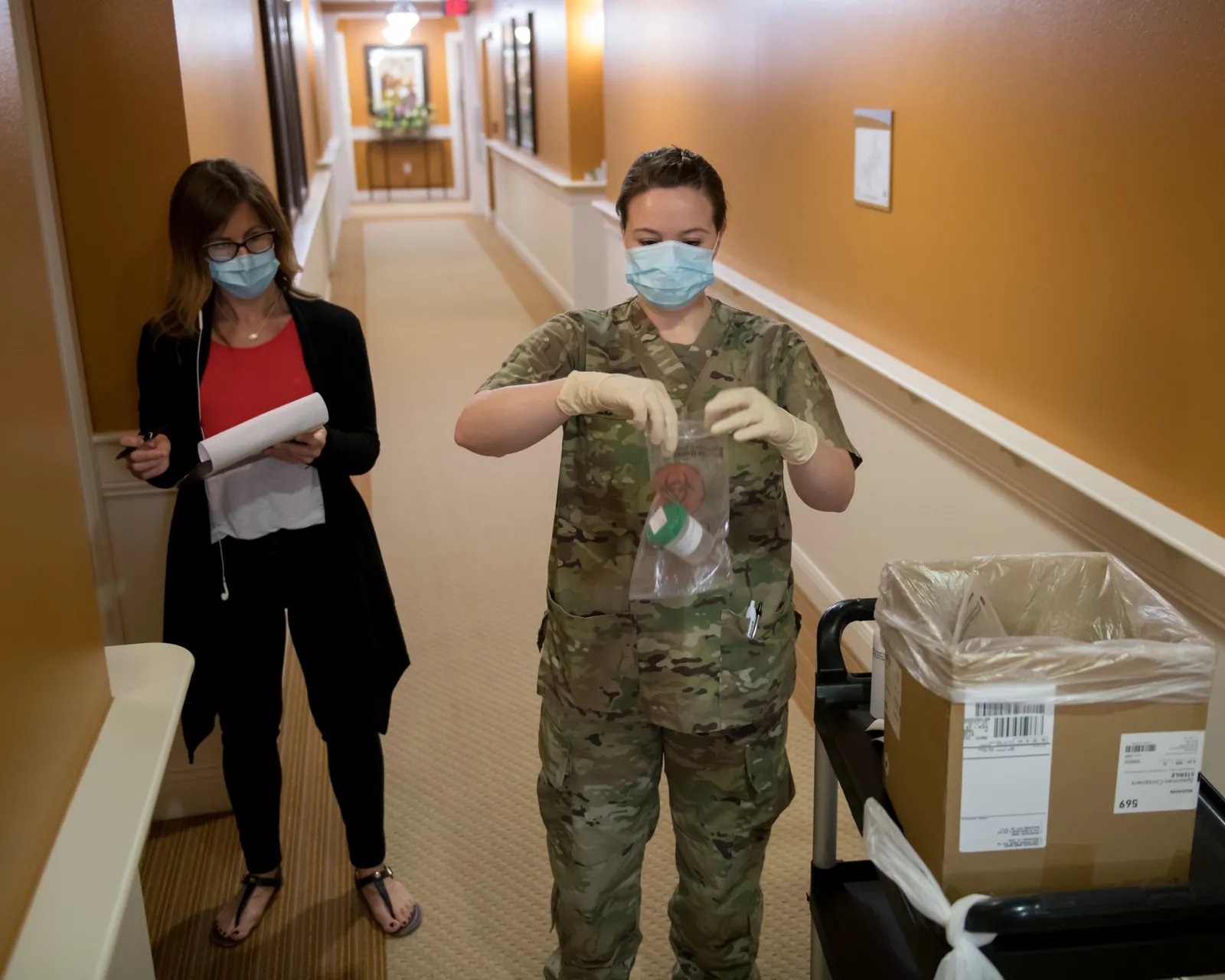
Rushed Lab Relocation Exposes Deep Flaws (Image Credits: Upload.wikimedia.org)
Oklahoma – Republican leaders in the state have pursued aggressive reforms to public health operations, resulting in widespread disruptions that mirror emerging federal strategies under President Trump.
Rushed Lab Relocation Exposes Deep Flaws
State officials relocated the Public Health Laboratory to Stillwater in 2021 amid haste to avoid external oversight, but the move triggered immediate breakdowns.[1]
Inspectors found insufficient electrical outlets, frequent power outages, unlocked refrigerators storing virus samples, expired testing reagents, and empty desks for specialized staff. Samples required shipping to Minnesota for analysis. A state worker labeled the decision “a hurried, thoughtless” effort lacking proper planning.[1]
These failures persisted into late 2021, forcing reliance on out-of-state labs and delaying critical diagnostics nationwide concerns about biodefense capabilities.
Funding Cuts Dismantle Key Programs
Governor Kevin Stitt’s administration rejected billions in federal grants, including $157 million returned as “wasteful” under the Division of Government Efficiency. Programs for immunizations, community health workers, newborn screening, and disease tracking faced elimination.[1]
An executive order barred Medicaid providers tied to abortion services, demanding “pro-life” affirmations. The $30 million Oklahoma Pandemic Center of Innovation, meant to track virus variants, stalled as a “work in progress” before its website vanished in 2023 – what one critic called a “$30 million ghost.”[1]
Lori Freeman, CEO of the National Association of County and City Health Officials, described the combination of withdrawn funds and opaque decisions as a “perfect storm” endangering community safety.
Families Bear the Brunt of Delays
Newborn screenings suffered directly from lab mishaps, as the Blevins family learned when their infant received a false positive for Malonic Acidemia. The error prompted five blood draws, two catheter procedures, and multiple doctor visits in the child’s first six weeks.[1]
Mother Lori Zehnder recounted the ordeal: “Those first six weeks were rough without having to add on something that could have been easily avoided if someone had taken the necessary steps.” Oklahoma ranked 49th in healthcare performance last year, per the Commonwealth Fund, with women’s mortality rising 25 percent from 2020 to 2021.[1]
- Workforce shortages plague rural hospitals, worsening since the pandemic.
- Live birth death rates exceed the national average by nearly seven points.
- Federal grant shortfalls threaten $700 million to $1 billion in Medicaid and SNAP support.
- Preventive services now lean on private labs, straining resources.
Federal Moves Echo State Experiment
One year into Trump’s term, similar patterns emerged nationally: key vacancies like chief medical officer, nearly $1 billion slashed from pandemic research, and Robert F. Kennedy Jr.’s influence on vaccine skepticism. Red states like Oklahoma forge ahead with pared-back systems, while blue states bolster theirs.[1]
State Senator Paul Rosino warned of massive funding gaps with no ready replacements. Dr. Robert Steinbrook of Public Citizen noted that fewer experts at health agencies mean more preventable illnesses and riskier drugs reaching markets.[1]
Key Takeaways
- Oklahoma’s unchecked reforms highlight risks of speed over preparation in public health.
- Federal cuts under Trump and Kennedy Jr. could fragment national standards by state.
- Everyday families already endure delays and stress from broken infrastructure.
Oklahoma’s experience underscores how one-party dominance accelerates change but invites chaos without oversight, potentially locking in divided healthcare landscapes across America. What do you think of these shifts? Tell us in the comments.