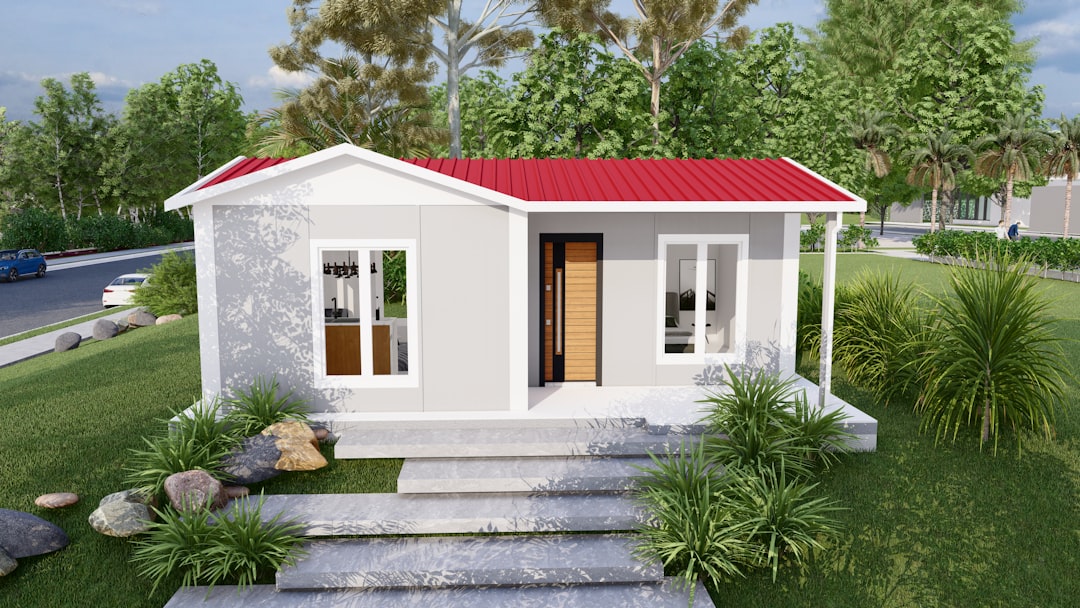
A Fresh Take on Housing Scarcity (Image Credits: Unsplash)
Omaha, Nebraska – Two strikingly modern residences stand out on a quiet, tree-shaded corner in the city’s northeast section. Measuring 802 and 618 square feet, these structures challenge the norm of oversized new builds that average more than 2,100 square feet nationwide, according to U.S. Census data from construction characteristics reports. Developed through OurStory, the initiative promises a blueprint for quick, cost-effective housing suitable for first-time buyers, aging residents, or backyard additions. Construction nears completion, signaling a potential shift in local real estate dynamics.
A Fresh Take on Housing Scarcity
Only six of the 48 recent single-family building permits in Omaha and Douglas County covered homes under 2,000 square feet, with none dipping below 1,000. This uniformity exacerbates the city’s pressing need for 30,000 new units aimed at low- and middle-income households by decade’s end. OurStory emerged to diversify options, blending affordability with thoughtful design.
Jessica Scheuerman, executive director of Partners for Livable Omaha, drew inspiration from her mother’s housing struggles on a fixed income. The nonprofit teamed up with the University of Nebraska-Lincoln’s FACT studio, where architecture students crafted the prototypes. Construction began earlier this year, with the larger home already sold for $190,000—well below the city’s median of $280,000, per Redfin market data at Omaha housing trends. Scheuerman emphasized inclusivity: "When you design and plan for the aging community, everybody benefits."
Efficient Designs Built for Longevity
Students under Professor Jeffrey Day optimized layouts by clustering kitchen and bathroom along a shared 10-foot wall, minimizing plumbing and electrical runs. Prefabricated structural insulated panels form walls, enabling factory production while foundations pour on-site. This "kit of parts" approach slashed timelines and costs, allowing configurations from one- to two-bedroom layouts.
Aging-in-place features include zero-step entries, wide hallways, and accessible doors, rooted in Scheuerman’s prior work with Partners for Livable Communities. One home sports a peaked roof with loft space; the other a slanted design. Day noted the system’s adaptability: "The goal has always been to think about this project as a prototype that could be replicated multiple times, and in different configurations." These elements make the homes versatile for artists, renters, or families.
Proven Economics Through Smart Funding
Total build costs for both reached about $540,000, offset by grants from Nebraska’s Middle Income Workforce Housing Investment Fund, philanthropy like the Lozier Foundation, and Pella’s material donations. Spark Capital extended forgivable loans up to $100,000 for nonprofits. Even without subsidies, per-unit prices undercut market medians, proving viability.
| Feature | Larger Home (802 sq ft) | Smaller Home (618 sq ft) |
|---|---|---|
| Bedrooms | 2 | 1 |
| Sale Price | $190,000 | Pending (lower expected) |
| Key Innovation | Peaked roof + loft | Slanted roof |
Lessons from lenders and appraisers refined the designs, ensuring mortgage readiness. Scheuerman stressed financial rigor: "At the end of the day, this project is pointless if the numbers don’t work." Proceeds will fund more land acquisitions.
Toward a Replicable Model Nationwide
OurStory positions communities to act as developers, with students now compiling a free online catalog of plans this summer, backed by AIA, AARP, and Nebraska’s Affordable Housing Trust Fund. Echoing Sears catalogs of old, it offers pro-bono blueprints for prefab small homes. Scheuerman envisions broad uptake: "Real estate development is our shared responsibility, and communities need to be empowered to get into the developer’s seat."
- Addresses size uniformity in new permits.
- Supports aging in place without sacrificing appeal.
- Reduces build times via prefab efficiency.
- Unlocks financing for equity-rich buyers.
- Scales through open-source designs.
Key Takeaways
- OurStory homes cost 30-50% less than Omaha medians.
- Prefab panels enable rapid, low-waste assembly.
- Versatile for ADUs, starters, or forever homes.
As these prototypes near handover by August, OurStory demonstrates how collaboration and innovation can ease housing pressures. Cities facing similar shortages might find a roadmap here. What role could compact homes play in your community? Share your thoughts in the comments.