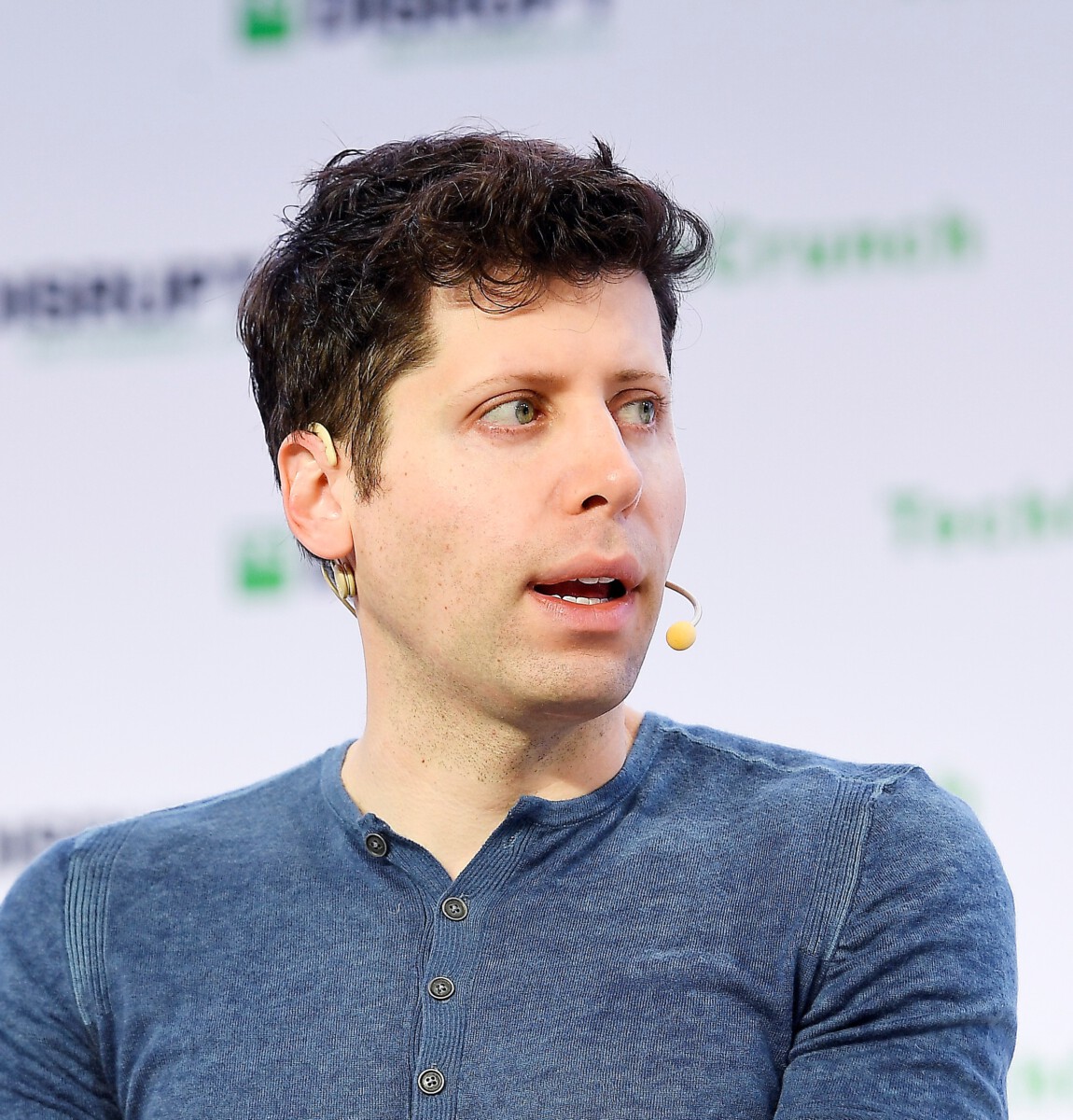
A ‘Code Red’ Response to Competitive Threats (Image Credits: Upload.wikimedia.org)
San Francisco — OpenAI faces mounting pressure in the competitive AI landscape. Late last year, CEO Sam Altman issued an internal “code red” memo that signaled a sharp pivot. The company now plans to nearly double its staff to 8,000 employees by the end of 2026, aiming to reclaim momentum against rivals like Anthropic.[1][2]
A ‘Code Red’ Response to Competitive Threats
OpenAI’s leadership recognized a critical vulnerability. The firm had pursued ambitious side projects in areas like video models and robotics. Meanwhile, competitors sharpened their focus on core enterprise needs. This distraction allowed Anthropic to capture business customers at three times the rate of OpenAI for first-time AI purchases.[2]
Altman’s memo in early December 2025 called for immediate refocusing. Employees paused non-essential initiatives to bolster ChatGPT, making it more capable, intuitive, and personalized. The directive expanded global access while scaling back investments in sectors such as health, shopping, and advertising. OpenAI’s chief product officer later emphasized this shift as a way to force company-wide concentration.[3]
Anthropic’s Surge in the Business Sector
Anthropic emerged as a formidable challenger. The company grew its business customer base to over 300,000 by September 2025, up dramatically from fewer than 1,000 two years earlier. Large enterprise accounts expanded more than sevenfold in that period. Recent data shows Anthropic claiming 73 percent of first-time enterprise AI spending, leaving OpenAI with just 26 percent.[4][3]
This dominance stems from targeted enterprise strategies. Anthropic holds about 32 percent market share in corporate AI, generating 80 percent of its revenue from such clients. OpenAI, despite over 800 million weekly ChatGPT users, trails in this lucrative segment. The gap prompted OpenAI to treat the situation as a full-scale business battle.[5]
Massive Hiring to Fuel Recovery
OpenAI currently employs around 4,500 people. The expansion targets 8,000 by late 2026, with most additions in key areas.[1] New roles will emphasize product development, engineering, research, and sales. Recruiters seek specialists in “technical ambassadorship” to assist businesses in integrating OpenAI tools effectively.
This hiring spree contrasts with layoffs at peers like Meta and Google. OpenAI views talent as essential to accelerate innovation. The plan aligns with a recent funding round that valued the startup at $840 billion, attracting major investors including SoftBank.[1]
- Product development: Enhancing core models like ChatGPT.
- Engineering: Building scalable infrastructure.
- Research: Advancing reasoning and personalization features.
- Sales: Securing enterprise contracts.
- Technical support: Onboarding business users.
Broader Strategic Adjustments
Beyond headcount growth, OpenAI eliminates distractions. The “code red” eliminated “side quests,” redirecting resources to proven strengths. This mirrors responses to other threats, such as Google’s Gemini 3, which topped benchmarks and drew massive user traffic.[1]
Financially, OpenAI tracks toward $20 billion in annualized revenue as of late 2025, with ambitions for hundreds of billions by 2030. Enterprise remains pivotal, as consumer growth alone cannot sustain the infrastructure demands. Rivals’ advances underscore the need for speed in a market valued in trillions.
| Company | Current Workforce | Enterprise Focus |
|---|---|---|
| OpenAI | ~4,500 | Ramping up sales and support |
| Anthropic | Not specified | 73% first-time spend share[4] |
Key Takeaways:
- OpenAI’s “code red” in December 2025 refocused efforts on ChatGPT amid Anthropic’s enterprise gains.
- Workforce will grow from 4,500 to 8,000 by end-2026, prioritizing technical and sales roles.[1]
- Anthropic leads with 73% of new enterprise AI spending, pressuring OpenAI to adapt quickly.
OpenAI’s aggressive moves signal determination in the AI arms race. As competition intensifies, this workforce boom could redefine enterprise leadership. What do you think about OpenAI’s strategy? Tell us in the comments.