

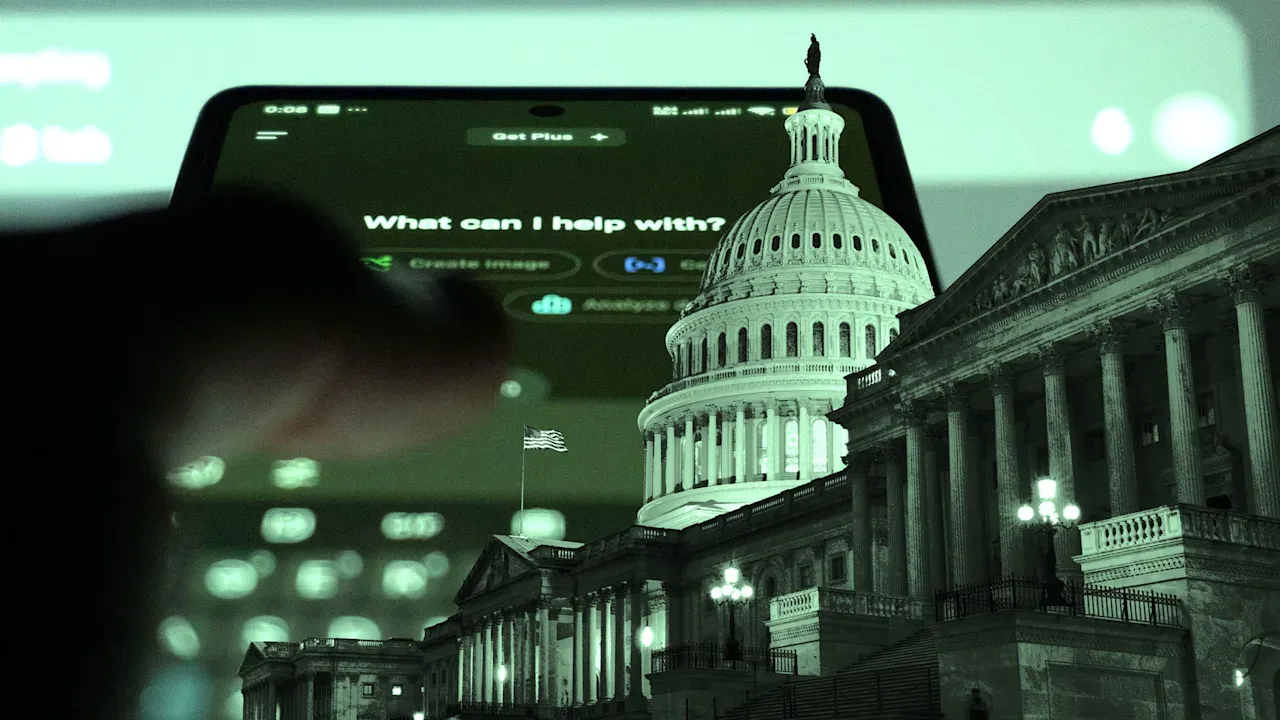
80,000 Users Signal Rapid Government Traction (Image Credits: Images.fastcompany.com)
The United States – OpenAI has solidified its position as a primary AI provider to federal operations, serving 37 agencies and reaching about 80,000 government workers who rely on its technology daily.
80,000 Users Signal Rapid Government Traction
Even as a minor slice of its overall customer base, government adoption carries outsized symbolic weight for OpenAI and rivals like Google and Perplexity. These companies vie aggressively for federal favor, often slashing prices to near zero to encourage uptake. Such moves underscore the high stakes in embedding AI within public sector workflows.
Recent milestones amplify this momentum. OpenAI, alongside competitors, secured fast-track approval to deploy AI services on government-vetted clouds. This accreditation addresses longstanding barriers, enabling agencies to integrate tools like ChatGPT Enterprise with sensitive data.
Mission Alignment Fuels the Push
Felipe Millon, OpenAI’s head of government sales, emphasized that financial gains play second fiddle to broader objectives. The company views government engagement as essential to its public benefit mission: ensuring artificial general intelligence serves humanity. Leaders argue that policymakers must experience AI firsthand to grasp its transformative potential.
Practical applications abound in civilian services. Agencies could streamline tax processing at the IRS, enhance housing support via HUD, or improve food assistance programs. Millon noted, “The best way to understand what’s happening in AI is to be a user and to see it for yourself.”
Overcoming Procurement and Security Obstacles
Federal contracting demands rigorous cybersecurity compliance and convoluted buying processes, which slow innovation. Agencies face constrained budgets compared to private enterprise, prompting OpenAI’s aggressive discounting through initiatives like the OneGov deal. Microsoft’s Azure OpenAI service had already paved some ground, but direct access accelerates broader use.
Major players now lead adoption. The Department of Health and Human Services boasts tens of thousands of ChatGPT Enterprise users, matched by the Treasury Department. Around 50 agencies tapped the OneGov program, though per-agency security reviews often delayed rollout. National labs, including Los Alamos with an on-premises setup, round out key deployments.
Cloud Shift Eases Path Forward
Government computing has migrated from on-site servers to scalable cloud platforms dominated by Amazon, Microsoft, Google, and Oracle. OpenAI’s FedRAMP authorization aligns its enterprise offerings with these standards, allowing secure handling of real data. This step unlocks value across departments like Treasury, HHS, and State.
Civilian-focused efforts sidestep many defense-related frictions. Tensions arise occasionally, but good-faith talks typically resolve them. Still, examples like the Pentagon’s disputes with Anthropic highlight risks of dependency and supply chain scrutiny.
Key Challenges in the AI-Government Dance
Political sensitivities loom large. Partnerships with agencies like Homeland Security draw public and employee backlash. Procurement inertia persists despite discounts, as agencies navigate budgets and authorizations.
- Cybersecurity reviews demand extensive validation.
- Tight fiscal constraints limit scaling.
- Political optics complicate high-profile deals.
- Reliance on hyperscalers shapes deployment options.
- Employee adoption hinges on hands-on access.
Key Takeaways
- OpenAI prioritizes mission over revenue in government pursuits.
- FedRAMP status enables secure, data-rich AI use.
- 80,000 users across 37 agencies mark early wins amid competition.
OpenAI’s calculated discounts and compliance triumphs position it to shape public sector AI, potentially redefining citizen services. As adoption deepens, the true impact on efficiency and equity remains to be seen. What implications do you foresee for AI in government? Share your thoughts in the comments.