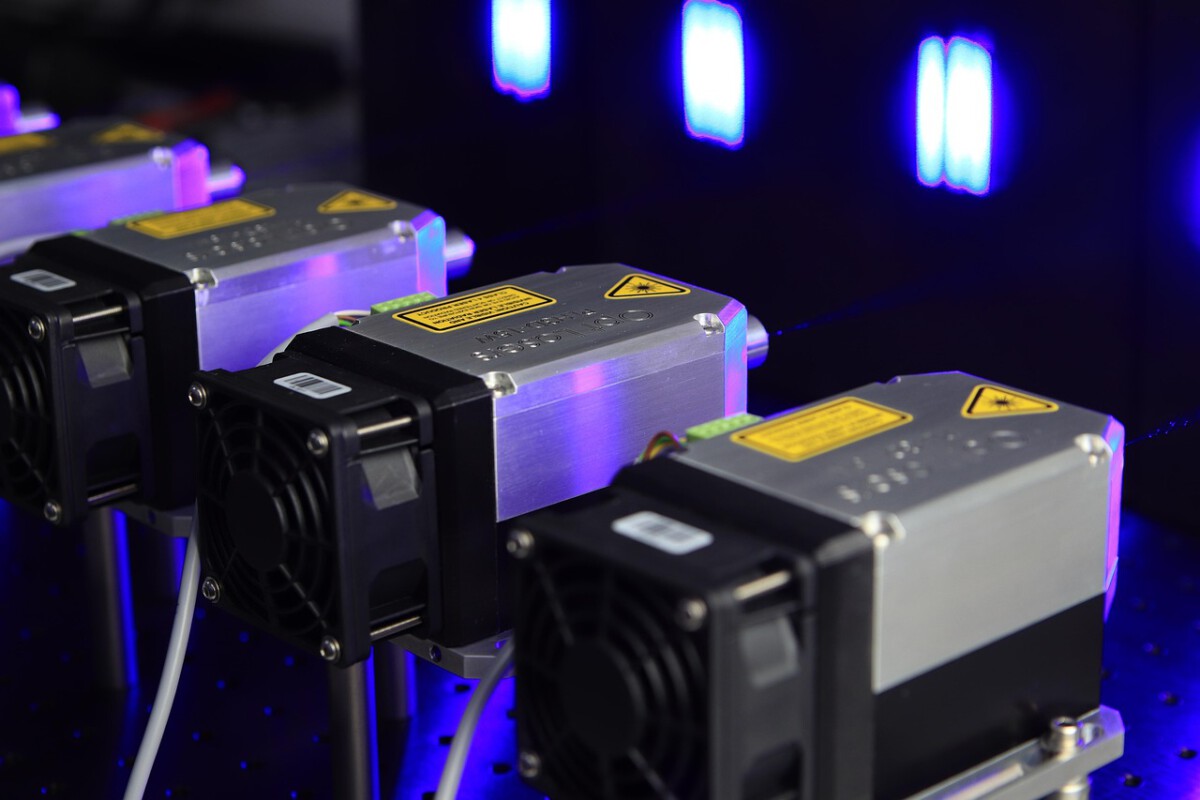
Surging R&D Investments Eclipse Past Eras (Image Credits: Pixabay)
The U.S. Department of Defense released a preliminary version of its fiscal year 2027 budget request on April 3, totaling $1.5 trillion. This “skinny” outline highlights a substantial commitment to directed energy technologies, particularly high-energy lasers. Officials plan to disclose detailed program breakdowns on April 21, but early figures already point to over $2 billion allocated for research, development, testing, and evaluation.
Surging R&D Investments Eclipse Past Eras
The proposed funding represents a sharp escalation from the more than $1 billion spent annually on directed energy RDT&E in recent years. It also surpasses average yearly outlays during the Strategic Defense Initiative of the 1980s and 1990s. Analysts view this as the largest single-year U.S. military investment in such technologies to date.
Defense-wide programs under the Office of the Secretary of Defense show notable growth. The High Energy Laser Advanced Component Development & Prototype element jumps to $44.5 million from $5.5 million the prior year. Meanwhile, the High Energy Laser Advanced Technology Program seeks $201 million, up from $120 million.
These efforts, managed by the Joint Directed Energy Transition Office, aim to mature laser systems for diverse military applications. They support demonstrations of operational value across services. Funding also flows to the Joint Interagency Task Force 401, with $580 million earmarked, potentially aiding counter-drone laser initiatives.
Procurement Plans Remain Cautious Amid Fielding Goals
The Pentagon aims to deploy laser weapons at scale within three years, yet procurement lines show restraint. The Navy’s AN/SEQ-4 ODIN laser program, installed on Arleigh Burke-class destroyers, receives no new funds after $3 million last year. Broader counter-small unmanned aircraft systems budgets, however, offer possibilities.
A defense-wide C-sUAS line item requests $800 million, up from $732 million, tied to the new Joint Interagency Task Force 401. The Army’s equivalent seeks $994.1 million, rising from $693.4 million. This could fund up to several Enduring High Energy Laser units, each costing nearly $25 million.
Full clarity awaits justification books. Still, the pattern emphasizes experimentation over mass production for now.
Golden Dome Initiative Drives Directed Energy Momentum
A standout element targets $452 million for directed energy development under the Golden Dome missile defense effort. This triples the $142 million from last year’s reconciliation package signed by President Trump in July 2025. The funds, listed under RDT&E despite procurement labeling, focus on prototypes and testing.
The Joint Laser Weapon System, a Navy-Army collaboration, falls here. Designed to counter cruise missiles, it aligns with broader shield ambitions. Pulsed laser explorations may also benefit, building on new fiscal year 2026 starts.
Service Breakdowns Reveal Varied Priorities
Navy RDT&E for directed energy and electric weapons climbs to over $94 million from $14.5 million. This supports potential advances in systems like HELIOS, SONGBOW, or Red Sea-tested prototypes. Leaders have voiced ambitions for lasers on every ship.
Army allocations lack explicit laser lines. Programs such as AMP-HEL, E-HEL, and JLWS nest under larger increases: $460 million for M-SHORAD and $235 million for EMAM. Cancellations of DE M-SHORAD and IFPC-HEL have streamlined focus.
Air Force funding dips slightly to $92 million under Directed Energy Technology, from $96 million. Prototyping remains at zero. Plans persist for airborne and base-defense lasers.
| Service/Program | FY2026 (millions) | FY2027 Request (millions) |
|---|---|---|
| Navy Directed Energy | 14.5 | 94 |
| Defense-wide HEL Tech | 120 | 201 |
| Air Force Directed Energy | 96 | 92 |
| Golden Dome DE | 142 | 452 |
Path Forward Balances Promise and Prudence
The budget underscores sustained R&D amid drone and missile threats, yet stops short of widespread procurement. Services continue refining prototypes for real-world utility. Detailed documents next week could clarify shifts.
Key Takeaways:
- Over $2 billion total for directed energy RDT&E, a record high.
- Navy and defense-wide programs see biggest jumps; Air Force trims slightly.
- Procurement hints in C-sUAS, but no major buys confirmed yet.
This investment positions lasers as a cornerstone of future defense, potentially transforming engagements. What implications do you see for U.S. military strategy? Share your thoughts in the comments.