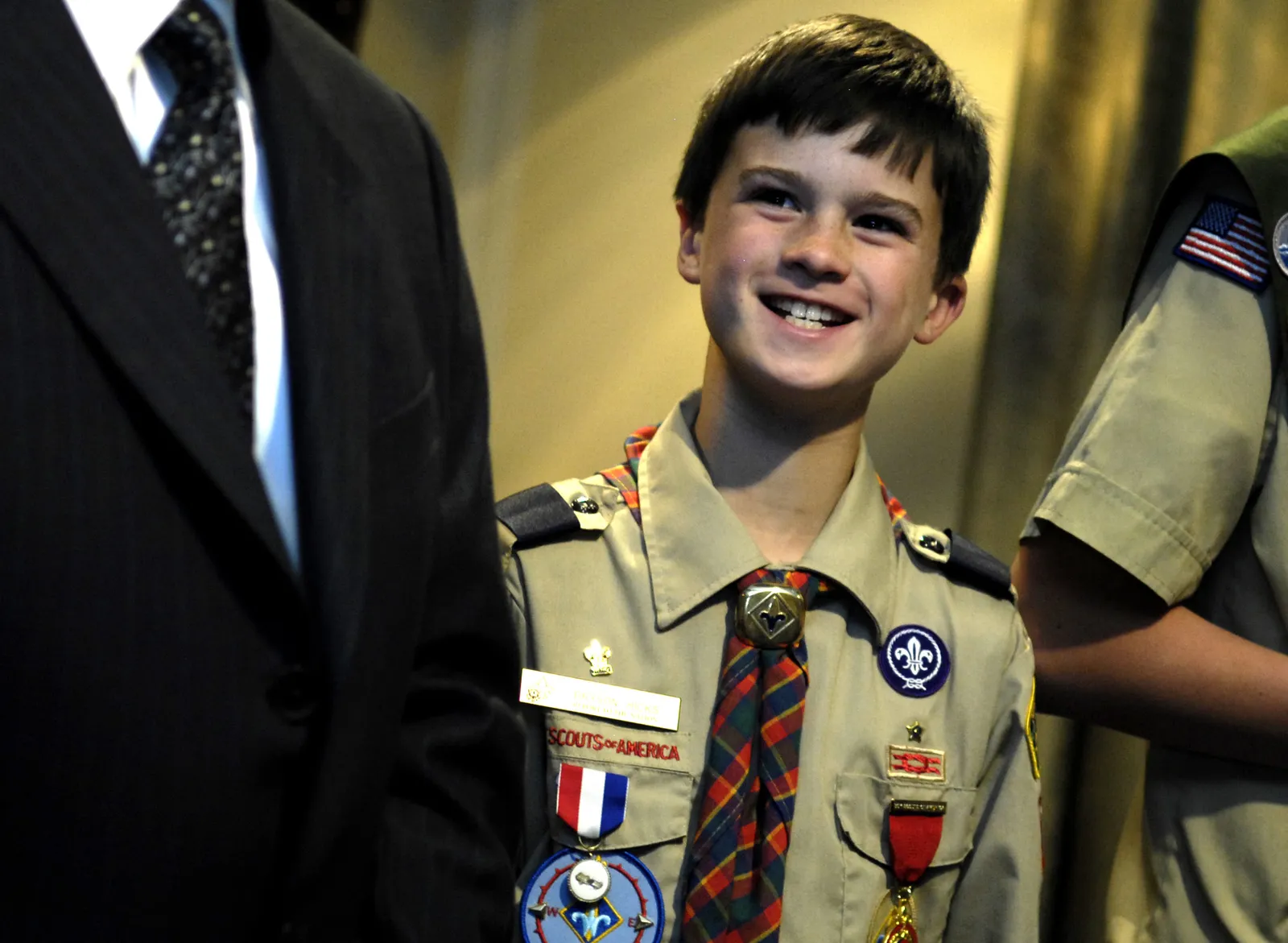
A Century of Shared Values and Support (Image Credits: Upload.wikimedia.org)
The U.S. military’s longstanding relationship with Scouting America gained fresh momentum this week, months after draft plans emerged to end the collaboration.[1][2]
A Century of Shared Values and Support
The partnership between the Department of Defense and Scouting America dates back more than 100 years, with formal ties established in 1937. Military personnel have long provided logistical and medical assistance for major events like the National Jamboree, which draws up to 20,000 young participants every four years. Troops have met on bases worldwide, benefiting from aviation demonstrations and other resources at no cost to the organization.[3]
This alliance served dual purposes: training exercises for service members and character-building opportunities for youth. Eagle Scouts who enlist often receive advanced ranks and higher starting pay, reflecting the program’s alignment with military discipline. Up to 20 percent of cadets at service academies once held Eagle Scout status, underscoring the pipeline to armed forces careers.[3]
Tensions Rise Over Organizational Changes
In late 2025, internal Pentagon documents revealed efforts to terminate the relationship. Defense Secretary Pete Hegseth, a vocal critic of the group’s evolution, argued that Scouting America had deviated from its roots by embracing diversity, equity, and inclusion initiatives. Draft memos described the organization as “genderless” and accused it of undermining “boy-friendly spaces” and merit-based standards.[3]
These proposals cited national security concerns, claiming resources for Scout events diverted attention from priorities like border operations. Scouting America, which rebranded from Boy Scouts of America in February 2025 to emphasize inclusivity for girls and others, responded with dismay. Chief Scout Executive Roger Krone called the characterization “uninformed,” stressing that badges and ranks are earned through rigorous challenges.[4]
Toward Reconciliation and Core Reforms
By early February 2026, discussions shifted. Pentagon spokesman Sean Parnell announced the department was “near a final agreement” to sustain support, provided Scouting America adopted “common-sense, core value reforms.” These changes aimed to address concerns over DEI policies and a perceived drift from traditional principles.[5]
Parnell noted the organization’s commitment to realign, stating, “Scouting America remains far from perfect, but they have firmly committed to a return to core principles.”[5] Scouting America welcomed the progress, affirming its dedication to military families. The group emphasized its nonpartisan history, having collaborated with administrations across the political spectrum for over a century.
Benefits at Stake for Troops and Youth
The potential rift alarmed military families, who rely on Scout programs for stability during frequent relocations. Parents described seamless integration for children at bases from Louisiana to Germany. Losing access could hinder recruitment, as scouting backgrounds bolster Navy officer training and community engagement.[3]
Key advantages of the partnership include:
- Logistical aid for National Jamborees, enhancing youth leadership skills.
- Base access for troops, fostering community amid deployments.
- Advanced enlistment perks for Eagle Scouts, aiding talent pipelines.
- Mutual training opportunities, from medical support to skill demos.
- Shared emphasis on duty, service, and patriotism.
Key Takeaways
- The Pentagon reviewed ties amid DEI debates but now prioritizes continuity with reforms.
- Scouting America pledged adjustments to preserve military support.
- Families and recruiters stand to benefit from sustained collaboration.
This evolving alliance highlights broader debates on tradition versus inclusion in youth programs. As details emerge, the partnership promises to endure, nurturing future leaders for both Scouting and the military. What impact do you see for military families? Share your thoughts in the comments.