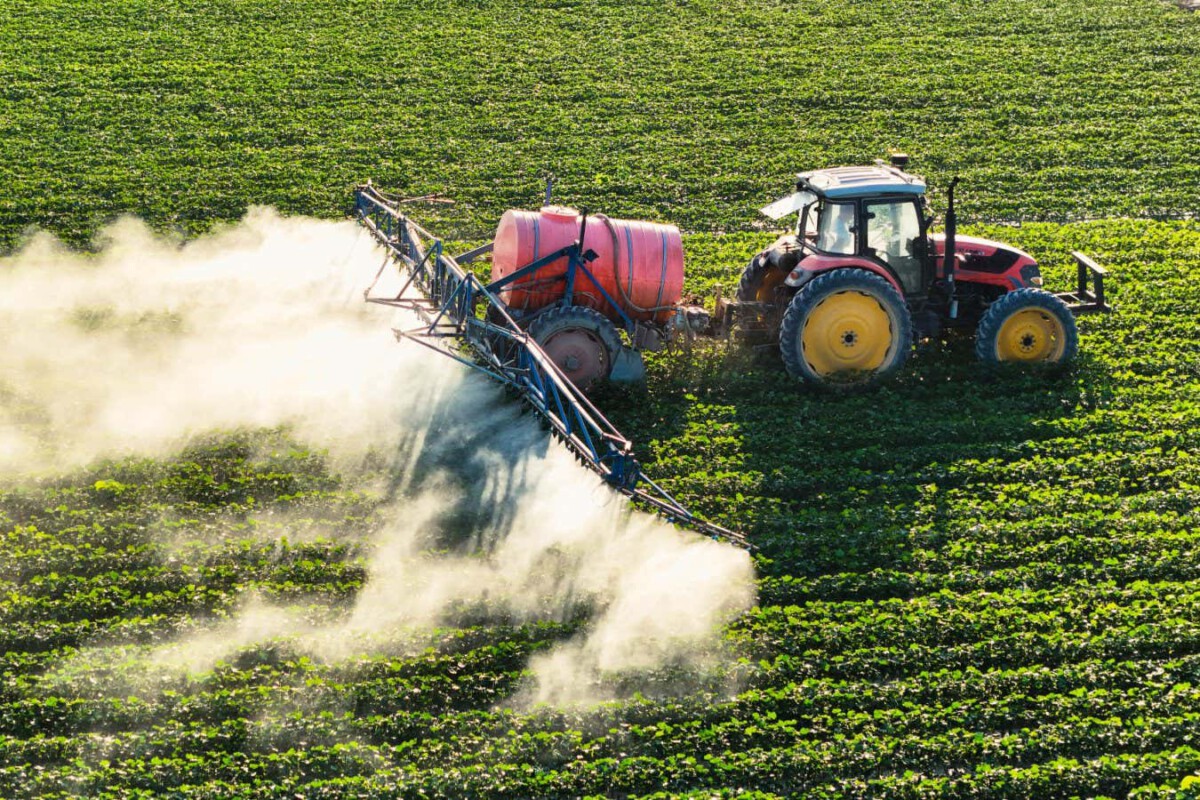
Researchers Uncover Escalating Applied Toxicity (Image Credits: Images.newscientist.com)
A comprehensive study has uncovered rising levels of pesticide harm across nearly every nation, even as global efforts aim to curb their risks.
Researchers Uncover Escalating Applied Toxicity
Scientists led by Ralf Schulz at RPTU University Kaiserslautern-Landau in Germany analyzed pesticide use in 201 countries from 2013 to 2019.[1]
They examined data on 625 pesticides applied in both conventional and organic farming.[1]
The team created a metric called “applied toxicity,” which multiplies the amount of each pesticide used by its toxicity to different species.
Toxicity ratings came from regulators and covered eight organism groups: aquatic plants, aquatic invertebrates, fish, terrestrial arthropods, pollinators, soil organisms, terrestrial vertebrates, and terrestrial plants.[1]
“In more or less all countries, the trend is towards increasing applied toxicity,” Schulz stated.[1]
Steep Rises Hit Key Wildlife Groups
The analysis revealed total applied toxicity grew from 2013 to 2019 for six of the eight organism categories.[1]
Pollinators faced a 13 percent increase, fish a 27 percent jump, and terrestrial arthropods the sharpest rise at 43 percent.[1]
- Aquatic invertebrates and soil organisms also saw notable upticks.
- Terrestrial plants and vertebrates experienced smaller or stable levels.
- Aquatic plants bucked the trend with a decline.
Schulz emphasized that these figures signal growing potential harm, though real-world effects depend on exposure levels.[1]
Studies elsewhere have shown pesticide concentrations in rivers and soils often exceed regulatory predictions.[1]
Resistance and Usage Drive the Surge
Two factors fueled the growth: greater overall pesticide volumes and a shift to more potent chemicals.[1][2]
Pest resistance prompted farmers to replace older, less toxic options with stronger ones like pyrethroids and neonicotinoids.
Pyrethroids proved especially harmful to fish and aquatic invertebrates, despite low application rates.
Neonicotinoids posed major risks to pollinators.
High-volume herbicides such as glyphosate added to the total, even if individually less toxic per unit.
“Resistance is, in my view, something that can only increase if you use chemical pesticides,” Schulz noted.[1]
Global Pledges Fall Short Amid Warnings
At the 2022 UN biodiversity summit, nations committed to halving overall pesticide risk by 2030, though the goal lacked a clear definition.[1]
Schulz’s team proposed applied toxicity as a suitable yardstick.
Roel Vermeulen at Utrecht University called the trends “troubling,” adding, “the world is currently moving away from the UN target rather than toward it. That is bad news for ecosystems and ultimately for human health.”[1]
He highlighted that a few highly toxic pesticides drive most of the risk, offering targeted opportunities for action.
Broad changes, including dietary shifts and less food waste, could ease the pressure on agriculture. For details, see the study in New Scientist.[1]
This mounting toxic load threatens biodiversity and food security, as curbing pesticides might reduce yields and expand farmland needs. A handful of potent chemicals dominate the problem, pointing to feasible interventions. What steps should governments prioritize to reverse this course? Share your thoughts in the comments.
Key Takeaways
- Applied toxicity rose 13-43 percent for major wildlife groups from 2013-2019.
- Nearly all countries showed upward trends in pesticide harm.
- Targeting pyrethroids, neonicotinoids, and overuse offers quick wins.