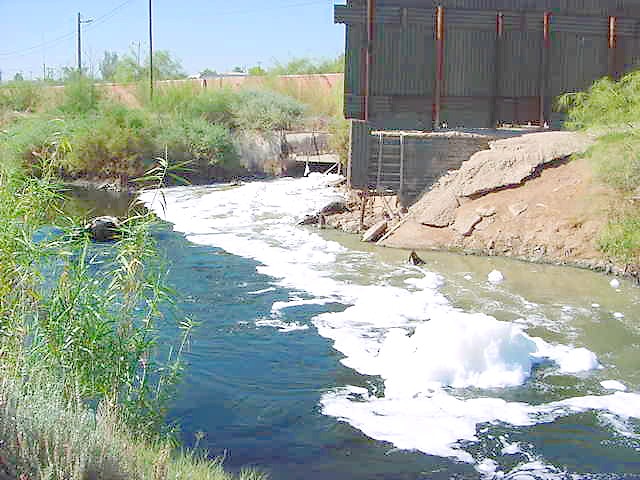
Sewer Pipe Failure Unleashes Massive Spill (Image Credits: Upload.wikimedia.org)
Washington, D.C. – A ruptured sewer line dumped vast quantities of untreated wastewater into the Potomac River, exposing millions to heightened health risks after authorities dramatically understated bacterial contamination levels.
Sewer Pipe Failure Unleashes Massive Spill
Late on January 19, 2026, a 72-inch diameter sewer pipe known as the Potomac Interceptor collapsed near the Clara Barton Parkway in Montgomery County, Maryland.[1][2]
The incident released an estimated 40 million gallons of sewage daily into the river, equivalent to roughly 66 Olympic-sized swimming pools worth of untreated waste.[1] Officials activated bypass pumping systems to reroute flows to the Blue Plains treatment plant, but contamination persisted.
Repairs proved complex due to the pipe’s age, dating back to the early 1960s. An additional 600,000 gallons spilled on February 8 when non-disposable wipes clogged the system.[1] Total discharge reached at least 243 million gallons over weeks.[3]
Human Error Inflates Contamination Concerns
DC Water began daily E. coli monitoring at multiple sites on January 29. Early tests showed reductions, but a February 6 report from a drainage channel at Swainson Island near Cabin John, Maryland, initially listed levels at 2,420 most probable number (MPN) per 100 milliliters.[1][4]
Internal review revealed a mathematical miscalculation. The agency corrected the figure to 242,000 MPN/100mL – 100 times higher than first stated.[5] DC Water attributed the blunder to human error and updated its data promptly.
| Date | Reported Level (MPN/100mL) | Corrected Level (MPN/100mL) |
|---|---|---|
| February 6 | 2,420 | 242,000 |
The safe recreational threshold stands at under 410 MPN/100mL, making the actual reading profoundly unsafe.[2]
Health Warnings Issued for River Users
The Potomac supplies about 78% of the region’s water, including drinking supplies for roughly 6.1 million residents across D.C., Maryland, and Virginia.[1] Authorities urged avoiding contact with river water.
- Prohibit swimming in D.C. waters.
- Avoid fishing, boating, or wading; keep pets leashed and away.
- Wash skin immediately after exposure; seek medical help for symptoms like diarrhea or fever.
- Vulnerable groups, such as the immunocompromised, faced extra caution.
No confirmed illnesses tied directly to the spill emerged, though independent tests by University of Maryland researchers detected levels up to 10,000 times above safe limits in some areas.[1]
DEI Focus Draws Sharp Criticism
DC Water maintains an Office of Inclusion under Chief People and Inclusion Officer Lisa Stone, emphasizing diversity, equity, and inclusion to support staff and communities. The agency also runs supplier diversity programs.[1][3]
Conservative commentators questioned whether such priorities compromised competence in critical roles. They highlighted the basic math failure as evidence that equity initiatives might sideline merit-based hiring, endangering public safety.[4] DC Water has not linked the error to personnel practices.
Key Takeaways
- Aging infrastructure amplified the spill’s severity, with repairs ongoing into late February.
- The E. coli correction underscored vulnerabilities in monitoring processes.
- DEI scrutiny reflects broader national debates on hiring standards in public utilities.
Engineers continue restoration efforts amid oversight from the EPA and state agencies. The incident exposed infrastructure frailties and fueled policy discussions on balancing inclusion with expertise. How should cities prioritize competence in essential services? Share your views in the comments.