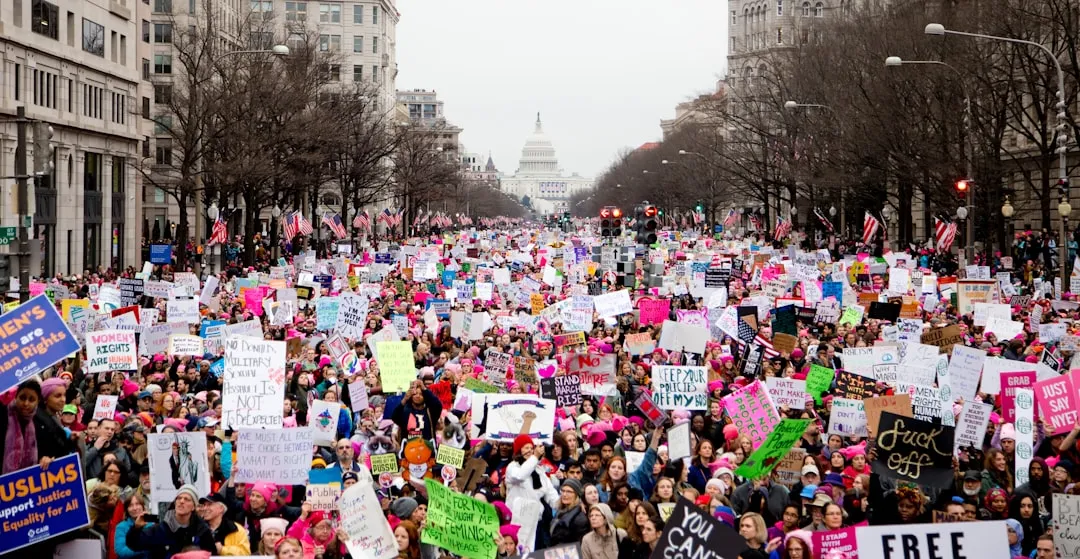
Unprecedented Mobilization Greets Second Term (Image Credits: Unsplash)
Across the United States, demonstrations against perceived threats to democracy have surged dramatically during the early months of President Donald Trump’s second term.[1][2]
Unprecedented Mobilization Greets Second Term
Records show roughly 10,000 protests occurred nationwide just over a year into Trump’s first presidency. By contrast, more than 40,000 took place by January 31, 2026, in his current term – an increase of over 300 percent.[1] Partial data already accounts for over 10 million participants. These gatherings centered on issues like the expansion of presidential authority, democratic erosion, and immigration enforcement.
Organizers framed their actions around safeguarding institutions. Marches disrupted operations tied to controversial policies. Local campaigns, such as those urging citizens to document federal agents, gained traction and correlated with shifts in public opinion.[1] This wave reflects a broader pattern where clear signals of overreach spark widespread opposition.
Brazil’s Courts Lead the Charge Against Bolsonaro
Judges in Brazil played a pivotal role in curbing former President Jair Bolsonaro’s ambitions. Supreme Court Justice Alexandre de Moraes invalidated decrees and probed coup threats after Bolsonaro’s 2023 election challenge failed.[1] Military leaders refused to back extra-constitutional moves. Voters then delivered a decisive win to Luiz Inácio Lula da Silva.
Bolsonaro’s overt admiration for past dictatorships made his intentions transparent. Institutions responded decisively, culminating in his imprisonment. This sequence demonstrated how judicial independence can neutralize power grabs when threats appear unmistakable.
South Korea Repels Martial Law Bid
President Yoon Suk Yeol declared martial law on December 3, 2024, aiming to sideline rivals. Lawmakers convened swiftly and voted unanimously to revoke it. Massive street protests prevented arrests of opposition figures.[1]
A history of resisting military rule fueled rapid unity. Yoon faced impeachment and a life sentence. The episode underscored public vigilance as a deterrent against sudden authoritarian lurches.
Poland Builds Lasting Opposition Coalitions
Poland’s Law and Justice party gradually weakened courts and media over years. Civic coalitions countered with pacts for joint candidates, securing Senate control in 2019. High voter turnout ousted them in 2023.[1]
No partners emerged for the incumbents post-defeat, isolating them further. Patient organizing proved effective against subtle erosion. Elections restored balance without violence.
Key Takeaways
- Highlight threats to democracy clearly to rally elites, courts, and citizens.
- Pursue institutional remedies alongside measured protests to deny pretexts for crackdowns.
- Foster broad coalitions that sustain pressure through elections and daily actions.
These cases reveal a common thread: democracies endure when authoritarian designs become evident, prompting coordinated pushback. The United States now mirrors this dynamic through intensified activism. Sustained clarity and unity could define the path ahead. What strategies do you see gaining ground? Share in the comments.