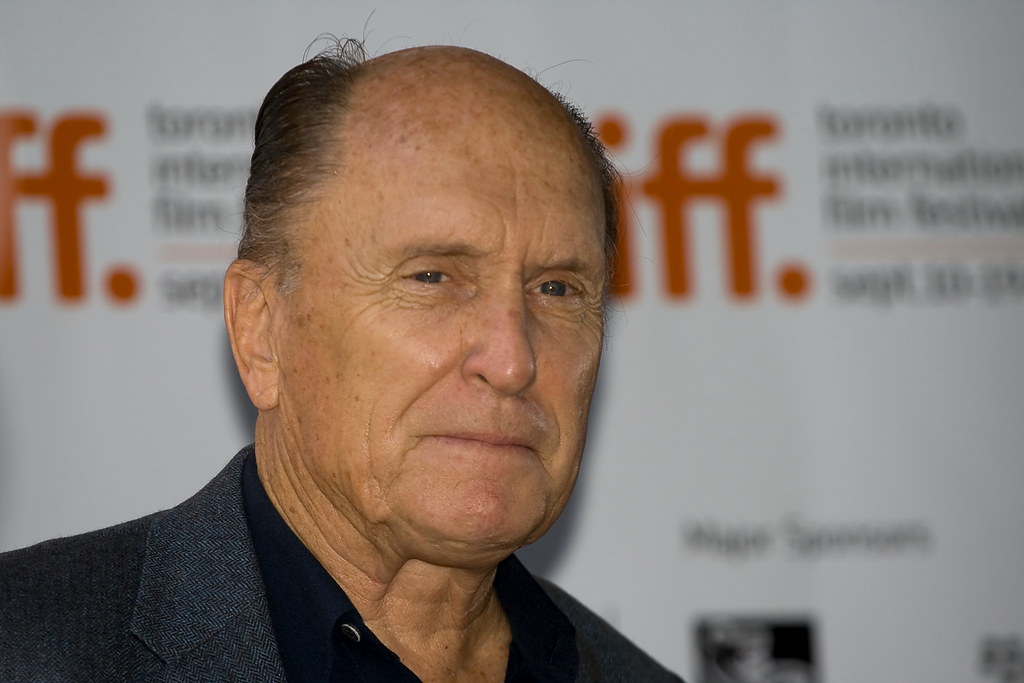
A Silent Debut That Spoke Volumes (Image Credits: Flickr)
Robert Duvall, the acclaimed actor who breathed vulnerability into cowboys, soldiers and cops across more than 90 films, passed away peacefully at his home in Virginia on Sunday.[1][2]
A Silent Debut That Spoke Volumes
Duvall launched his screen career with a wordless yet unforgettable performance as Boo Radley in the 1962 classic To Kill a Mockingbird. His subtle expressions transformed the reclusive figure from a shadowy menace into a beacon of quiet kindness in the film’s poignant finale. That nuanced physicality set the tone for a lifetime of roles where he peeled back layers of toughness to reveal inner fragility.[1]
Born into a military family in San Diego, Duvall discovered acting somewhat by accident during college amid the Korean War era. He credited his parents for pushing him toward the stage, where he earned his first A and found purpose. Relocating to New York City, he honed his craft alongside future stars like Gene Hackman, Dustin Hoffman and James Caan over coffee at a local drugstore.[1]
Iconic Turns in Era-Defining Films
Duvall’s roles steadily expanded through the late 1960s and early 1970s, showcasing his knack for understated power. He originated the prickly Major Frank Burns in M*A*S*H, brought calm restraint to Tom Hagen, the Corleone family consigliere in The Godfather, and navigated gritty tales in Bullitt and True Grit.[1]
Two 1979 releases cemented his reputation for edgier portrayals. As the domineering Marine father in The Great Santini, he captured a bully’s desperate bid to toughen his son. In Apocalypse Now, his swaggering Lt. Col. Bill Kilgore surfed amid chaos and famously declared, “I love the smell of napalm in the morning.” Those performances earned back-to-back Oscar nominations and highlighted his ability to infuse bravado with hidden depths.[1]
- To Kill a Mockingbird (1962): Boo Radley – Star-making silent role.
- The Godfather (1972): Tom Hagen – Steadfast family lawyer.
- M*A*S*H (1970): Major Frank Burns – Uptight surgeon.
- Apocalypse Now (1979): Lt. Col. Bill Kilgore – Charismatic commander.
- The Great Santini (1979): Bull Meechum – Tough Marine dad.
Oscar Triumph and Creative Independence
Duvall claimed his sole Academy Award for Best Actor in 1983’s Tender Mercies, portraying a washed-up country singer rebuilding his life. He sang his own songs, delivering a raw portrayal of redemption that resonated deeply. Later, he expanded into directing with 1997’s The Apostle, writing, producing and starring as a flawed Pentecostal preacher – a role that garnered his fifth Oscar nod.[1][2]
His philosophy stayed refreshingly simple throughout: “Basically just talk and listen, and keep it simple. And however it goes, it goes.” Duvall appeared in landmark films like The Godfather Part II, Network and Open Range, always prioritizing authenticity over flash. He also earned Emmys for the miniseries Broken Trail and accolades across theater and television.[2]
A Legacy of Depth in Masculine Icons
Duvall’s wife, Luciana, shared the news on Facebook: “Yesterday we said goodbye to my beloved husband, cherished friend, and one of the greatest actors of our time. Bob passed away peacefully at home, surrounded by love and comfort.”[1] Married four times, with Luciana since 2005, he left no children but a profound imprint on cinema.
From military service in the 1950s to tango dancing in later years, Duvall lived fully. His work redefined stock characters, adding melancholy and heart to Hollywood’s hard men.
Key Takeaways:
- Over 90 films, one Oscar win, multiple nominations.
- Signature style: Vulnerability amid toughness.
- Versatility from silent debuts to directorial efforts.
Duvall’s passing marks the end of an era, yet his performances endure as masterclasses in emotional truth. What was your favorite Robert Duvall role? Tell us in the comments.