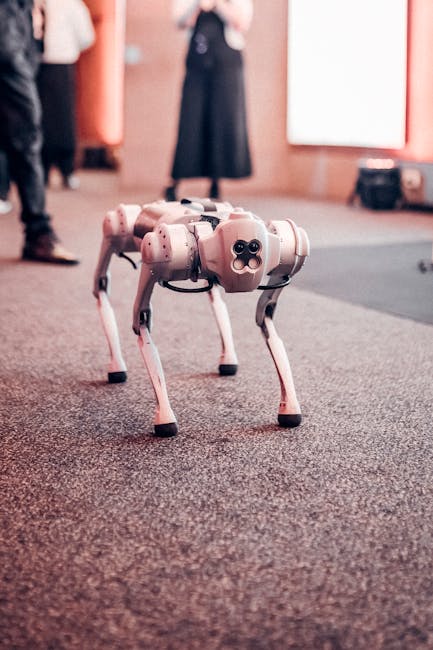
Quadruped Robots Step Up to Guard Vast Facilities (Image Credits: Pexels)
The explosive growth in artificial intelligence has spurred a massive expansion of data centers across North America, with 35 gigawatts of capacity now under construction.[1][2] These sprawling facilities, often covering dozens of acres, demand relentless 24/7 protection against intrusions and equipment failures. Operators increasingly turned to advanced quadruped robots from Boston Dynamics and Ghost Robotics to meet these needs, providing tireless patrols and precise inspections that human guards alone cannot match.
Quadruped Robots Step Up to Guard Vast Facilities
A single data center can span 1.5 million square feet, making comprehensive surveillance a daunting task.[1] Robot dogs changed that equation by navigating rough terrain and tight spaces with ease. Their deployment marked a shift toward automation in an industry racing to support AI demands.
These machines operated autonomously on pre-set routes, feeding live video and sensor data back to control rooms where human operators monitored feeds. They flagged anomalies in real time, reducing response times to potential threats or breakdowns. Early adopters reported fewer overlooked issues, proving the technology’s practical edge over traditional methods.
Key Capabilities That Set Robot Dogs Apart
Boston Dynamics’ Spot robot handled both indoor and outdoor missions, detecting thermal irregularities, leaks, puddles, and odd noises during equipment checks.[1] It also mapped sites, oversaw construction progress, and spotted propped-open doors or other security lapses. Ghost Robotics’ Vision 60 focused on exterior patrols, scanning fence lines for breaches, suspicious packages, or intruders.
Both models endured harsh weather and covered miles on a single charge, outperforming human patrols in endurance. Operators equipped them with sensors for comprehensive monitoring, turning potential disasters into manageable alerts. The result was a layered defense that complemented rather than supplanted human oversight.
- Perimeter scanning for fence damage or unauthorized access
- Thermal imaging to identify overheating components
- Video streaming to central control for immediate review
- Autonomous navigation over uneven ground and stairs
- Anomaly detection, including leaks and unusual sounds
Real-World Deployments Highlight Early Success
Novva Data Centers deployed a team of Spot robots at its West Jordan, Utah campus, a 1.5 million-square-foot site.[1][3] The robots ran scheduled missions to inspect gear, report irregularities via thermal sensors, and notify staff of problems. This setup allowed for proactive maintenance in a facility too large for manual checks alone.
Ghost Robotics placed Vision 60 units at a handful of unnamed sites, primarily for boundary protection. Interest surged as the U.S. data center count hit 5,000, with 800 to 1,000 more in development.[1] Operators valued the robots’ ability to operate without fatigue, vacations, or salary demands.
Investment Costs Versus Proven Returns
Pricing reflected the advanced engineering: Spot started at $175,000 and reached $300,000 with added payloads, while Vision 60 began at $165,000.[1][2] A human security guard cost about $150,000 annually, prompting a straightforward ROI calculation.
Merry Frayne, senior director of product management at Boston Dynamics, noted customers achieved payoff within two years, often in 18 months through direct savings alone.[1] Michael Subhan, chief growth officer at Ghost Robotics, explained the math: replace two guards at $300,000 with one human and a robot that never calls in sick.[1]
| Model | Base Price | Primary Role | ROI Timeline |
|---|---|---|---|
| Spot (Boston Dynamics) | $175,000–$300,000 | Inspection & security | 18–24 months |
| Vision 60 (Ghost Robotics) | $165,000+ | Perimeter patrol | Comparable savings |
Key Takeaways
- Robot dogs cut labor costs while boosting detection accuracy in expansive facilities.
- AI-driven data center growth creates vast demand for reliable automation.
- Operators see tangible savings in under two years, validating high upfront costs.
As data centers multiply to fuel the AI era, robot dogs emerged as a smart bet for operators balancing security risks with operational efficiency. Their integration signaled broader automation trends set to reshape infrastructure protection. What do you think about robots replacing guards in critical sites? Tell us in the comments.