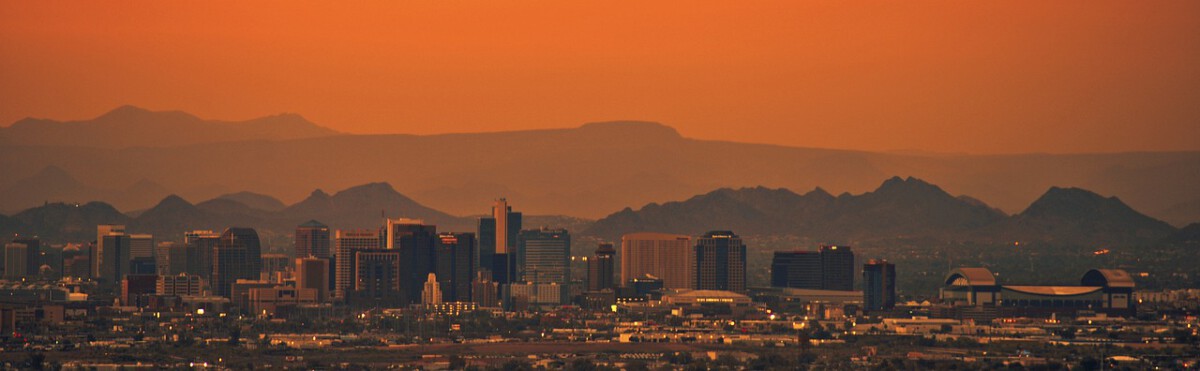
Extremes That Defy Historical Norms (Image Credits: Pixabay)
U.S. Southwest – A ferocious heat wave swept through Arizona, southern California and neighboring areas in March, obliterating long-standing temperature records and exposing residents to dangers months ahead of typical summer threats. Preliminary readings topped 109 degrees Fahrenheit across multiple sites, with one Arizona desert location hitting 110 degrees to claim the title of the nation’s hottest March day ever. Scientists from the World Weather Attribution group analyzed the event and concluded it would have been virtually impossible in a world untouched by human-induced climate change.
Extremes That Defy Historical Norms
Thursday’s scorching peaks pushed the mercury to levels rarely seen before May in this sun-baked region. Arizona and southern California stations logged temperatures around 109 degrees Fahrenheit, figures that experts classified alongside the most severe weather outliers in recent memory. University of Victoria climate scientist Andrew Weaver described the episode as climate change unfolding in real time, where once-rare anomalies now recur with alarming regularity.
Government responders and communities accustomed to summer swelter found themselves unprepared for this early onslaught. The heat wave joined a roster of ultra-extreme events, including the 2021 Pacific Northwest dome and floods in Pakistan the following year. More than a dozen specialists consulted by the Associated Press placed it in the same league as devastating hurricanes like Helene, Harvey and Sandy.
Attribution Science Delivers Clear Verdict
World Weather Attribution researchers conducted a rapid analysis, comparing observed March conditions since 1900 against models simulating both natural variability and a fossil fuel-influenced atmosphere. Their findings showed that human activities, primarily the combustion of coal, oil and natural gas, amplified temperatures by 4.7 to 7.2 degrees Fahrenheit. Co-author Clair Barnes of Imperial College London noted that this warming transformed uncomfortable heat into potentially lethal conditions under the prevailing heat dome.
The study, while awaiting peer review, underscored a shift where such events edge beyond plausible natural bounds. Imperial College scientist Friederike Otto, who coordinates the group, affirmed that climate change fuels more frequent and intense record-breakers across weather types. This approach has repeatedly linked extremes to anthropogenic forcing, from heat domes to deluges.
Rising Toll of Weather Wildness
Federal Emergency Management Agency’s former director Craig Fugate observed operations increasingly straying from historical precedents, with floods, surges and heats exceeding designed thresholds. Communities built on a century of past patterns now confront eroding assumptions, a trend echoed by insurers retreating from high-risk zones. Climate Central’s chief meteorologist Bernadette Woods Placky highlighted the challenge of tracking escalating extremes, which reshape risk profiles and expose more people to peril.
National Oceanic and Atmospheric Administration data revealed the U.S. area affected by extremes doubled over the past two decades. Hot weather records now shatter 77% more often than in the 1970s and 19% more than the 2010s. Billion-dollar disasters have doubled in number and average cost compared to a decade ago, nearly quadrupling versus 30 years prior, per NOAA and Climate Central tallies.
From Southwest to Worldwide Anomalies
Stanford’s Chris Field categorized the Southwest surge as a “giant event,” with anomalies up to 30 degrees above normal. He cited peers like the 2020 Siberia scorch, 2021’s Pacific Northwest inversion where British Columbia outdid Death Valley, and triple-digit heat across North America, China and Europe in 2022. Additional standouts included 2023 waves in the western Mediterranean and South Asia, plus East Antarctica’s 2022 spike of 81 degrees above average.
- 2020 Siberia heat wave: Record-shattering Arctic temperatures.
- 2021 Pacific Northwest: Death Valley-level heat in Canada.
- 2022 global summer: Widespread continental baking.
- 2023 Mediterranean and South Asian domes: Prolonged deadly humidity.
- 2022 East Antarctica: Largest temperature anomaly on record.
Beyond heat, climate-amplified wildness manifests in hurricanes, droughts and floods. West Africa endured major inundations in 2022 and 2024, Iran a protracted dry spell, and Typhoon Haiyan ravaged the Philippines in 2013. Superstorm Sandy in 2012 unleashed winds over a fifth of the contiguous U.S., with seas rivaling half the nation’s footprint and energy matching multiple atomic blasts.
Key Takeaways
- Human warming added up to 7.2°F to the Southwest’s March heat.
- U.S. extreme weather zones doubled in 20 years; disasters quadrupled in cost over 30.
- Global “giant events” like this one signal a new era of recurring outliers.
As extremes accelerate, adaptation lags behind the pace of change, urging a reevaluation of infrastructure and preparedness. The clearest indicators emerge not just in data, but in lives disrupted and economies strained. How has unusual weather affected your community? Share your thoughts in the comments.