Over 400 Ex-Employees Launch Ventures Targeting the Toughest Problems (Image Credits: Upload.wikimedia.org)
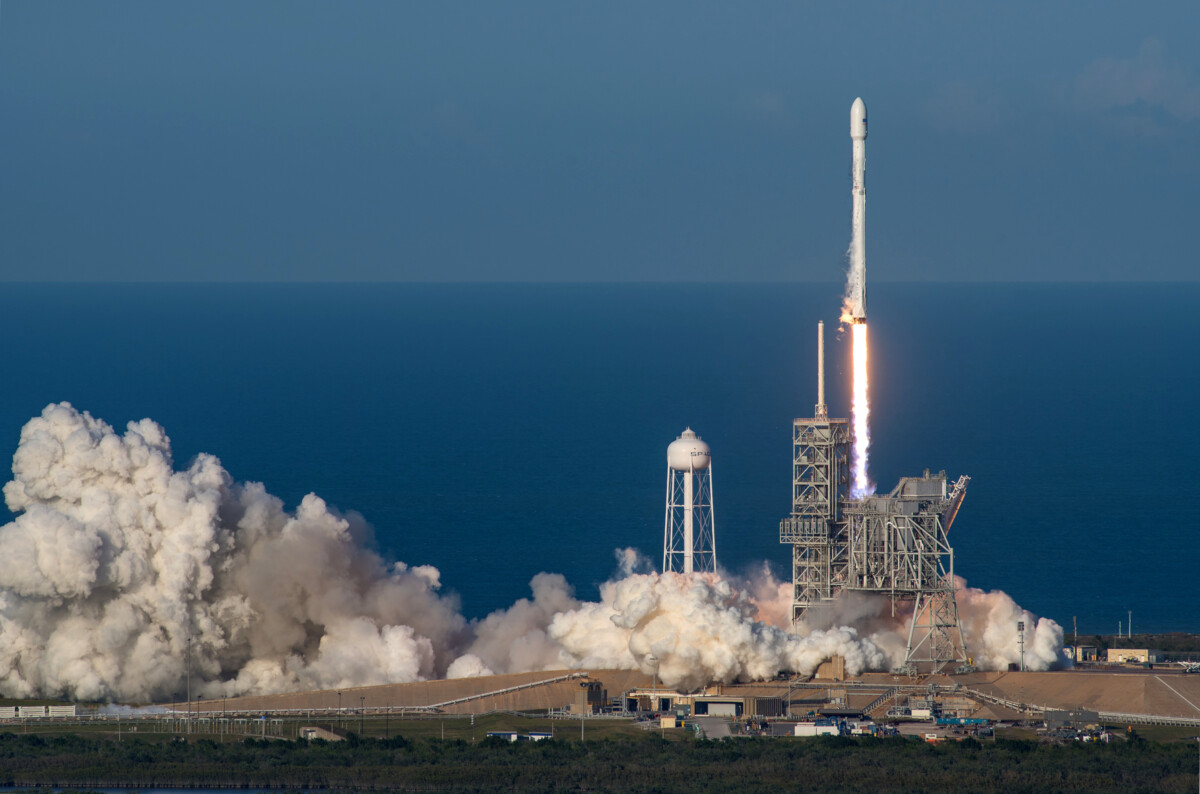
SpaceX has redefined space travel through reusable rockets and satellite networks like Starlink, which captured nearly all the market for global internet services last year. These milestones generated billions in revenue and positioned the company at the heart of a burgeoning space economy projected to reach trillions by decade’s end. Yet beneath these feats lies a quieter revolution: hundreds of former employees now lead startups applying SpaceX-honed skills to tackle daunting challenges on Earth and beyond.
Over 400 Ex-Employees Launch Ventures Targeting the Toughest Problems
More than 400 individuals who once worked at SpaceX have founded companies, creating the largest known cohort of alumni entrepreneurs from any single firm. This group spans audacious projects, from planetary rovers destined for the moon to agricultural vehicles navigating rugged terrain.
Only about 17 percent remain focused on space, with most turning to manufacturing, energy, transportation, and defense. Companies like Astrolab develop commercial rovers for extraterrestrial exploration, while Kisui designs farming machines for unpredictable landscapes. Others, such as Airhart Aeronautics, aim to produce personal aircraft operable by novices. These efforts cluster near former SpaceX sites in California, fostering new U.S. industrial hubs.
First Principles Thinking Drives Radical Innovation
SpaceX alumni swear by breaking problems down to fundamental truths, a method that slashed launch costs from tens of thousands to under $3,000 per kilogram to orbit, according to NASA data. This “first principles” approach rejects incremental tweaks in favor of rebuilding from raw materials.
Max Benassi, ex-SpaceX propulsion engineer and now CTO at Apex Space, recalled solving unprecedented challenges there. His firm now streamlines satellite production with in-house components like batteries. Robert Rose, who led Falcon 9 software, credits the environment for attracting bold thinkers now building autonomous aircraft at Reliable Robotics. Karthik Gollapudi of Sift emphasized rapid iteration over caution, allowing quicker paths to success. Such tactics echo Elon Musk’s “idiot index,” which questions inflated costs in traditional processes.
Internships That Forge Future Founders
SpaceX hires young talent aggressively, including interns who endure the same rigorous interviews as full-timers. At least 94 former interns have launched startups, with some completing multiple stints.
These roles involve substantive tasks, like avionics design or enterprise systems, reshaping careers. Michelle Lee shifted from chemical engineering to founding Medra, which automates lab work with AI and robotics after her 2015 internship. Recruiters note the mutual benefits, as interns gain real-world exposure to ambitious missions like Mars colonization. Top feeder schools include Cal Poly San Luis Obispo, Embry-Riddle, and Harvey Mudd College.
| Key SpaceX Alumni Startup Focus Areas | Examples |
|---|---|
| Space & Satellites | Apex Space, Impulse Space |
| Manufacturing & Robotics | Astrolab, Senra Systems |
| Agriculture & Autonomy | Kisui, Reliable Robotics |
| Defense & Energy | Castelion, Radiant |
Culture of Ownership and Resilience Fuels Expansion
Vertical integration dominates, with firms like Senra Systems opening massive factories for wire harnesses critical to vehicles and rockets. Jordan Black, a recent alum, identified manufacturing bottlenecks at SpaceX and scaled production fivefold in California.
Extreme ownership prevails, where engineers own the full system, not just parts. Alumni like Tyler Habowski at Kyber Labs mimic human dexterity for manufacturing. They convert skepticism into motivation, as Rose described enduring industry doubt before vertical landings proved doubters wrong. Values like “mission clarity,” “scrappy innovation,” and “challenge all constraints” persist, even as these ventures raise billions collectively.
Key Takeaways
- SpaceX alumni prioritize physical-world challenges, with just 17% in space.
- First principles and rapid iteration cut costs and accelerate breakthroughs.
- A robust investor network, including alum-led funds like Interlagos, backs the ecosystem.
As SpaceX eyes a massive public debut, its alumni network stands poised to compound influence across sectors. These founders prove that mastering impossible problems scales beyond rockets. What challenges do you see them tackling next? Share in the comments.