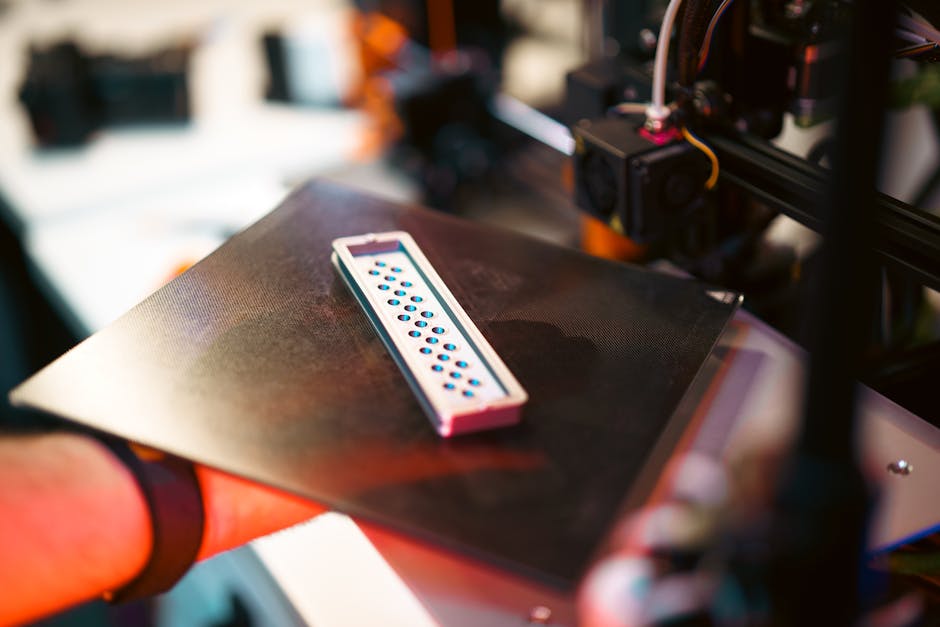
Minimal Threat Drives Major Proposals (Image Credits: Pexels)
The tension between gun rights and public safety in the United States has spilled into the world of 3D printing. Lawmakers in several states introduced measures last year to embed software in printers that detects and blocks firearm blueprints. Critics contend these steps target a minor issue while threatening a versatile technology used by hobbyists, manufacturers, and medical professionals alike.
Minimal Threat Drives Major Proposals
Authorities recovered just 325 3D-printed guns at crime scenes nationwide in 2024, a tiny fraction of the roughly 350,000 firearms linked to crimes in over 50 cities from 2020 to 2024, according to data from gun control group Everytown for Gun Safety. That low number underscores the debate: ghost guns made via 3D printing represent an “incredibly small” factor in overall gun violence, as Michel Weinberg, executive director of New York University’s Engelberg Center on Innovation Law and Policy, described it.
Still, the visibility of untraceable firearms prompted action. Washington state’s HB 2321 mandated that printers or slicers screen files for weapon parts. California’s AB 2047 required manufacturers to certify detection algorithms in printers sold there. New York followed with comparable requirements.
Details of the Blocker Technology
These bills focused on “print blocker” software that scans digital files before printing. The systems aim to identify shapes resembling gun components and halt jobs automatically. Proponents viewed this as a proactive step against unregulated weapons.
Implementation varied by state. Washington’s measure applied to both hardware and software slicers. California’s emphasized manufacturer attestation for compliance. Such tools would reshape how users interact with printers, embedding surveillance-like checks into everyday devices.
- Washington HB 2321: Targets printers and slicers for file screening.
- California AB 2047: Requires certified detection in sold models.
- New York: Pushes printer-side blocking mandates.
Tech Leaders Sound the Alarm
Kyle Wiens of iFixit called the proposals a ban on certain shapes, warning they undermined core technology assumptions. He labeled 3D-printed guns an “imaginary problem” unworthy of such broad intervention. The Electronic Frontier Foundation echoed this, deeming print blocking “wishful thinking” that fails to deter criminals.
Opponents highlighted practical flaws. Many printers lack power for local analysis, potentially forcing cloud uploads. This raised privacy fears and risks of vendor lock-in, sidelining open-source options and secondhand markets. Legitimate users – from prototypers to medical innovators – faced the brunt, while determined actors could bypass restrictions.
Impacts on Innovation and Rights
3D printing supports diverse fields beyond hobbies. It aids parts prototyping, small-batch production, and medicine, including anatomical models and surgical tools. Global sales hit one million units in early 2025, signaling rapid growth.
Regulations could chill experimentation. Weinberg noted dozens of more effective gun violence interventions existed before these downsides. Treating general tools as suspect by default eroded user trust and stifled progress. Lawmakers pressed on, seeing any incremental gain as worthwhile despite privacy costs for thousands of users.
Key Takeaways
- 3D-printed ghost guns accounted for under 0.1% of crime firearms recovered recently.
- Proposals risk cloud scanning, privacy breaches, and open-source barriers.
- Critics urge data-driven policies over imagined threats.
Weinberg urged focus on real threat models, not imagination, as Wiens put it. Policymakers must weigh narrow gains against widespread innovation hurdles. What do you think – do these restrictions justify the trade-offs? Share in the comments.