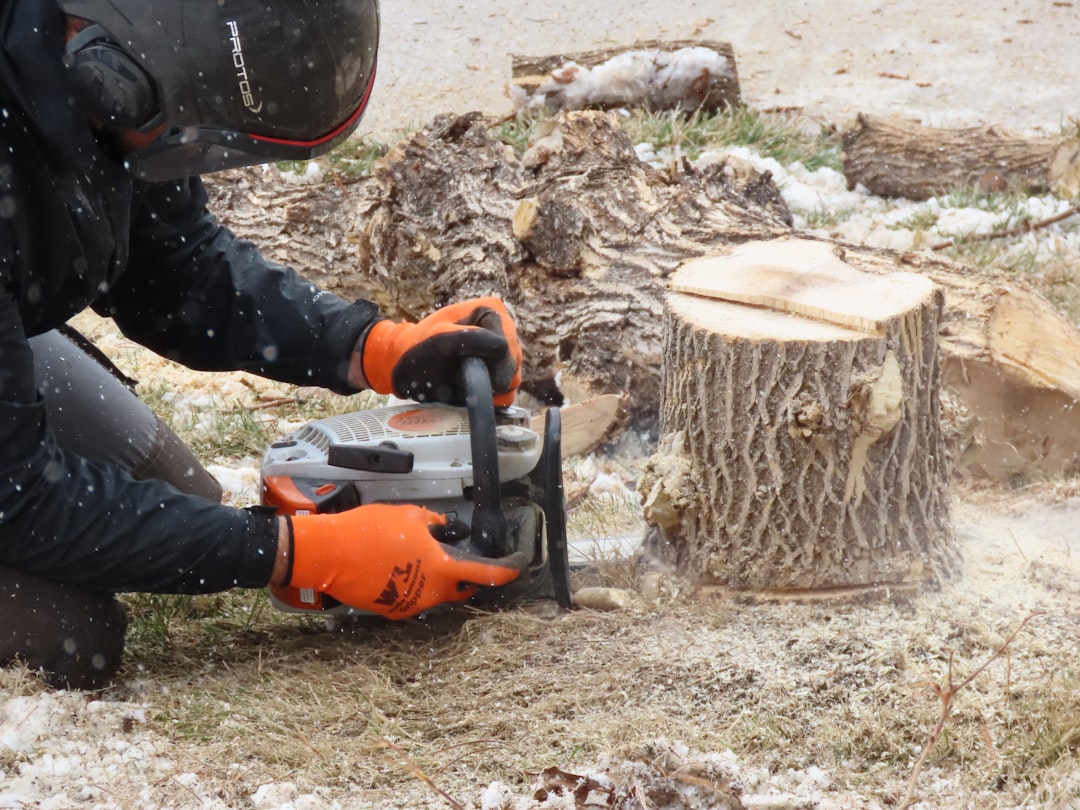
Hidden Hazards Lurking in Leftover Stumps (Image Credits: Unsplash)
Tree removal often leaves behind a persistent stump that disrupts yards and invites future headaches for homeowners.
Hidden Hazards Lurking in Leftover Stumps
Decaying stumps quickly become magnets for termites, those destructive insects that thrive on dead wood.[1]
These pests establish colonies in the soft material, turning the stump into a ready food source. From there, they expand toward nearby structures like homes, sheds, or fences. Such infestations lead to costly repairs running into thousands. Homeowners who neglect stumps face not just aesthetic issues but serious property threats. Professional removal addresses these dangers at the source.
Regrowth Realities and the Grinding Solution
Many tree species, including Australian natives like eucalypts and exotics such as willows and poplars, sprout vigorous suckers from their roots after the trunk falls.[1]
These shoots emerge around the stump base or even meters away in lawns and beds, forming unruly bushes. Repeated cutting fails to stop them until root reserves deplete over time. Stump grinding targets the root crown directly, mulching it into chips to halt this cycle permanently. Operators grind to depths of 150mm to 300mm below the surface, ensuring no regrowth potential remains. This method clears space effectively for new landscaping or turf.
Mastering the Grinding Process Step by Step
Specialized machines equipped with tungsten carbide teeth shave away the stump in precise layers.[1]
Professionals select grinders suited to tight backyard access, such as those fitting through 750mm gates or handheld units for awkward spots. They assess sites for ramps over raised areas and check for underground services like pipes, cables, or drains. Homeowners mark private lines, while experts consult databases for public utilities. Grinding typically reaches sufficient depth for most needs, though deeper cuts suit replanting scenarios to avoid root conflicts.
Waste Management and Method Comparisons
The process generates wood chips equivalent to two or three times the stump’s volume, which decompose naturally over time.
Options include backfilling the hole, spreading chips as mulch to retain soil moisture and suppress weeds, or hauling them away for immediate topsoil and turf installation. Chips demand nitrogen-rich soil amendments to prevent lawn yellowing.
| Method | Pros | Cons |
|---|---|---|
| Grinding | Quick, minimal disruption | Requires equipment |
| Manual Digging | Low cost for small stumps | Labor-intensive |
| Chemical | Hands-off | Slow, soil contamination |
| Excavator | Fast for large stumps | Destructive to yard |
Answering Key Stump Removal Queries
Jobs often wrap up in 15 to 20 minutes for small softwood stumps, extending to an hour or more for large hardwoods.[1]
Remaining roots pose no regrowth threat as they die off, though shallow ones lifting pavers may need attention. Costs depend on stump diameter, tree hardness, and access, with savings from multiple removals. DIY rentals tempt some, yet underpowered machines and safety risks make pros the smarter choice. Near fences or walls, guards and manual finishing protect structures.
- How long? Most residential jobs take 1-2 hours total.
- Roots a problem? Severed roots decompose harmlessly.
- DIY viable? Professionals save time and ensure safety.
- Near structures? Skilled grinding avoids damage.
Key Takeaways
- Grinding prevents termite spread and sucker regrowth effectively.
- Depth matters: 150-300mm ensures long-term clearance.
- Chip mulch boosts gardens, but remove for instant turf.
Opting for stump grinding delivers a smooth, hazard-free yard ready for whatever comes next. What experiences have you had with tree stumps? Tell us in the comments.