The Sun’s Latest Powerful Outburst (Image Credits: Unsplash)
A potent X1.5-class solar flare erupted from the Sun on March 30, 2026, launching a high-speed coronal mass ejection directly toward our planet. This event from sunspot region AR4405 follows a period of heightened solar activity and could spark severe geomagnetic storms upon arrival tomorrow. Forecasters predict widespread auroras that might stretch to mid-latitudes, offering a rare viewing opportunity for skywatchers around the globe.[1][2]
The Sun’s Latest Powerful Outburst
Sunspot region AR4405 unleashed the X1.5 flare at 2:47 UTC on March 30. This marked the strongest eruption in recent days and triggered an R3 radio blackout that affected high-frequency communications over the Pacific and Asia-Pacific regions. The flare’s intensity highlighted the region’s growing instability, as it had already produced multiple smaller events.[1]
Over the prior 24 hours, the Sun generated eight flares in total, including seven C-class and this single X-class event. Three of those came from AR4405 alone. Observatories like NASA’s Solar Dynamics Observatory captured the dramatic release of energy, underscoring the Sun’s volatile state during this solar maximum period.[1]
CME Speeds Toward Impact
Shortly after the flare, at 3:24 UTC on March 30, a fast coronal mass ejection burst from the same active region. Traveling at approximately 1,845 kilometers per second, this Earth-directed plasma cloud stands out for its exceptional velocity. Experts estimate its arrival at around 10:40 UTC on March 31, with a margin of plus or minus seven hours.[1]
A secondary CME appeared in observations but shows no path toward Earth. The primary one’s speed suggests a compressed timeline for effects, potentially intensifying interactions with Earth’s magnetosphere. Current solar wind from a coronal hole already elevates conditions, setting the stage for amplified disturbances.[1]
Severe Geomagnetic Storms on the Horizon
Space weather predictions point to G3 strong to G4 severe geomagnetic storms on March 31, with a possibility of reaching G5 extreme levels if the interplanetary magnetic field’s Bz component turns strongly southward. Planetary K-index values could hit 7 to 9 during peak activity. These storms arise when the CME’s charged particles collide with Earth’s magnetic field, inducing currents and auroral activity.[1][3]
March 30 already saw minor G1 storming from coronal hole influences. Effects may linger into April 1 with unsettled to active conditions before subsiding. For context, here are the NOAA geomagnetic storm scale levels:
| Level | Description | Aurora Visibility |
|---|---|---|
| G1 (Minor) | Kp=5 | Northern U.S., Canada |
| G3 (Strong) | Kp=7 | Mid-latitudes like New York |
| G4 (Severe) | Kp=8 | Northern U.S. to Alabama |
| G5 (Extreme) | Kp=9 | Equatorial regions possible |
Prime Spots for Aurora Views
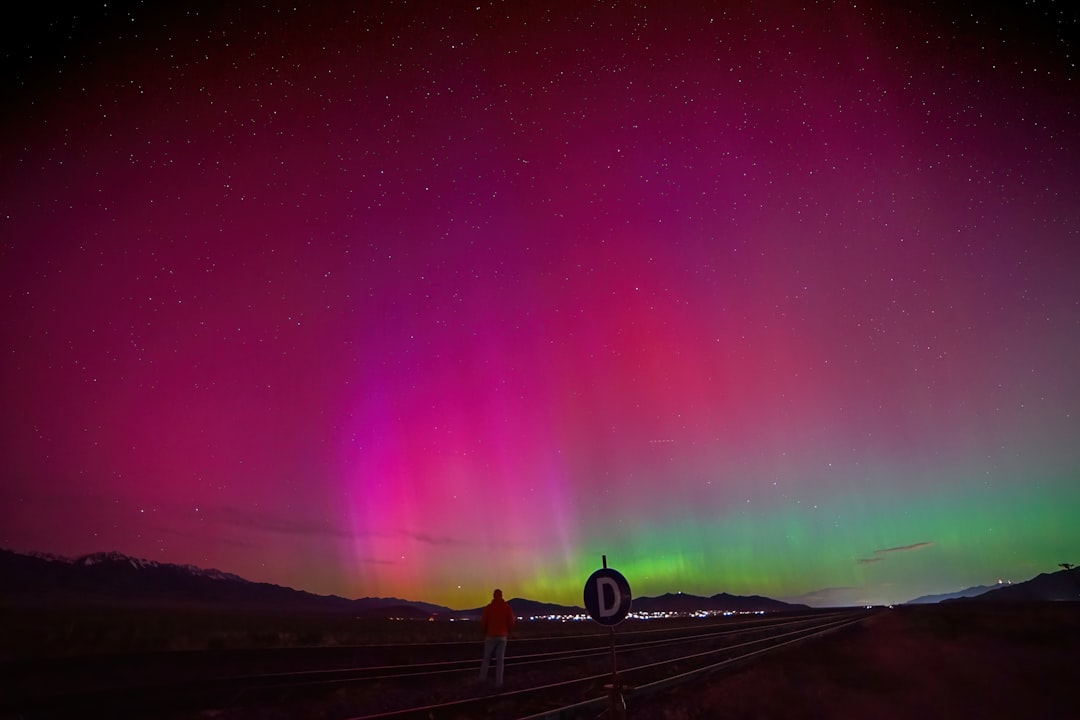
Auroras could extend remarkably far south on March 31, potentially visible from New York City, London, Paris, Berlin, the mid-Atlantic United States, southern France, and even southern Australia under optimal conditions. High-latitude areas like Seattle, Oslo, and Edinburgh might see displays as early as March 30 evening. Clear, dark skies away from city lights will enhance chances.[1]
Viewers should monitor real-time forecasts from sources like NOAA’s Space Weather Prediction Center. Smartphone apps and websites track Kp indices and Bz orientation for timely alerts. Patience pays off, as displays often peak between 10 p.m. and 2 a.m. local time.
- Northern Hemisphere: Alaska, Scandinavia, Canada for reliable sightings.
- Mid-latitudes: Check weather apps for cloud cover in Europe and U.S. East Coast.
- Southern Hemisphere: Tasmania or New Zealand for rare southern lights.
- Tips: Face north, use wide-angle cameras for photos.
Ongoing Solar Dynamics
Nine active sunspot regions dot the Earth-facing solar disk, though activity levels dropped to very low after the flare. Forecasters assign a 45 percent chance for M-class flares and 10 percent for another X-class on March 30. Solar wind speeds have risen due to the coronal hole stream, with the interplanetary magnetic field showing southward deflections that sparked early active conditions.[1]
Earth’s magnetic field responded with quiet to active fluctuations, reaching Kp=4. As the CME approaches, these factors could compound for a memorable event. For more details, see the full EarthSky update and NOAA’s Space Weather Prediction Center.[3]
- X1.5 flare from AR4405 on March 30 launched a 1,845 km/s CME arriving March 31.
- G3-G4 storms likely, G5 possible; auroras to mid-latitudes.
- Monitor NOAA and apps for real-time updates.
This solar spectacle reminds us of the Sun’s profound influence on Earth, blending beauty with potential technological challenges. Skywatchers have a prime chance to witness nature’s light show. What do you think about this incoming event? Tell us in the comments.