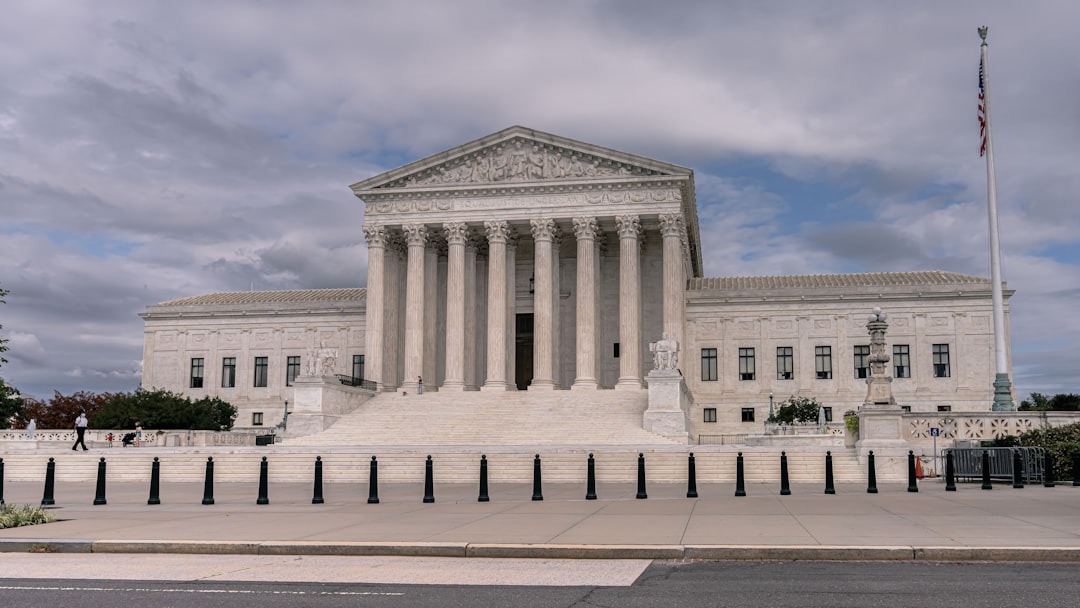
A Mid-Decade Redistricting Firestorm Ignites (Image Credits: Unsplash)
California – The Supreme Court cleared the path Wednesday for the state to deploy its new congressional districts, a voter-approved plan designed to bolster Democratic prospects in the 2026 midterm elections.[1]
A Mid-Decade Redistricting Firestorm Ignites
Republicans in Texas redrew their congressional map in August 2025, a move projected to deliver five additional House seats to the GOP and preserve their narrow majority.[2] California Democrats responded swiftly with their own plan, framing it as a necessary counterpunch to maintain balance in Congress. The state’s legislature advanced Proposition 50, which voters embraced in a special November election.
Over 64 percent of participating voters supported the measure, enacting new boundaries through 2030.[2] Analysts predicted the changes would flip five Republican-leaning or competitive districts toward Democrats. This back-and-forth highlighted escalating partisan maneuvers ahead of the census-decade cycle.
Proposition 50’s Path to the Ballot
California’s independent redistricting commission typically handled such tasks, but Democratic leaders bypassed it via the Election Rigging Response Act. The legislature proposed the ballot initiative explicitly to offset Texas gains.[3]
Voters turned out in force for the November 4 special election, approving the map amid debates centered on partisan advantage. The plan preserved the prior number of Latino-majority districts at 16, undercutting claims of racial targeting. State officials emphasized political motivations from the start.
- August 2025: Texas enacts GOP-favorable map.
- August 2025: California legislature passes Proposition 50 proposal.
- November 4, 2025: Voters approve with 64 percent support.
- November 7, 2025: Republicans file federal lawsuit.
Republicans Mount a Federal Court Assault
The California Republican Party sued Governor Gavin Newsom and Secretary of State Shirley Weber, alleging racial gerrymandering in 16 districts. Challengers pointed to mapmaker statements about Latino voting power and ties to Texas’s plan. The Trump administration joined, calling the map tainted by unconstitutional racial considerations.[3]
A three-judge federal panel in Los Angeles rejected the claims on January 14, 2026. The majority found overwhelming evidence of partisan intent but weak proof of racial predominance. One dissenting judge urged higher review. Republicans then sought Supreme Court intervention to block the map before candidate filings.
The high court issued an unsigned order denying the emergency stay, echoing its prior stance that partisan gerrymanders fall outside federal judicial purview.[1]
Shifting the 2026 House Battlefield
With both California and Texas maps now cleared, their partisan shifts could neutralize each other, preserving the House’s delicate balance. Democrats eye gains in formerly competitive areas, while Republicans regroup. Similar battles rage in Florida, Maryland, New York, Utah, Virginia, and Louisiana.
| State | Projected Seat Shift | Approval Method |
|---|---|---|
| California | Democrats +5 | Voter referendum (64%) |
| Texas | Republicans +5 | Legislature |
Candidates already campaign under the new lines, with primaries months away. The rulings underscore states’ latitude in redistricting amid tight national control.
Key Takeaways
- The Supreme Court denied Republicans’ bid to reinstate prior maps, citing insufficient racial gerrymandering evidence.
- Proposition 50’s partisan framing prevailed over challenges, maintaining 16 Latino-majority districts.
- California’s plan offsets Texas gains, stabilizing House battle lines for 2026.
As redistricting wars shape the midterms, California’s map stands as a testament to voter power in partisan chess. The real winners may be balanced competition – or prolonged uncertainty. What do you think about these map maneuvers? Tell us in the comments.