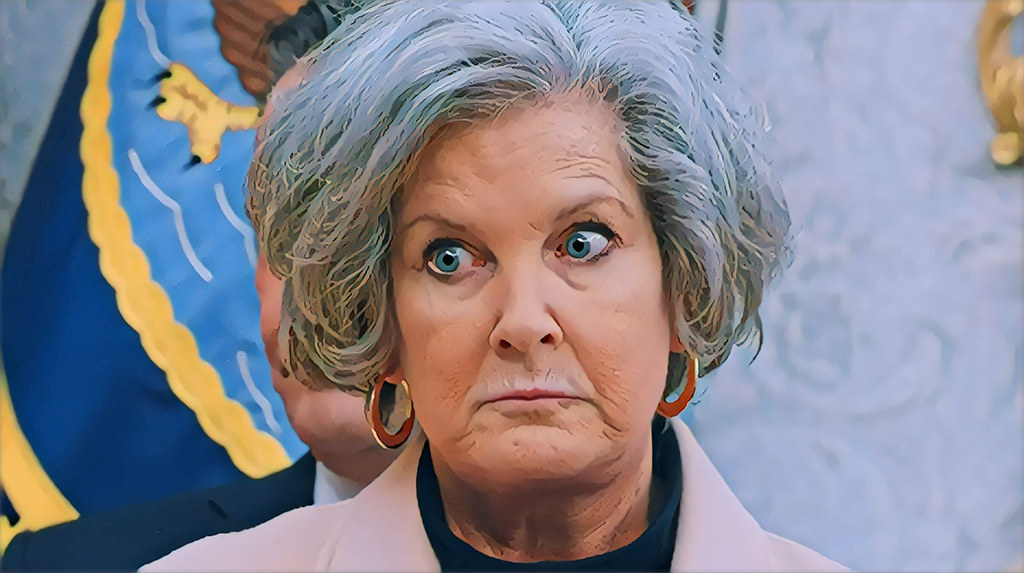


A Chief of Staff’s View on Trump’s Leadership Style (Image Credits: Flickr)
White House Chief of Staff Susie Wiles recently offered a rare glimpse into the inner workings of President Donald Trump’s second administration during an extensive interview with Vanity Fair.
A Chief of Staff’s View on Trump’s Leadership Style
Throughout the discussion, Wiles provided frank assessments of Trump’s personality and decision-making process. She compared his traits to those of an “alcoholic’s personality,” highlighting the intensity and unpredictability that define his approach to governance. This characterization emerged as Wiles reflected on moments of tension within the White House, including instances where Trump expressed frustration directly toward her.
Despite such challenges, Wiles emphasized her commitment to steering the administration through turbulent times. Her comments painted a picture of a leader who demands loyalty and swift action, often amid high-stakes crises. The interview captured how these dynamics have shaped daily operations since Trump’s return to office.
Assessing Key Figures in the Trump Orbit
Wiles did not hold back when evaluating prominent allies and appointees. She described Vice President JD Vance as someone who had embraced conspiracy theories for over a decade, pointing to his evolution within the political landscape. This revelation added layers to understanding Vance’s role in policy debates and public messaging.
Other mentions included critiques of figures like Attorney General Pam Bondi and Defense Secretary Pete Hegseth. Wiles questioned some of their tactics, particularly Hegseth’s aggressive strategies on national security issues. These insights revealed internal frictions and the chief of staff’s efforts to maintain cohesion among a diverse team that includes senators like Marco Rubio and communications director Karoline Leavitt.
The conversation also touched on broader team-building efforts, underscoring Wiles’ influence in assembling what she called a group of “junkyard dogs” ready to tackle controversies head-on.
Addressing Controversies and External Pressures
The interview delved into high-profile issues like the Jeffrey Epstein files and the administration’s stance on retribution against perceived enemies. Wiles offered measured thoughts on these topics, balancing transparency with strategic caution. Her perspective on the FBI’s handling of the January 6 investigation stood out, as she praised their work despite ongoing political debates.
Elon Musk’s involvement with the Department of Government Efficiency, or DOGE, drew particular scrutiny from Wiles. She described it as a “disaster,” citing disruptions caused by the initiative’s ambitious scope. This segment highlighted the challenges of integrating tech influencers into traditional government functions.
- Trump’s direct confrontations with staff during heated moments.
- Vance’s long history with fringe theories influencing his vice presidential duties.
- Musk’s DOGE project leading to operational chaos in federal agencies.
- Praise for the FBI’s thorough January 6 probe amid partisan divides.
- Internal doubts about certain Cabinet members’ effectiveness in crises.
The Backlash and Wiles’ Defense
Following the publication of the two-part interview, Wiles quickly pushed back against interpretations of her words. She labeled the Vanity Fair piece a “disingenuously framed hit piece” in statements to media outlets, arguing that it misrepresented her intent to provide honest reflections. This response underscored her protective stance toward the president and the administration’s narrative.
Supporters and critics alike seized on the quotes, sparking widespread discussion in political circles. Wiles’ rebuttal appeared in outlets like BBC and The Hill, where she clarified her admiration for Trump’s resilience. The episode illustrated the delicate balance chief of staffs must navigate between candor and loyalty in the public eye.
Key Takeaways
- Wiles’ portrayal of Trump’s personality reveals the emotional intensity driving White House decisions.
- Her critiques of Vance and others expose underlying tensions in Trump’s inner circle.
- The interview highlights ongoing struggles with external influences like Musk’s initiatives.
As the Trump administration progresses into its second year, Wiles’ revelations offer a window into the personal and political battles ahead. These insights remind observers of the human elements behind policy and power. What aspects of her interview surprised you most? Share your thoughts in the comments below.