
Something shifted in American cities over the past few years. The cheerful Airbnb logo, once a symbol of travel freedom and side-hustle income, has become a flash point for one of the most heated urban debates of our time. Residents are furious. Landlords are torn. And city councils across the country are putting their foot down in ways nobody quite expected.
What started as a trickle of local complaints has become a full regulatory wave. From the streets of Manhattan to the beach blocks of Santa Monica, municipalities are rewriting the rules and, in some cases, effectively pulling the plug on short-term rentals altogether. The reasons are more complex than they first appear, and the consequences are genuinely surprising.
So let’s dive in.
New York City: The Law That Shocked the Platform World
If you want to understand the Airbnb backlash, you start in New York. Local Law 18 is a municipal law enacted by New York City to regulate short-term rental activity. The law requires hosts to register their listings with the city and prohibits booking platforms from processing transactions for unregistered rentals. It was signed into law on January 9, 2022, and enforcement began on September 5, 2023.
The effect was almost immediate and absolutely staggering. When Local Law 18 took effect in September 2023, the impact was immediate: short-term rental listings dropped by over 90%. Think about that for a second. A single piece of local legislation wiped out the vast majority of a platform’s inventory in one of the world’s most visited cities.
In the outer boroughs alone, listings dropped from approximately 17,000 to 1,400, resulting in an average of 80,000 fewer guests per month on the platform. Under the new rules, short-term rental hosts had to register with the Mayor’s Office of Special Enforcement by September 5, 2023. Platforms such as Airbnb were prohibited from processing transactions for unregistered hosts. Violations could result in fines of up to $5,000 for hosts and $1,500 for platforms.
Honestly, the penalties alone tell you how serious the city was. This was not a polite suggestion. It was a crackdown. Having survived a legal challenge, the underlying local law and regulations may be used as a model for other local governments seeking to curb short-term apartment rentals within their borders.
Did It Actually Fix the Housing Crisis? The Uncomfortable Answer
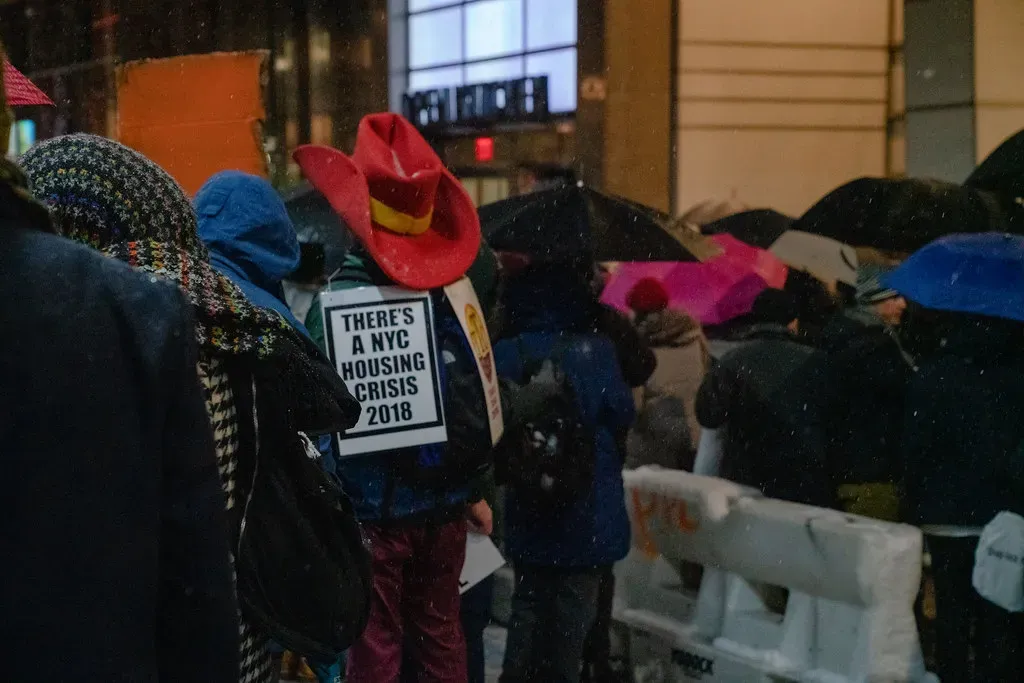
Here is the thing that nobody really wants to admit: the results have been deeply mixed. The city sold Local Law 18 as a cure for unaffordable housing. The reality? Much murkier. Championed as a law to increase housing availability and affordability, HR&A’s findings reveal that neither housing availability nor affordability has improved since LL18 was enacted.
Preliminary evidence shows that housing supply has not increased significantly and the affordable housing shortage persists. Data published by Apartments.com shows that 2024 rental prices in New York City are even higher than they were before Local Law 18 went into effect. That is genuinely surprising, and a little uncomfortable for policymakers who pushed the legislation hard.
The law has contributed to a rise in hotel prices, with rates climbing approximately 6% in 2024. Critics argue that the law has not achieved its intended goal of lowering rents and has instead eliminated a vital source of income for many New Yorkers, as well as a potential tax revenue stream. It is almost like squeezing one end of a balloon and watching the other end inflate.
Despite its intentions, LL18 has inadvertently sparked an underground rental market. Alternative avenues have emerged with Airbnb listings plummeting from over 22,000 to below 5,000. Private groups on social media platforms like WhatsApp and Facebook offer short-term sublets under the radar. These invite-only groups, with names like “Friendbnb”, have gained traction, circumventing the law through private transactions. Nobody predicted that one.
Santa Monica and Los Angeles: California’s Strictest Crackdowns
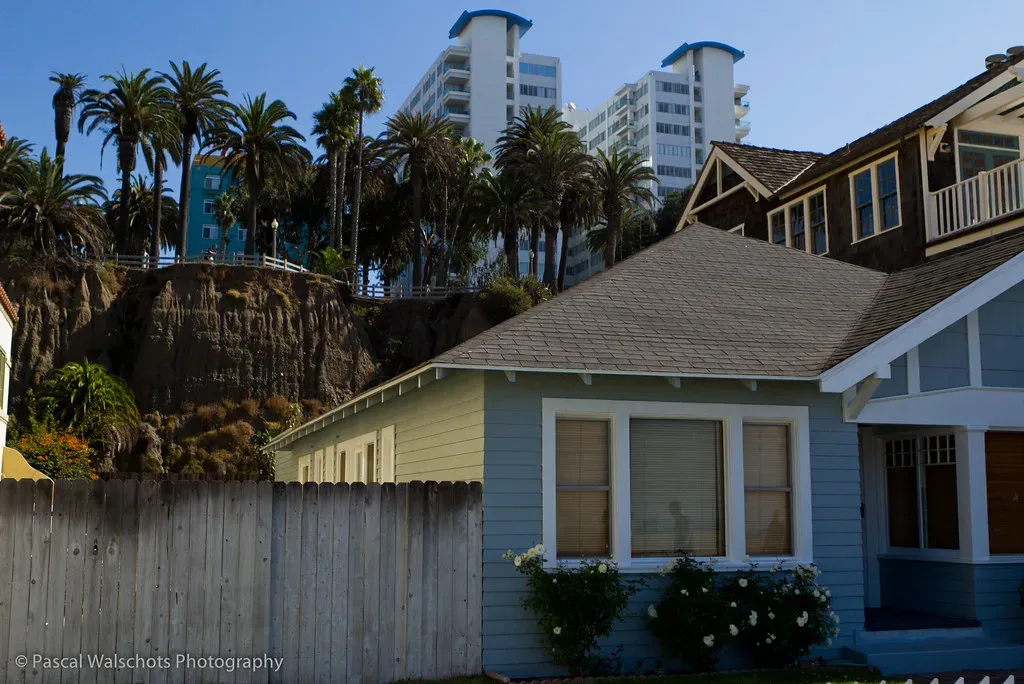
California has long been ground zero for housing tension, and two of its cities have gone further than almost anywhere else in the country. Santa Monica’s Home-Sharing Ordinance effectively allows hosted rentals only. Unhosted, entire-home short-term rentals are not allowed. The city requires licensing and enforces registration through platform coordination. In plain English: if you are not physically home during the stay, you cannot legally rent the place out short-term.
Cities like Santa Monica, California, have stringent rules, allowing home-sharing only with permits, while completely banning un-hosted rentals of 30 days or less. That essentially eliminates the classic investor-owned Airbnb model, where someone buys a property purely to rent it out to tourists while living elsewhere.
Los Angeles takes a slightly softer but still firm approach. The city’s Home-Sharing Ordinance restricts short-term rentals to primary residences and caps rentals at 120 days annually unless hosts obtain special extended home-sharing approval. West Hollywood, Santa Monica, and Pasadena have their own short-term rental laws and often ban or heavily restrict short-term rentals altogether. It is a patchwork of rules across a sprawling metro, which creates real confusion for hosts.
In Santa Monica, research finds no significant reduction in home prices and rents following the home-sharing ordinance. That finding, published in 2024, adds fuel to an already heated debate about whether these bans are actually solving anything or just creating the appearance of action.
San Francisco and Boston: Registration, Residency, and Radical Limits
San Francisco was actually one of the earlier movers on short-term rental regulation. The city restricts short-term rentals to primary residences only, with a cap of 90 nights per year for unhosted rentals. Think of it like this: you can rent your own bedroom or couch while you are there, but you cannot disappear for the summer and convert your apartment into a mini-hotel. That distinction matters enormously.
Many local governments are passing regulations to limit short-term rental activity, like banning rental stays under 90 days or proposing new taxes on short-term rental property owners, and communities across the U.S. and Canada are grappling with what the future of short-term rentals should look like. San Francisco sits firmly in the “limit aggressively” camp.
Boston follows a similar philosophy, requiring hosts to register and restricting listings to owner-occupied units. The practical effect is the same: investor-owned Airbnb properties get pushed out. Analogous cases can be found in Chicago, Boston, San Francisco, and Honolulu, among others. What these cities share is a conviction that the platform economy should not be allowed to quietly hollow out residential neighborhoods.
It is hard to say for sure whether these tighter regimes are delivering on their promise of affordability, but what is clear is that the political will behind them is fierce and growing stronger every year.
The Bigger Picture: Housing, Hotels, and the Real Cost of the Backlash
Zoom out from any single city and a broader, more complicated story emerges. Cities around the world have seen rising house prices and rents and an influx of tourists over the past decade. Over the same period, an increasing number of travelers have been using short-term rentals, enabled by digital platforms like Airbnb and VRBO. These coinciding trends have led residents to blame rent increases on Airbnb and politicians to pass laws restricting the availability of short-term rentals.
The research, though, is more nuanced than the political rhetoric. Critics of short-term rentals are correct that they place some upward pressure on home prices. However, this effect is downstream of the more fundamental problem: land use policy that restricts the supply of housing. Blaming and banning short-term rental platforms for high housing costs ignores the history of laws that have contributed to the current problem. That is a point worth sitting with.
Banning short-term rentals means cutting off revenue for property owners, expending resources on enforcement, and making travel more expensive for guests, all without a substantial or sustainable home price adjustment. The hotel industry, meanwhile, is quietly celebrating. Hotel Average Daily Rate has risen by 6% from May 2023 to May 2024. In New York alone, that surge has been dramatic.
NYC’s ban is currently being used as a model for short-term rental regulation in many other cities. So whether you think these bans are a victory for housing justice or an overreach that punishes everyday homeowners, one thing is certain: this is not a local story anymore. It is a template. And cities across the country, and the world, are watching very closely to see how it plays out.
Conclusion
The Airbnb backlash is real, it is spreading, and it is reshaping urban housing policy in ways that will outlast any single election cycle or news cycle. Five of America’s most prominent cities have drawn hard lines, and the data tells a story far messier than either side would like to admit. Rents have not meaningfully dropped. Underground markets have quietly filled the void. Hotels are charging more than ever. Yet the political pressure to act is only intensifying.
Let’s be real: the short-term rental debate has never really been about Airbnb alone. It is a proxy war for the much deeper, older, and harder question of who gets to live in America’s most desirable cities, and at what cost. The platform just made that question impossible to ignore any longer.
What do you think: are these bans genuine housing solutions, or are they political theater masking a far deeper problem? Tell us in the comments.